 Free
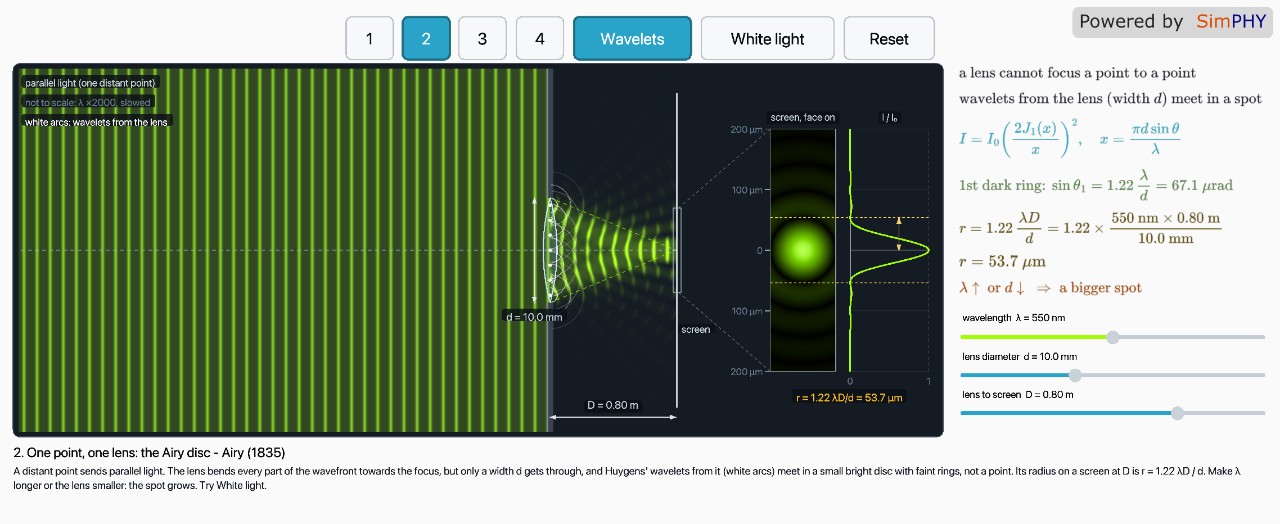
Rayleigh Criterion and Lens Resolution
Wave OpticsVisualize diffraction’s Airy pattern and apply Rayleigh’s criterion to...
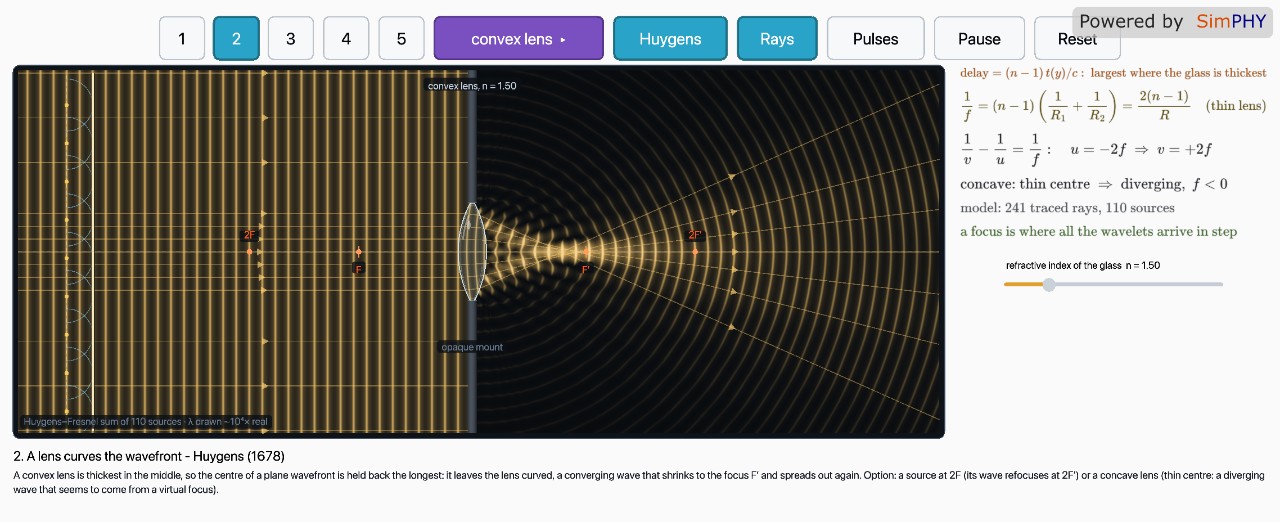
Explore Huygens’ construction and ray behavior as wavefronts pass through lenses, mirrors, and obstacles.
This simulation visualizes Huygens’ principle and Fermat’s least‑time principle by constructing wavelets that form moving wavefronts. Students can watch how the envelope of secondary wavelets creates the familiar ray paths as the wave encounters lenses, mirrors, sources, or obstacles.
Interactive step buttons let learners select the optical element, toggle the Huygens construction, display rays, and switch between a continuous wave and short pulses. A slider adjusts a key parameter such as object distance, letting students see how focal points shift and how image formation changes.
By comparing the real light field with the ray diagram, students develop a deeper understanding of the wave‑ray connection, focal length, image location, and the conditions for constructive interference in optical systems.
Free
Visualize diffraction’s Airy pattern and apply Rayleigh’s criterion to...
 Free
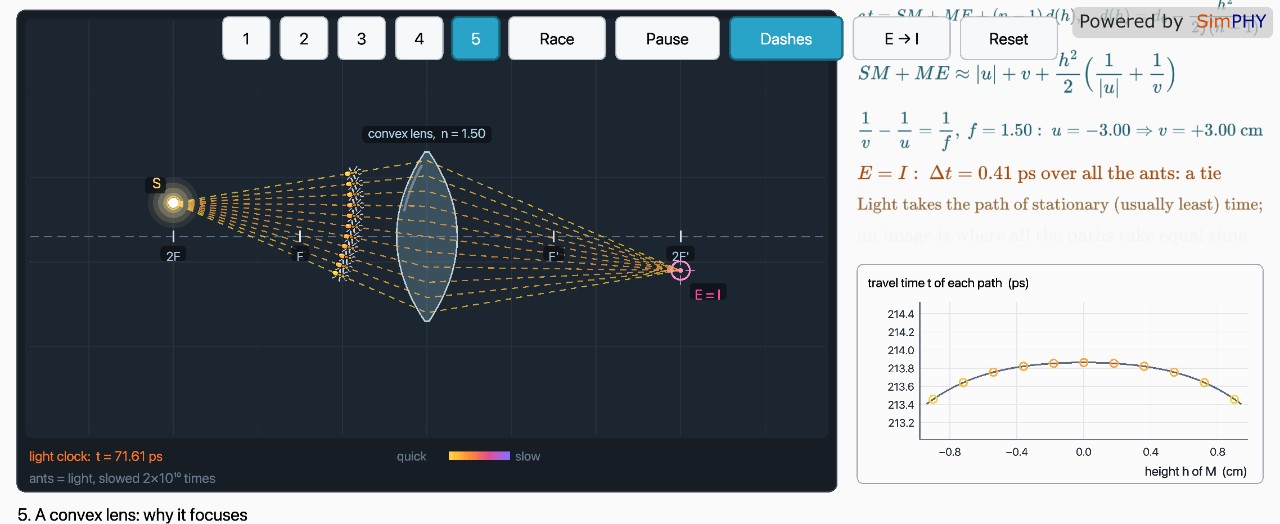
Watch light race through mirrors, lenses and adjustable media to revea...
 Free
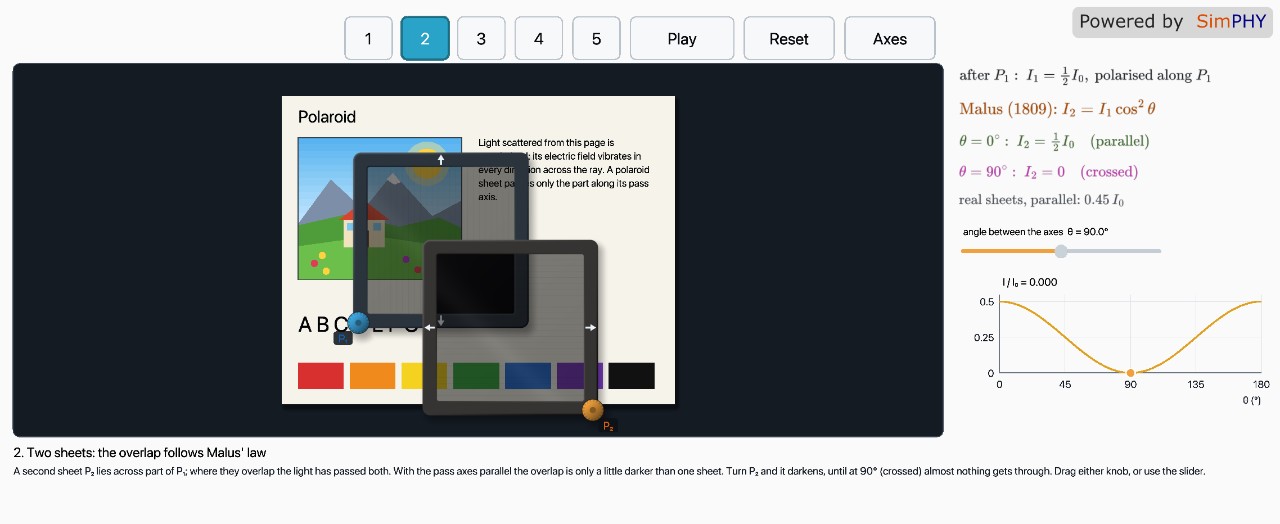
Explore how polarising filters change light intensity, test Malus’ law...
 Free
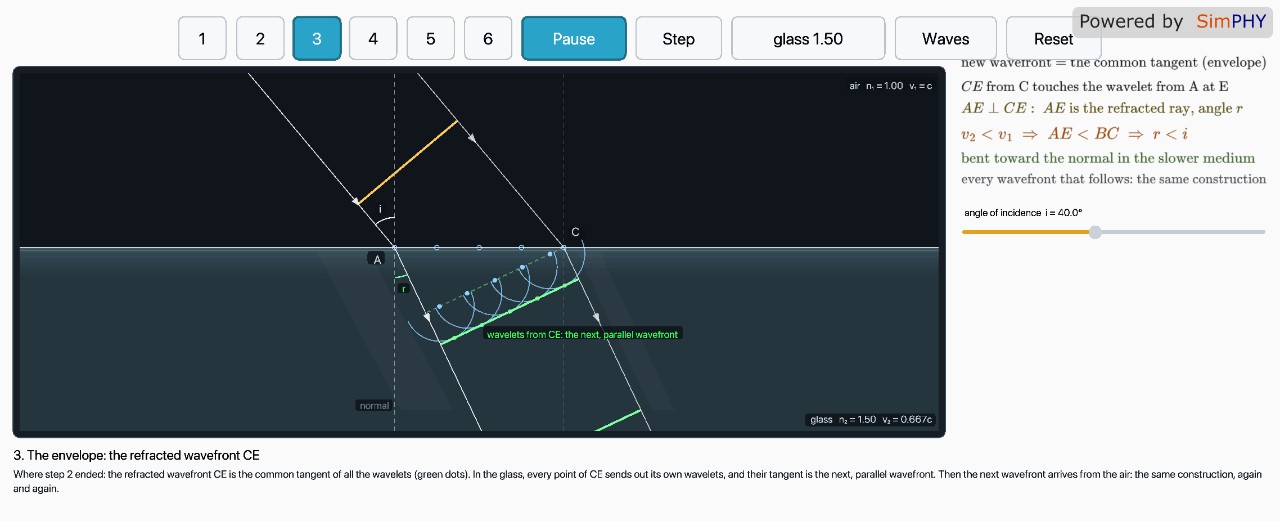
Step through Huygens' principle to watch wavefronts refract, derive Sn...
 Free
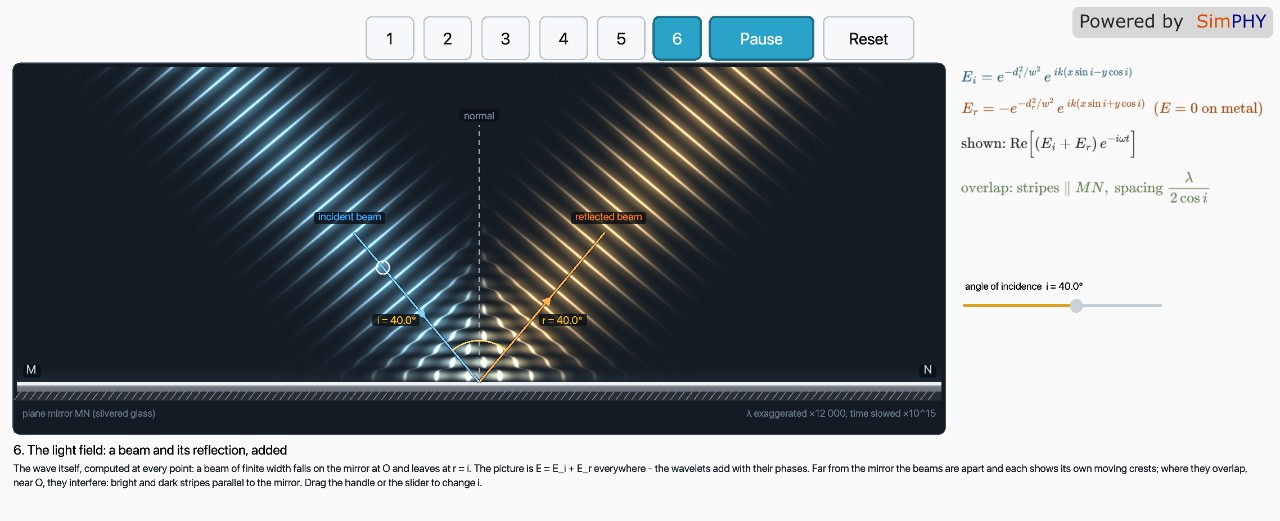
Interactive proof of the law of reflection via Huygens’ principle, wit...
 Free
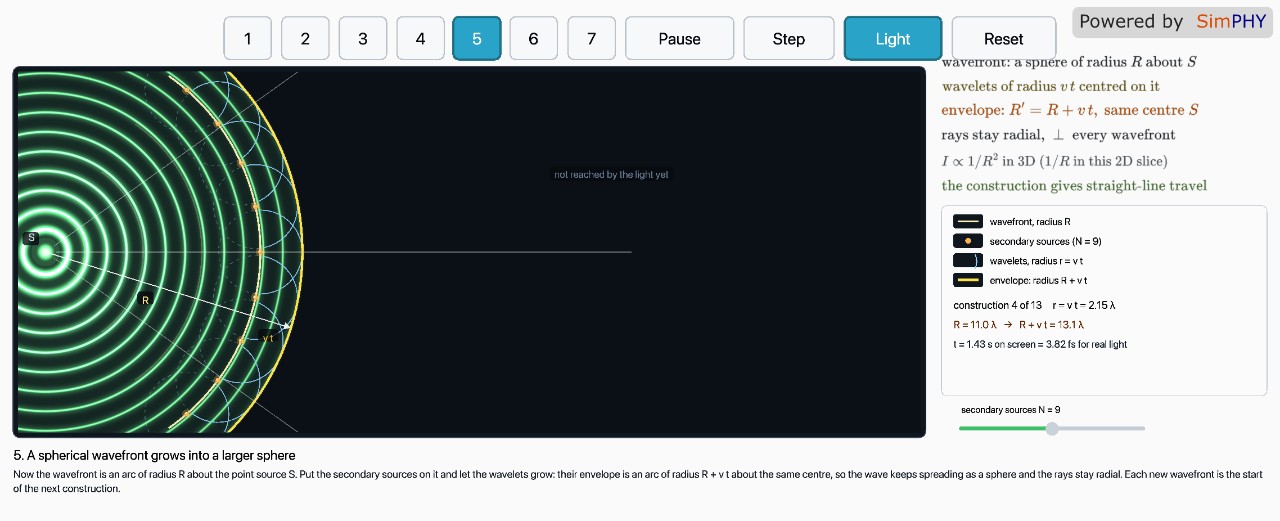
Explore Huygens' principle by building wavefronts from wavelets, adjus...