 Free
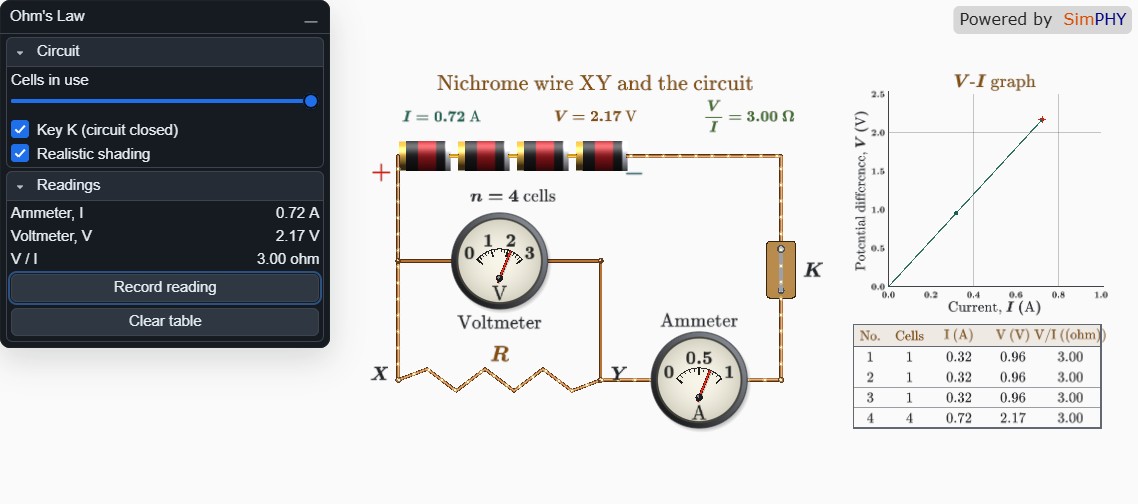
Ohm’s Law: Series Cells with Nichrome Wire
Current ElectricityAdd 1‑4 cells with a nichrome wire, close the key and read the ammeter...
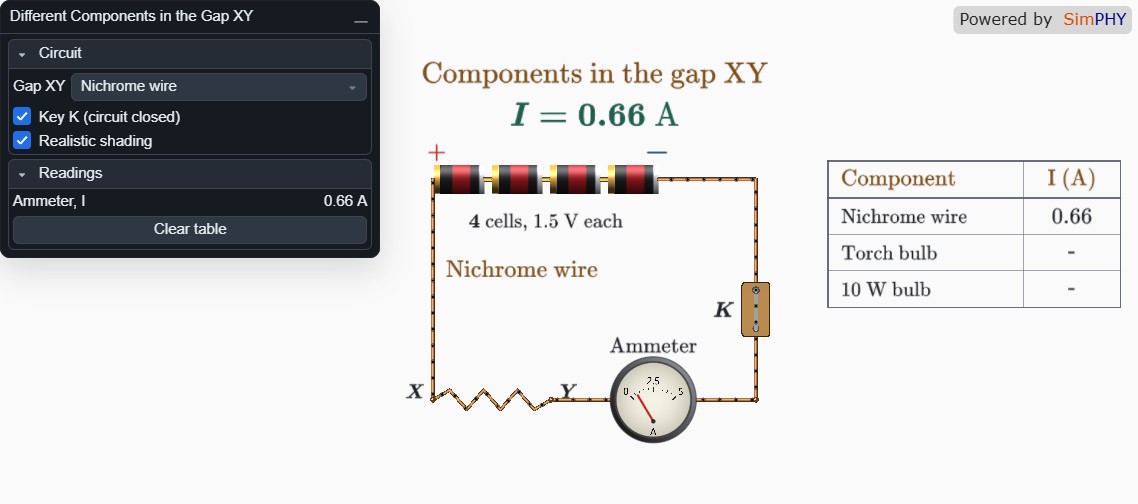
Watch how a nichrome wire, a torch bulb, and a 10 W bulb change the ammeter reading in a four‑cell circuit.
The simulation shows a simple series circuit built from four 1.5 V cells, an ammeter, a key, and a gap where a single component is placed. Students can insert a nichrome wire, a torch bulb, or a 10 W bulb one at a time and close the key to complete the circuit. The ammeter displays the current for each component, illustrating how different materials resist the flow of electricity.
When a bulb is used, its tungsten filament heats up, increasing its resistance according to the temperature coefficient of resistance. The model includes the transient overshoot of current and the cooling process, so students can see the filament’s temperature rise and the resulting drop in current. The nichrome wire behaves as an ideal ohmic resistor with constant resistance.
By comparing the steady‑state current values and the dynamic behaviour, learners explore concepts of resistance, Ohm’s law, and thermal effects in conductors, gaining insight into why some components allow more current than others.
Free
Add 1‑4 cells with a nichrome wire, close the key and read the ammeter...
 Free
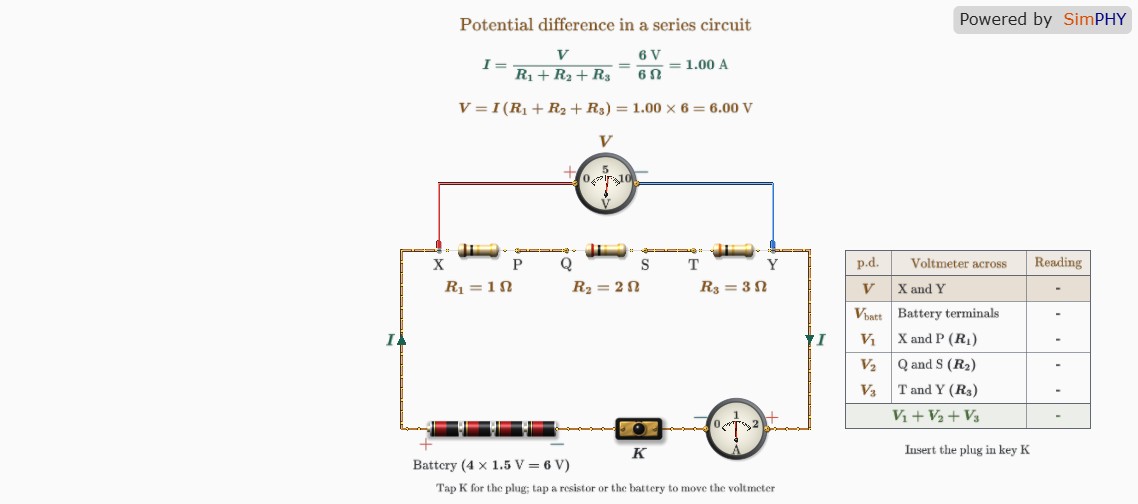
Explore how a circuit’s total voltage equals the sum of resistor volta...
 Free
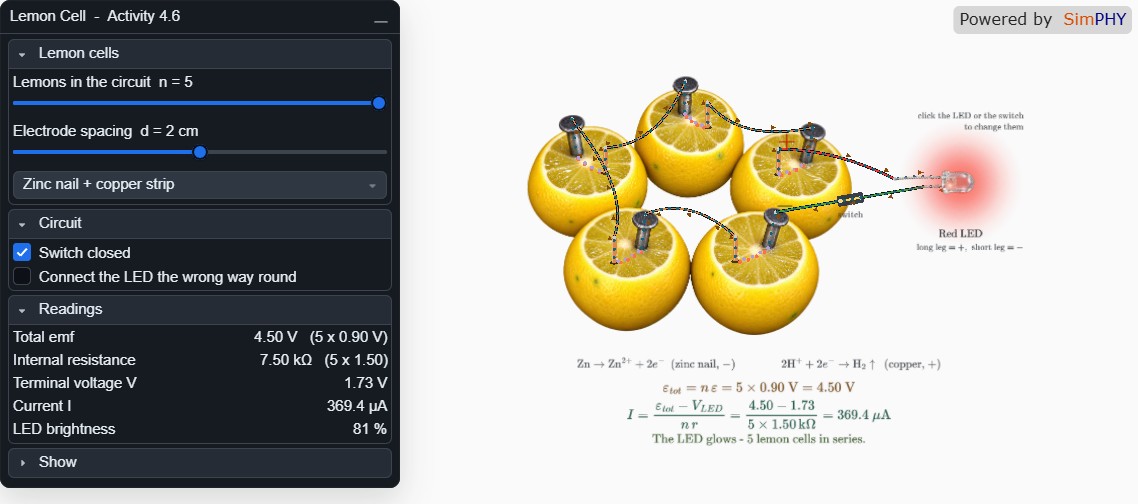
Explore series‑connected lemon cells, metal type and number of lemons...
 Free
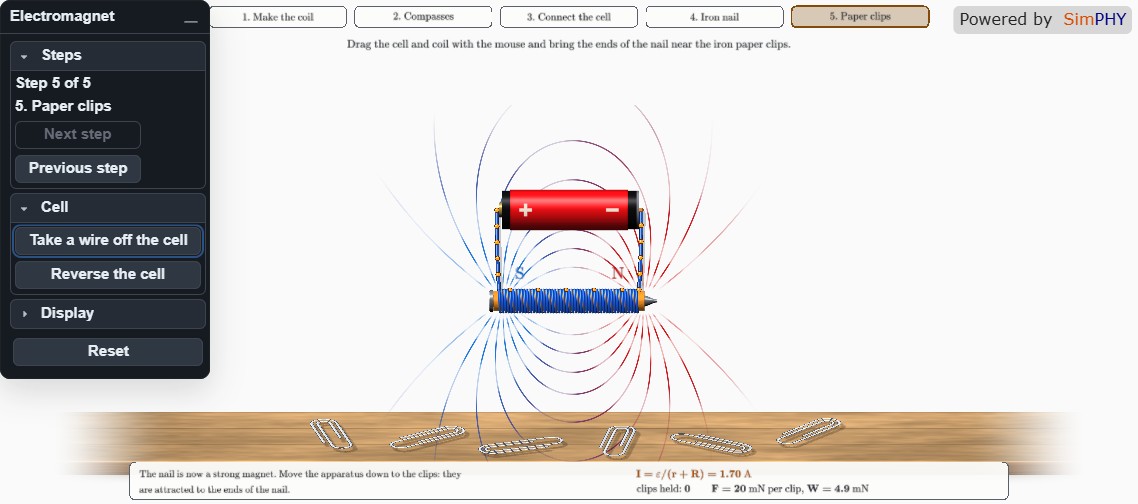
Wind a coil on a cylinder, connect a battery and see it act as a magne...
 Free
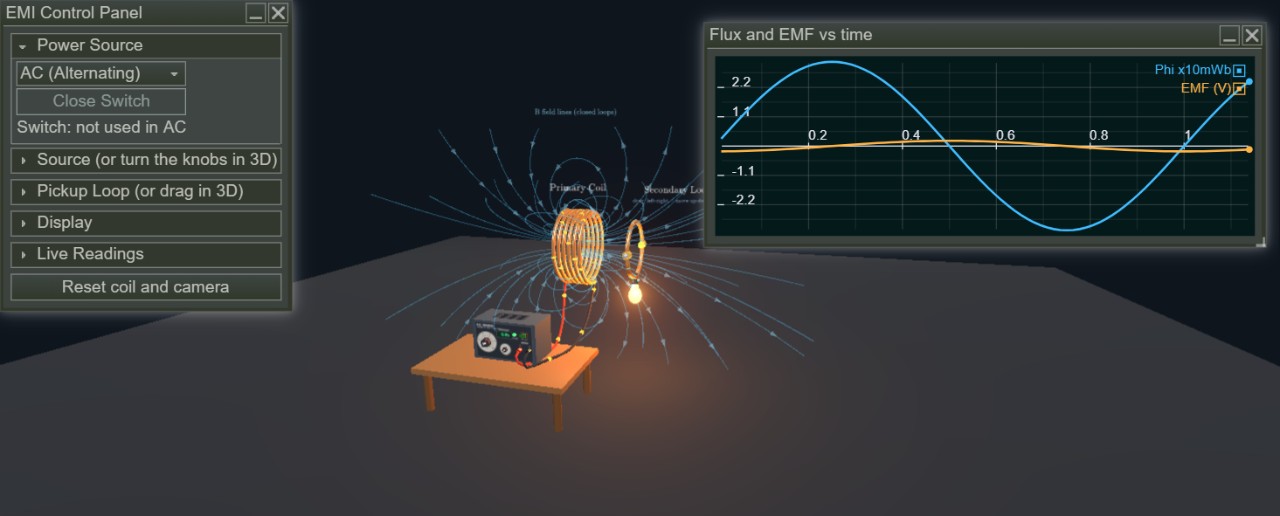
Slide the secondary coil to change distance, height, and tilt, and obs...