 Free
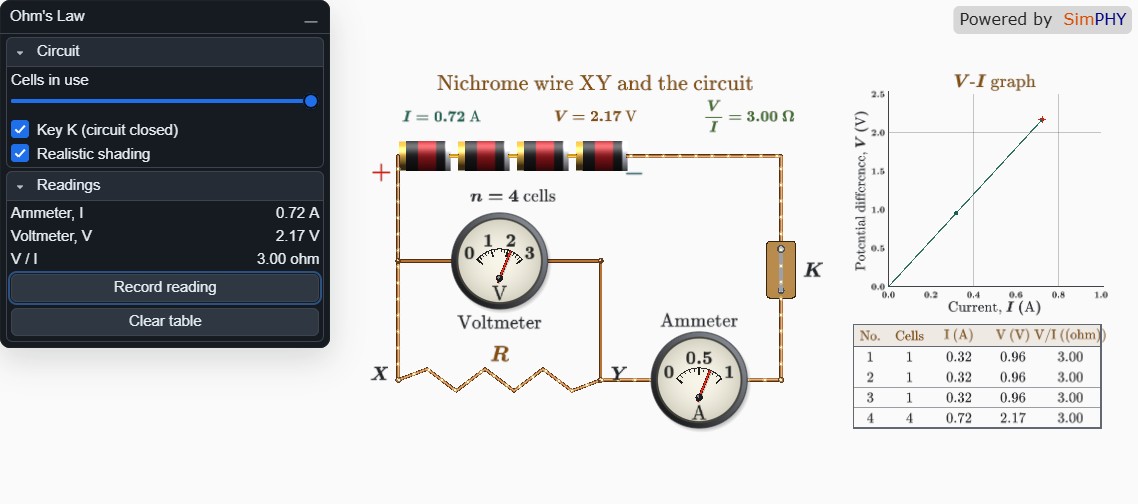
Ohm’s Law: Series Cells with Nichrome Wire
Current ElectricityAdd 1‑4 cells with a nichrome wire, close the key and read the ammeter...
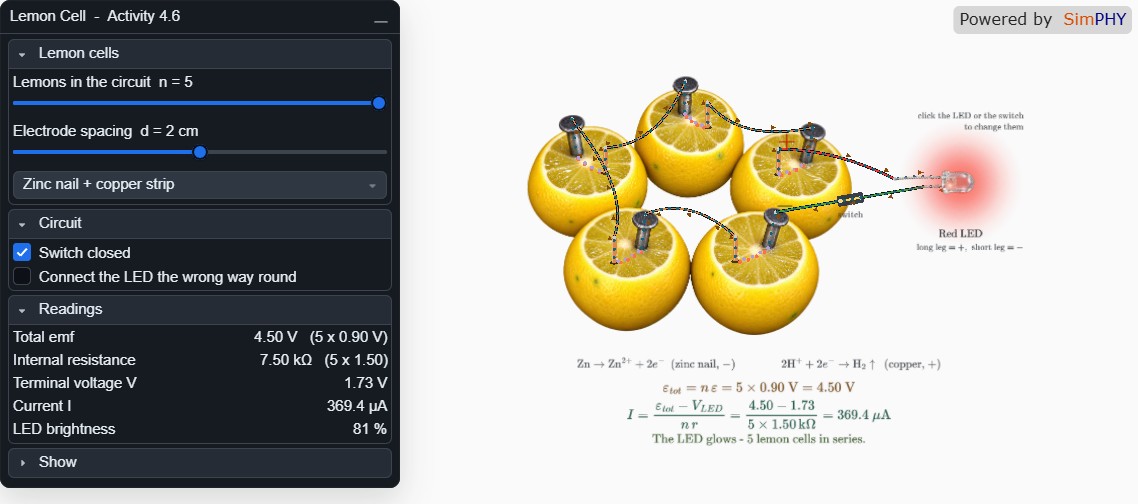
Explore series‑connected lemon cells, metal type and number of lemons to see voltage build‑up, LED lighting.
The simulation models a string of lemon electrochemical cells, each formed by a zinc nail and a copper electrode. The emf of a single cell depends on the metal pair (≈0.90 V for Zn|Cu, 0.60 V for Fe|Cu) and each cell has an internal resistance that grows with electrode spacing. When cells are joined in series their voltages add while internal resistances also add, forming a simple series circuit that can drive an LED.
Students can change the metal used for the electrodes and increase or decrease the number of lemons. The app displays the total emf, the combined internal resistance, and the terminal voltage that appears across the LED. By watching the LED turn on or stay off, learners see how series addition of cell voltages and internal resistance affect the current that flows through a non‑linear load.
Through this activity students learn the basics of current electricity, series circuits, and the relationship between emf, internal resistance, and load characteristics such as the LED’s I‑V curve. They also see how electrochemical cell chemistry influences electrical output.
Free
Add 1‑4 cells with a nichrome wire, close the key and read the ammeter...
 Free
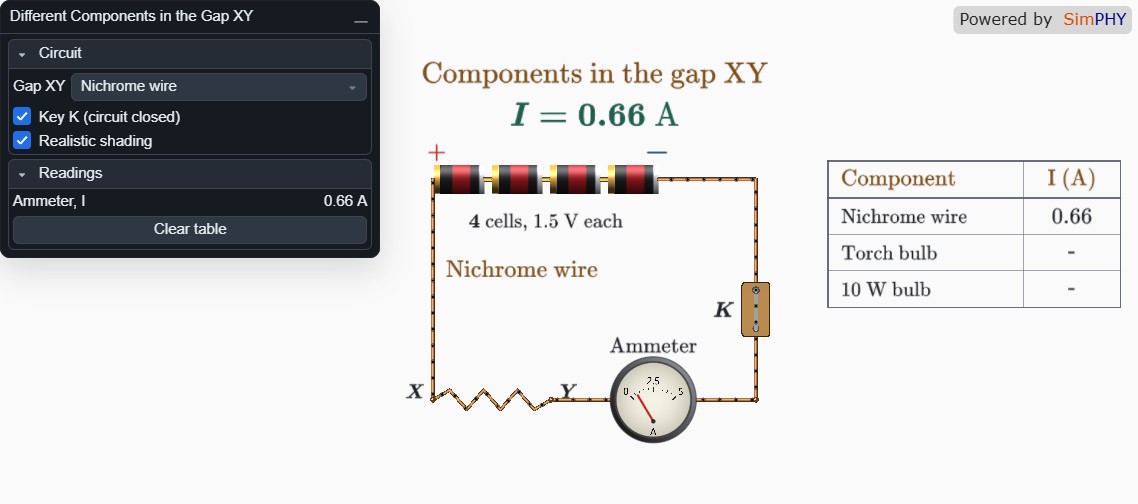
Watch how a nichrome wire, a torch bulb, and a 10 W bulb change the am...
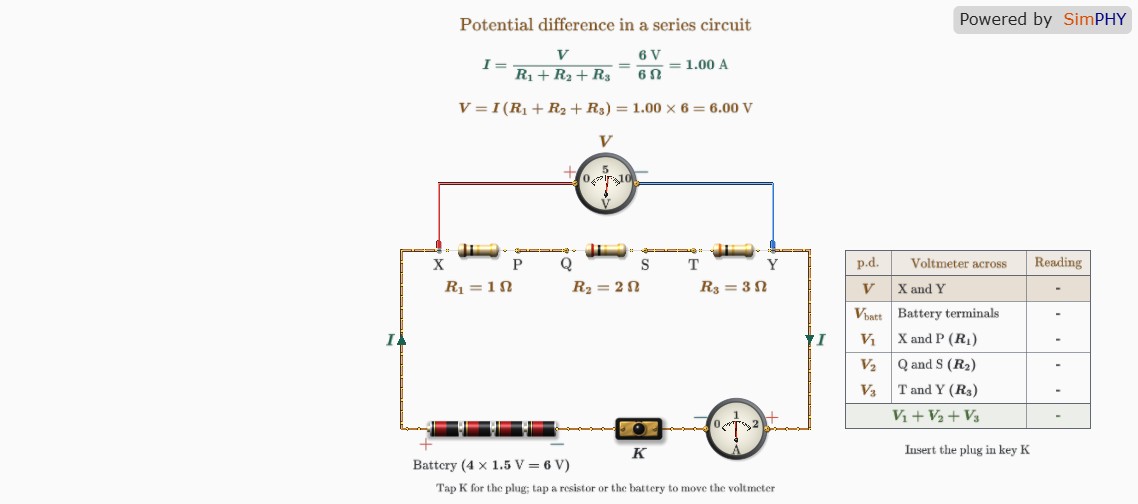 Free
Explore how a circuit’s total voltage equals the sum of resistor volta...
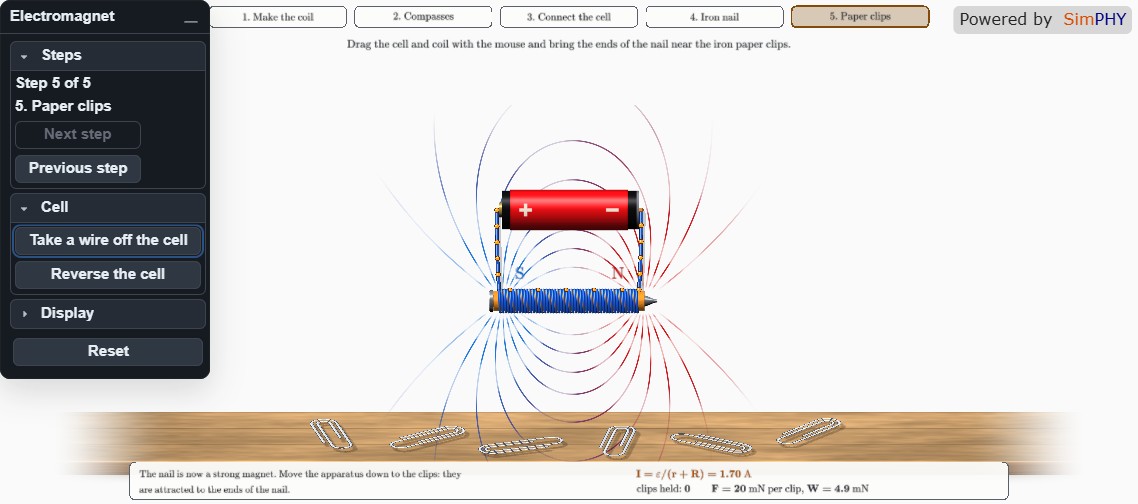 Free
Wind a coil on a cylinder, connect a battery and see it act as a magne...
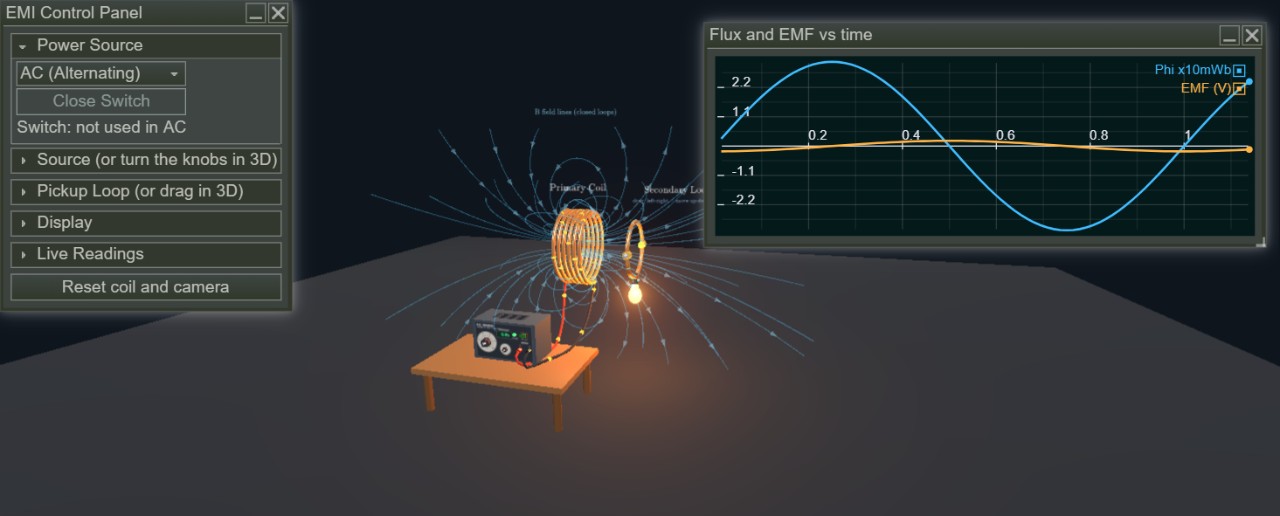 Free
Slide the secondary coil to change distance, height, and tilt, and obs...