 Free
Electromagnet: Current in a Coil
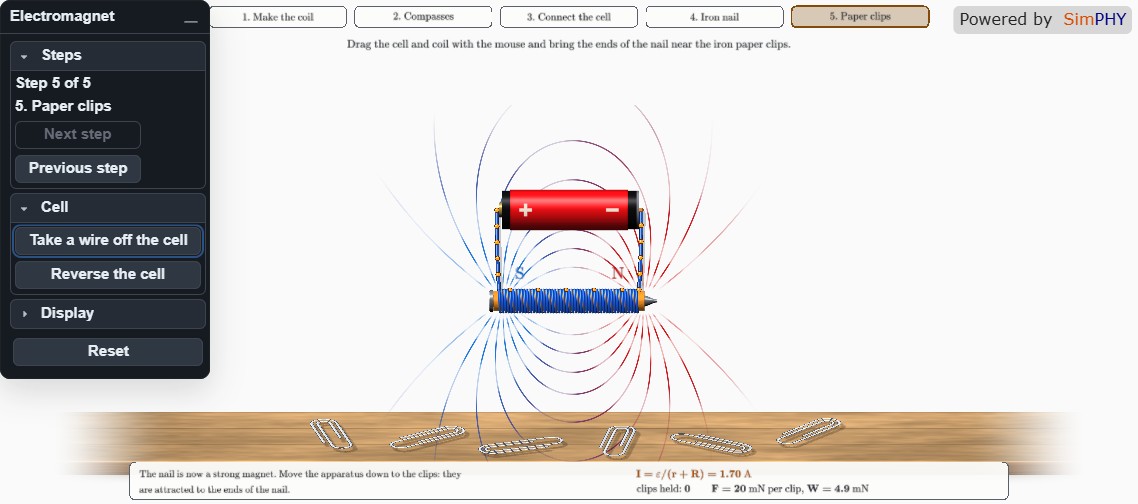
MagnetismWind a coil on a cylinder, connect a battery and see it act as a magne...
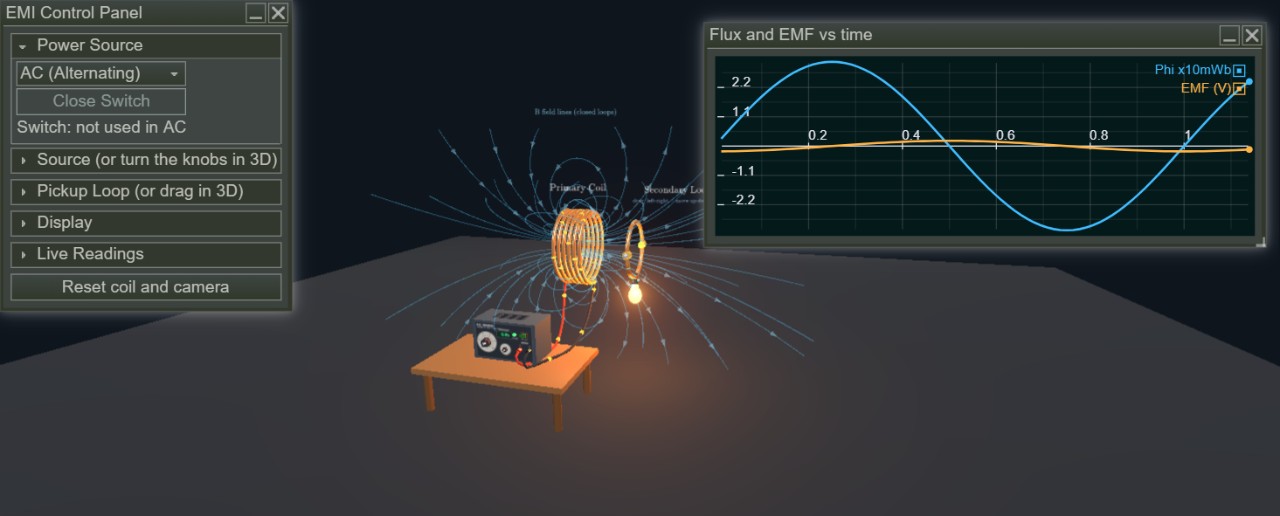
Slide the secondary coil to change distance, height, and tilt, and observe the EMF and bulb brightness.
This simulation demonstrates Faraday’s law of electromagnetic induction. A primary coil driven by an AC generator or a DC battery with a knife switch creates a time‑varying magnetic field. The changing flux through a nearby secondary coil induces an electromotive force (EMF) that can light a bulb, illustrating the link between magnetic flux, induced voltage, and current.
Students can drag the secondary coil left‑right to vary its distance from the primary, move it up or down to change its height, and tilt it about the vertical axis. Equivalent sliders in the control panel provide precise adjustments. As the coil’s position changes, the flux linkage and induced EMF vary, which is reflected in the brightness of the connected bulb. Learners can observe how geometry affects induction and verify the negative sign in Faraday’s law.
The activity connects to real‑world devices such as transformers and electric generators, helping students understand how mechanical motion or coil arrangement can control electrical power. By experimenting with the parameters, they gain intuition about magnetic coupling, the role of coil turns, and the dependence of induced voltage on the rate of change of flux.
Free
Wind a coil on a cylinder, connect a battery and see it act as a magne...
 Free
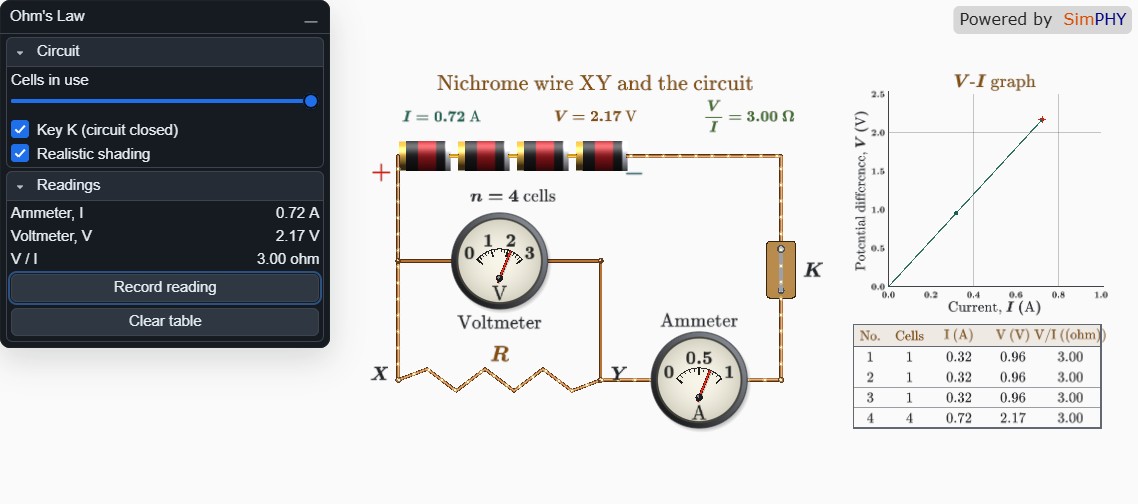
Add 1‑4 cells with a nichrome wire, close the key and read the ammeter...
 Free
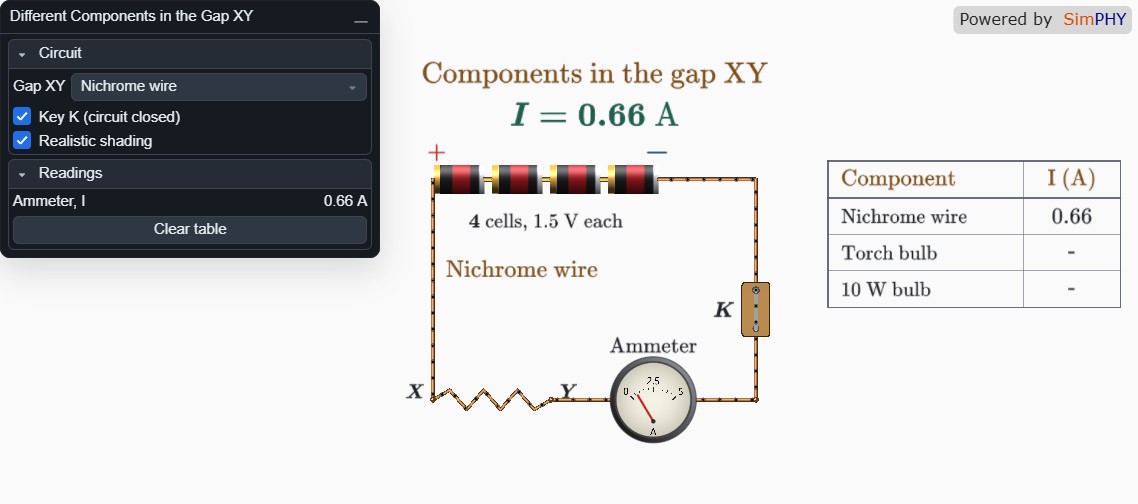
Watch how a nichrome wire, a torch bulb, and a 10 W bulb change the am...
 Free
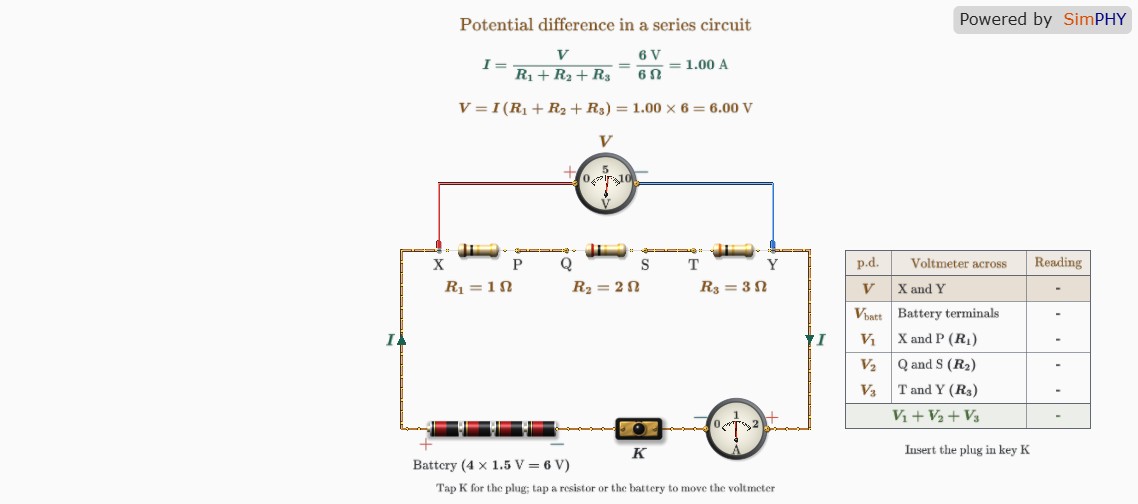
Explore how a circuit’s total voltage equals the sum of resistor volta...
 Free
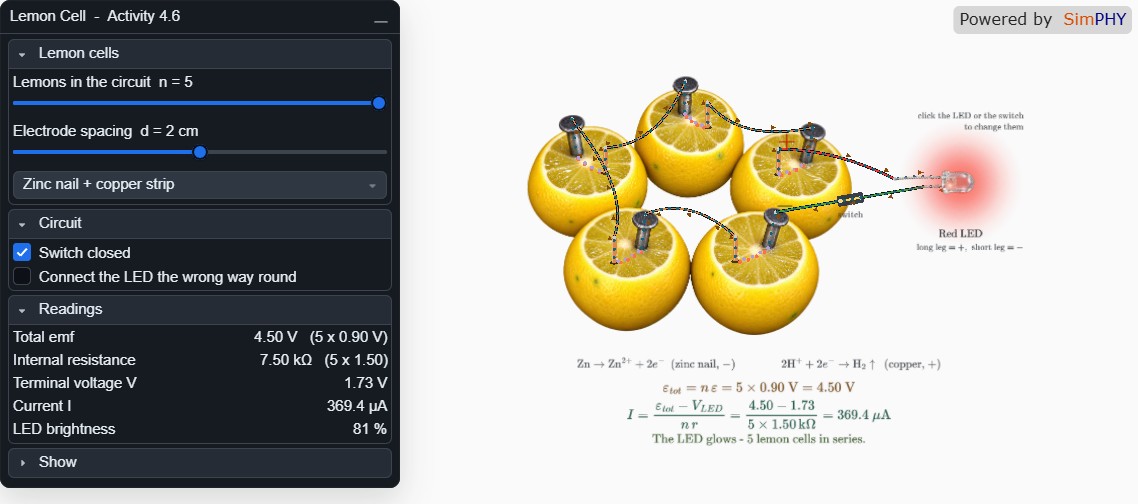
Explore series‑connected lemon cells, metal type and number of lemons...