 Free
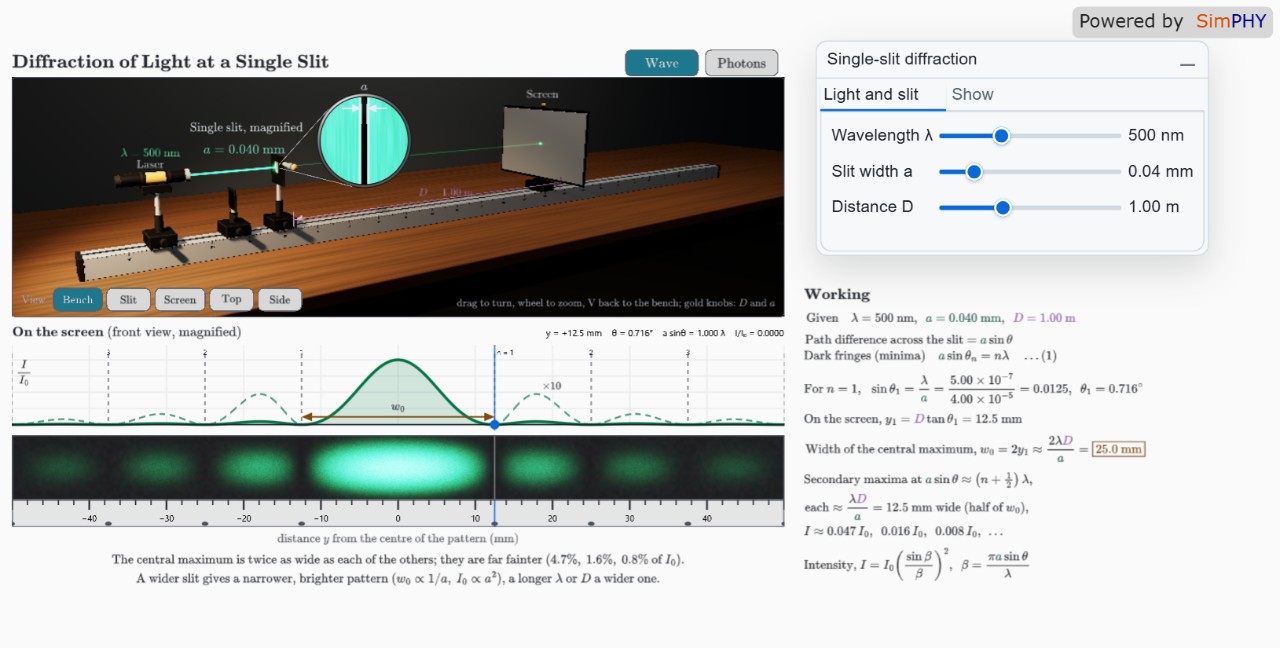
Diffraction of Light at a Single Slit
Wave OpticsExplore how slit width, wavelength, and distance affect the Fraunhofer...
Observe interference and diffraction from a laser through adjustable slits onto a screen and photon behavior.
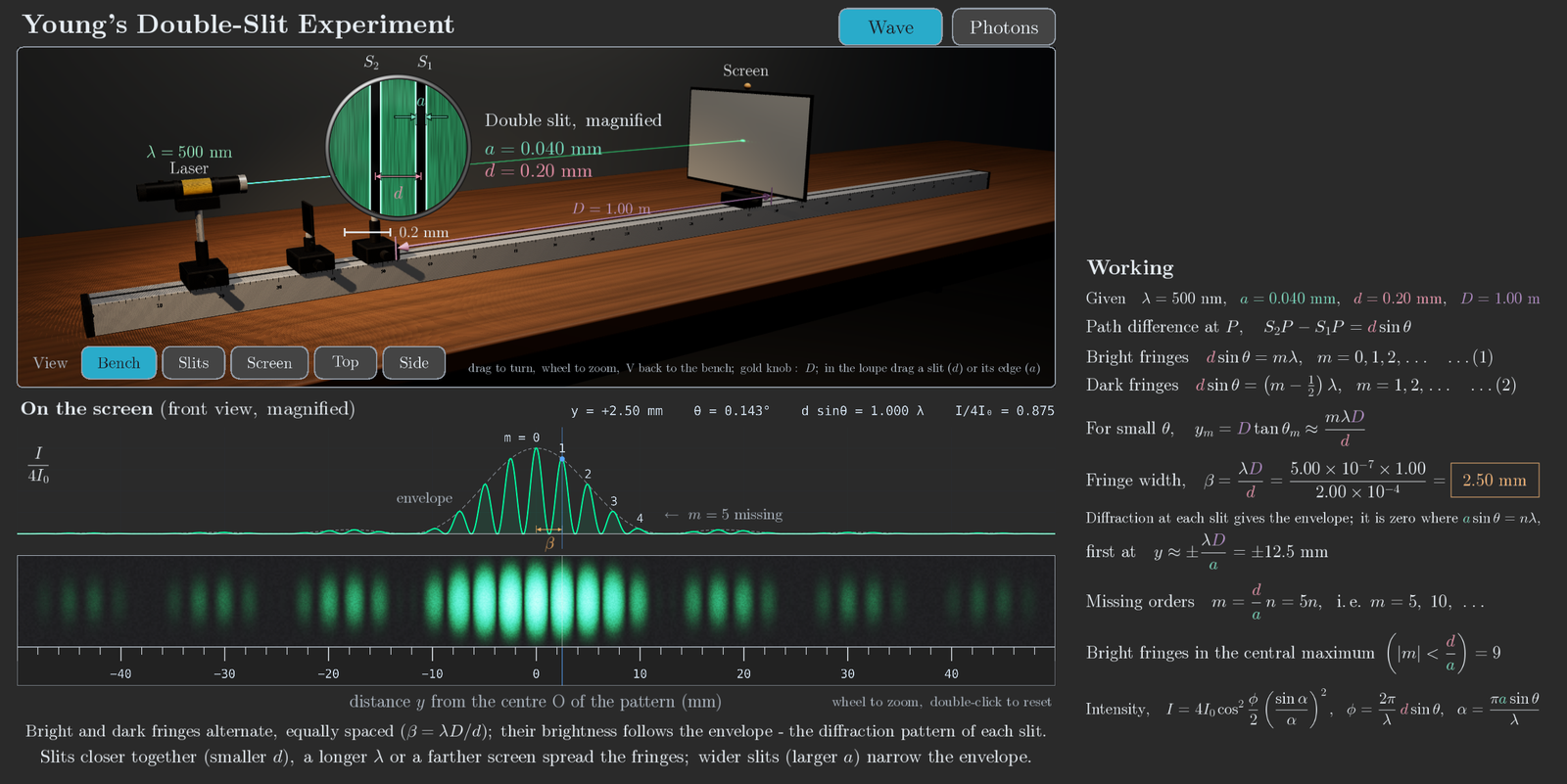
The simulation shows Young’s classic double‑slit set‑up: a laser illuminates two narrow slits of width a separated by distance d, and the resulting pattern falls on a screen a distance D away. Bright and dark fringes arise from the path difference d sinθ, while each slit’s own diffraction creates an envelope that can suppress certain orders.
Students can vary the wavelength (380–750 nm), slit width, slit separation, and screen distance with sliders or by dragging the slits and screen in the 3‑D view. A switch toggles between a continuous wave view and a photon‑by‑photon view, and a clear‑plate button resets the photon pattern. An intensity graph and scale markings update in real time, and numerical read‑outs show fringe position, angle, and intensity.
By exploring how the fringe spacing β = λD/d changes with wavelength and geometry, learners connect the quantitative formulas for interference and diffraction to the visual pattern. They also observe wave‑particle duality as the same setup produces both a smooth intensity distribution and discrete photon impacts, reinforcing concepts of optics and modern physics.
Free
Explore how slit width, wavelength, and distance affect the Fraunhofer...
 Free
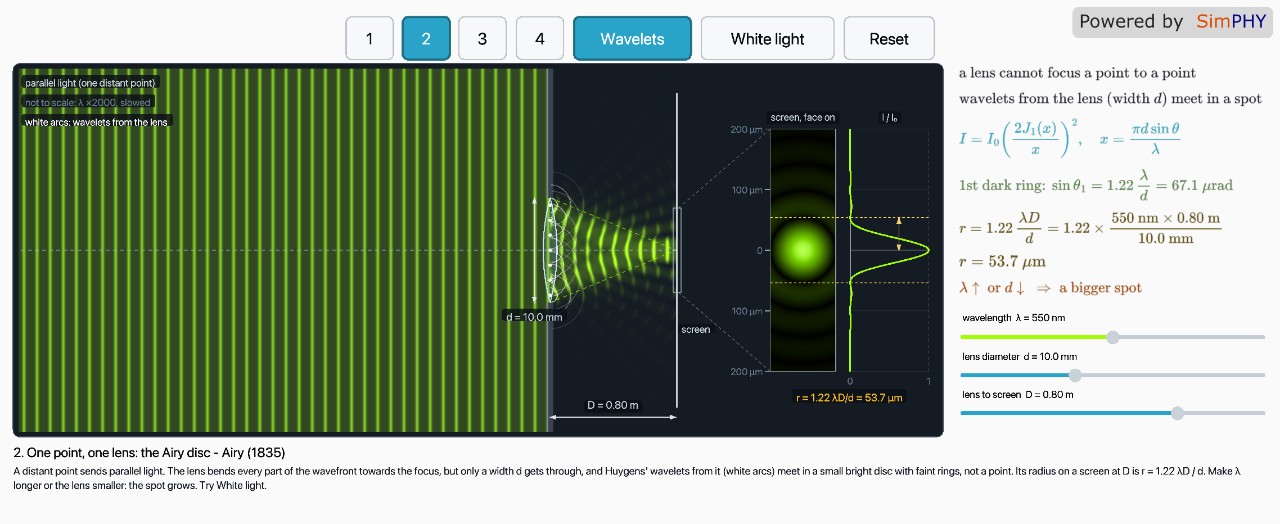
Visualize diffraction’s Airy pattern and apply Rayleigh’s criterion to...
 Free
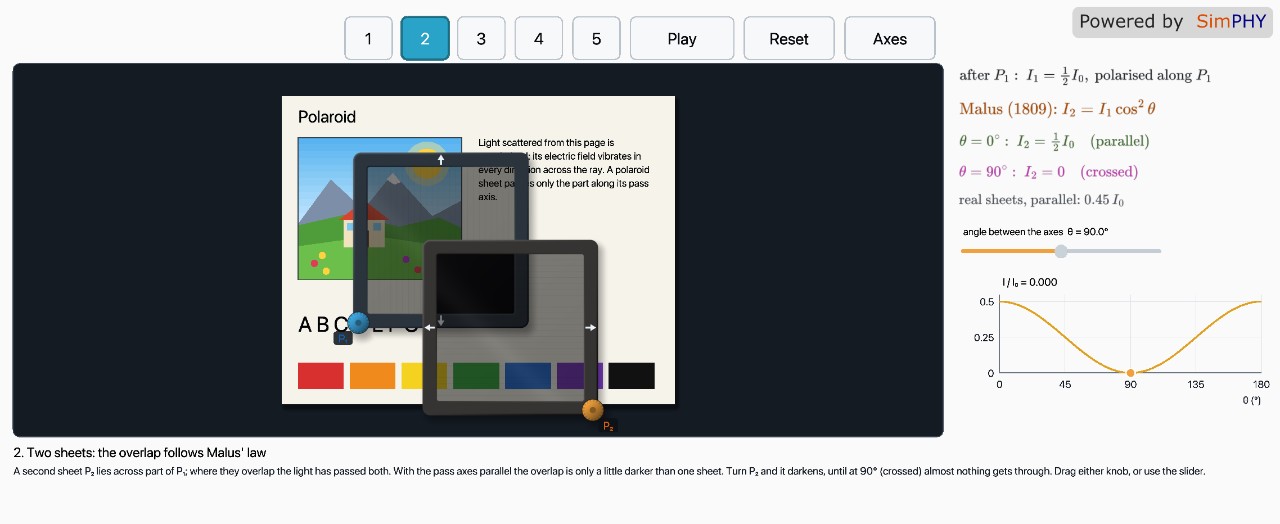
Explore how polarising filters change light intensity, test Malus’ law...
 Free
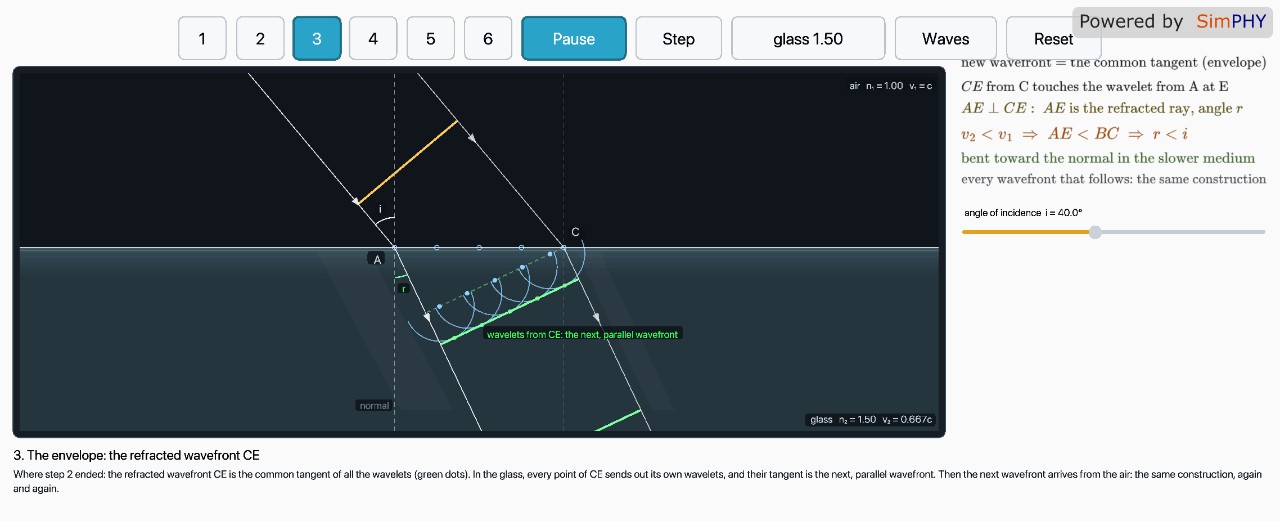
Step through Huygens' principle to watch wavefronts refract, derive Sn...
 Free
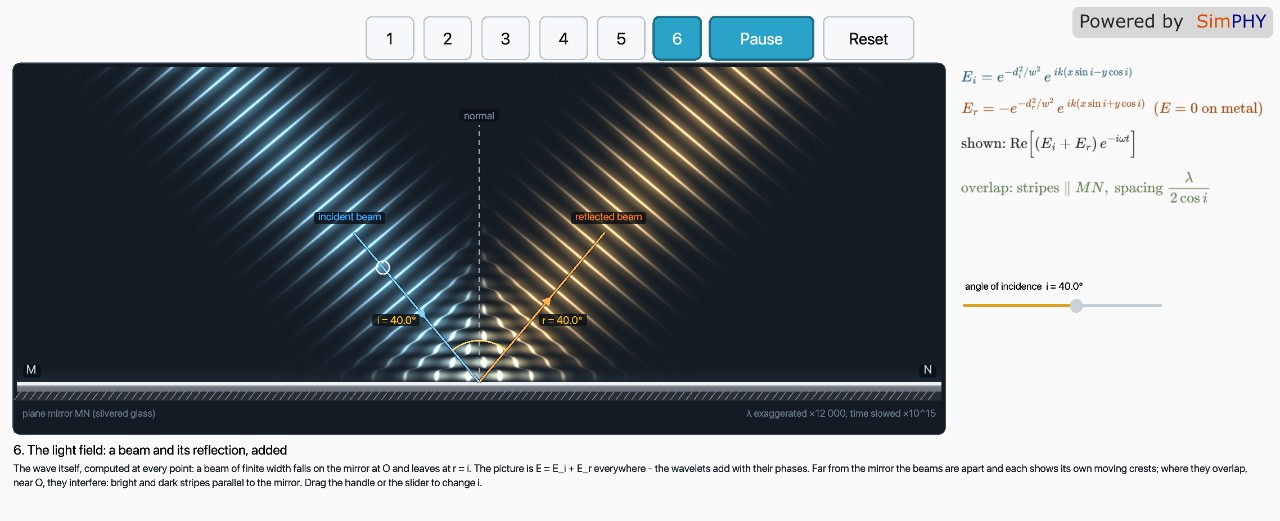
Interactive proof of the law of reflection via Huygens’ principle, wit...
 Free
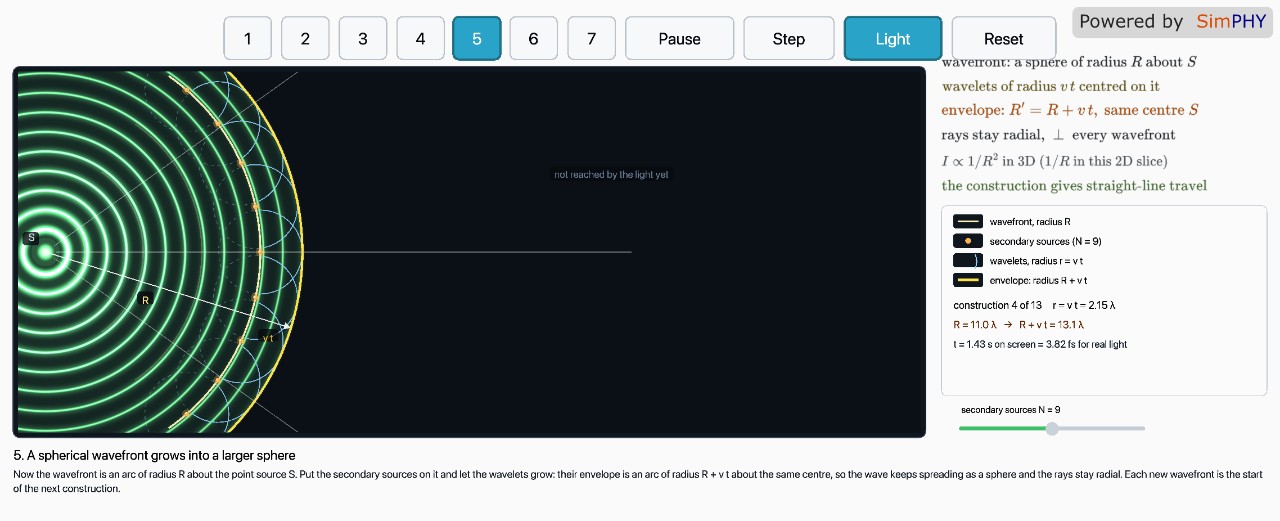
Explore Huygens' principle by building wavefronts from wavelets, adjus...