 Free
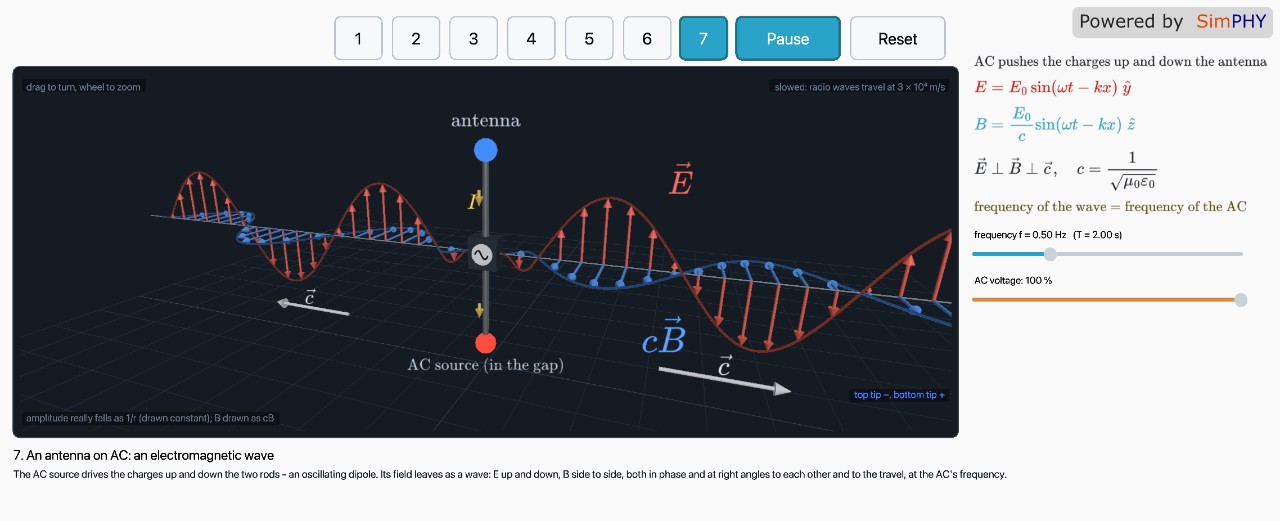
Electromagnetic Wave Production
Wave OpticsExplore how a vibrating charge creates transverse electric and magneti...
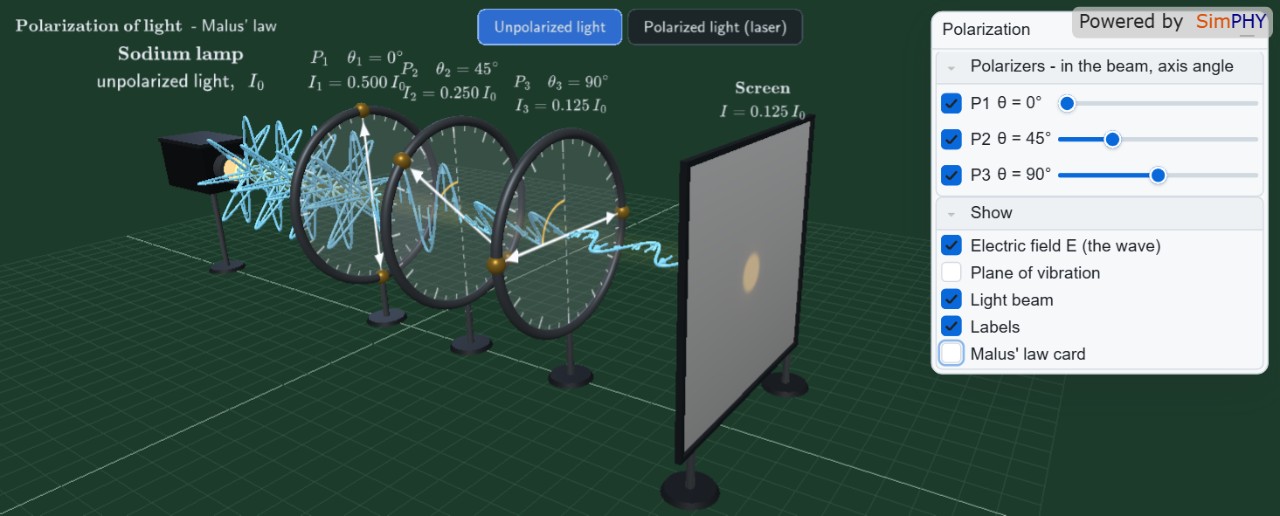
Rotate three polarizers to see how unpolarized or light’s intensity changes, illustrating Malus’s law.
Light is a transverse electromagnetic wave; its electric field vibrates perpendicular to the direction of propagation. Unpolarized light contains vibrations in all directions, while a polarized beam vibrates in a single plane. When light passes through a polarizer, only the component of the electric field aligned with the polarizer’s transmission axis is transmitted, and the transmitted intensity follows Malus’s law I=I₀cos²φ, where φ is the angle between the incident polarization and the axis.
In this 3‑D simulation you can choose an unpolarized sodium lamp or a vertically polarized laser as the source. Each of the three polarizers can be rotated by dragging its rim, using the gold knob, or adjusting the slider in the dialog, and they can be removed from the beam. The electric‑field vectors, the vibrating plane, the beam intensity, and the illuminated patch on a ground‑glass screen are all visualized. A card at the lower left continuously calculates the intensity after each polarizer using Malus’s law.
Students can explore how changing the angles of the polarizers affects the transmitted intensity, discover why crossed polarizers block light, and see how inserting a third polarizer at 45° restores some illumination. The simulation reinforces concepts of polarization, vector decomposition of light, and quantitative application of Malus’s law.
Free
Explore how a vibrating charge creates transverse electric and magneti...
 Free
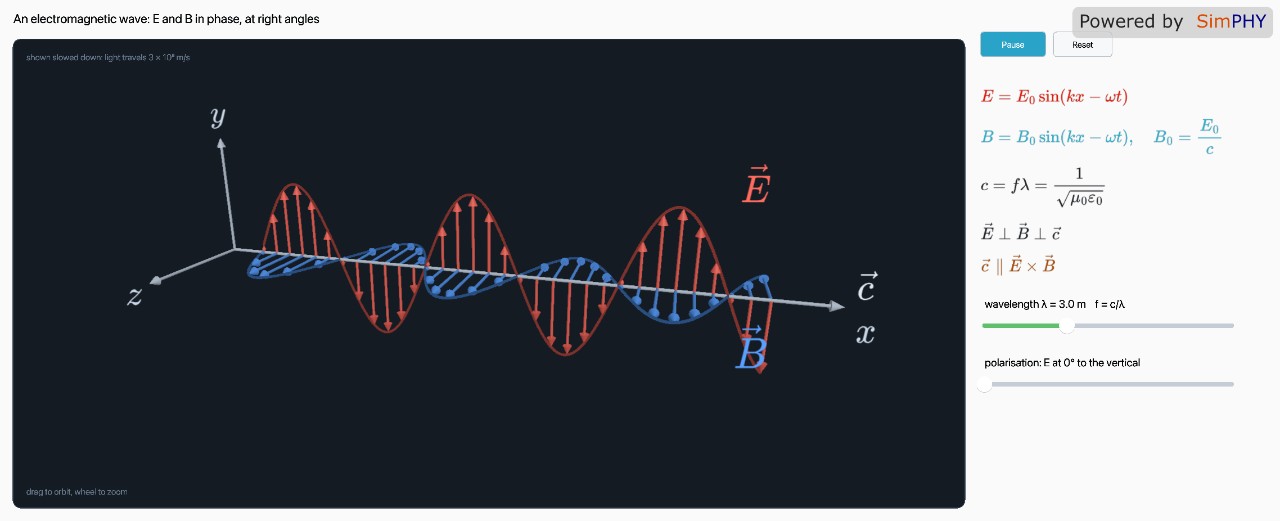
Visualize an electromagnetic wave, see electric and magnetic fields an...
 Free
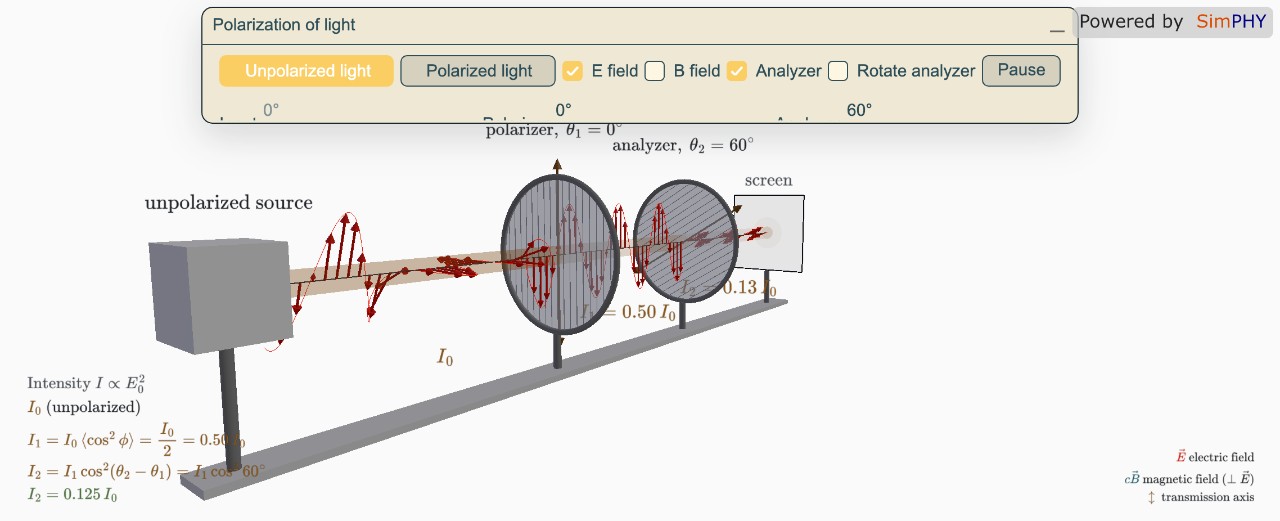
Visualize how a polarizer and analyzer affect polarized and unpolarize...
 Free
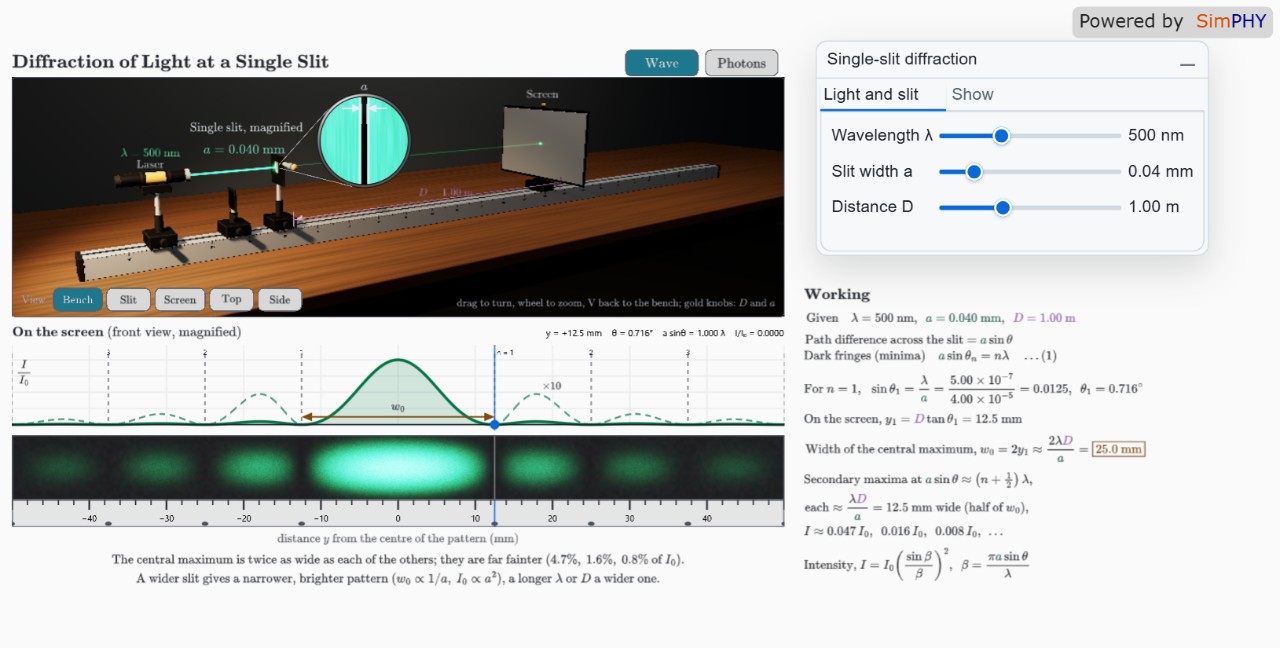
Explore how slit width, wavelength, and distance affect the Fraunhofer...
 Free
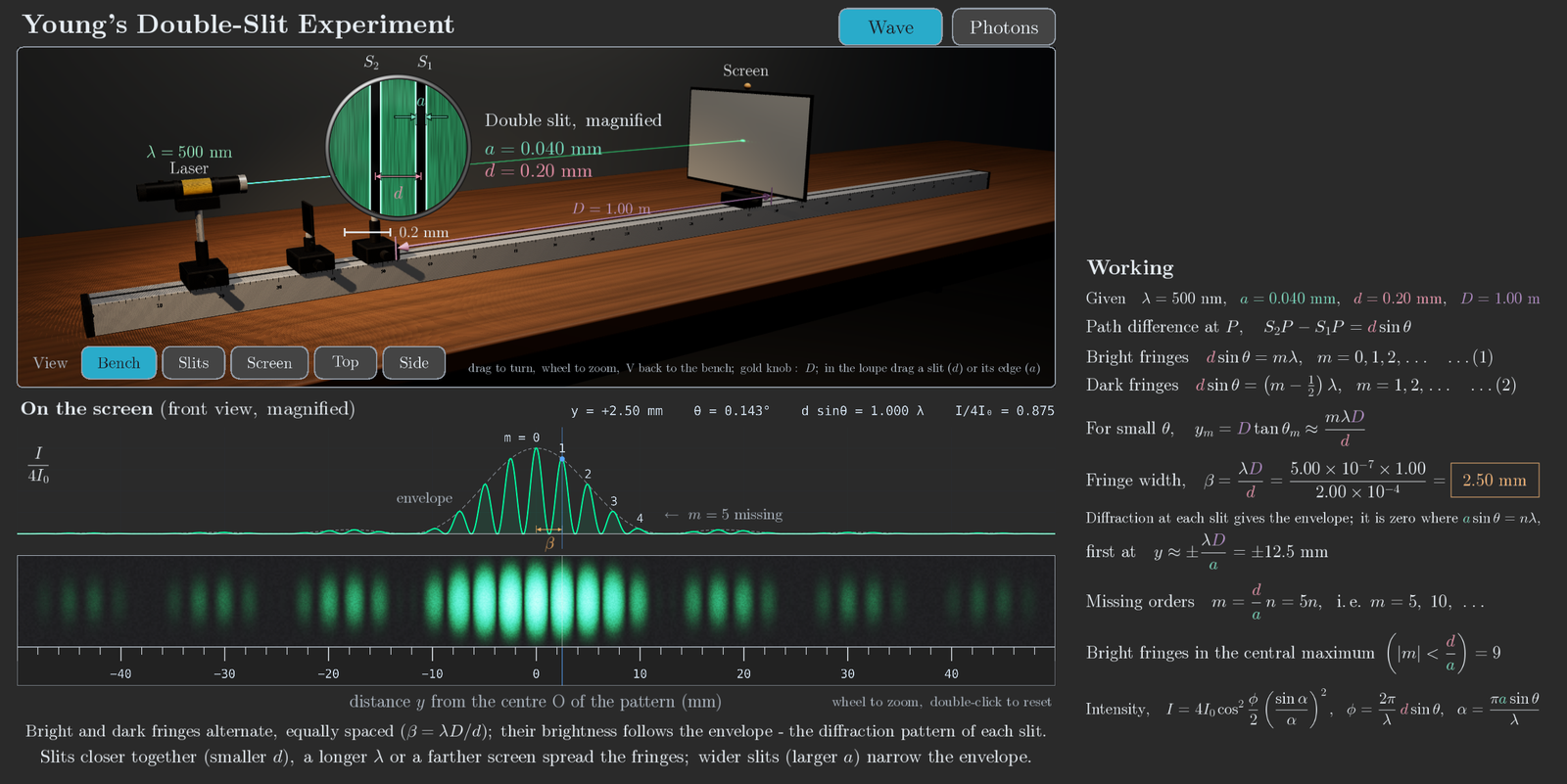
Observe interference and diffraction from a laser through adjustable s...
 Free
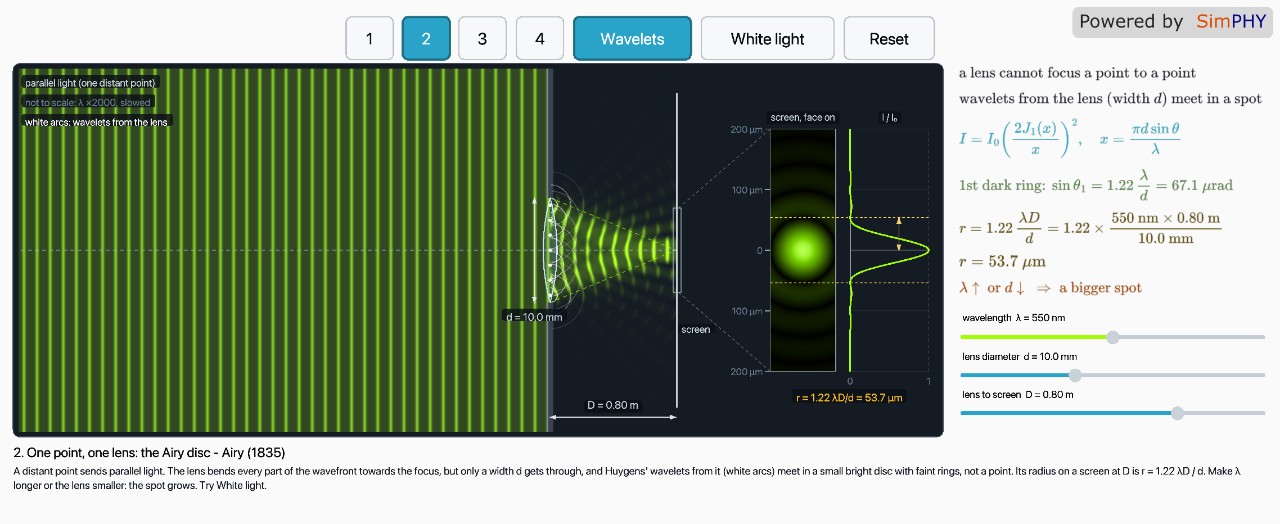
Visualize diffraction’s Airy pattern and apply Rayleigh’s criterion to...