 Free
Thermal Expansion – Five Experiments
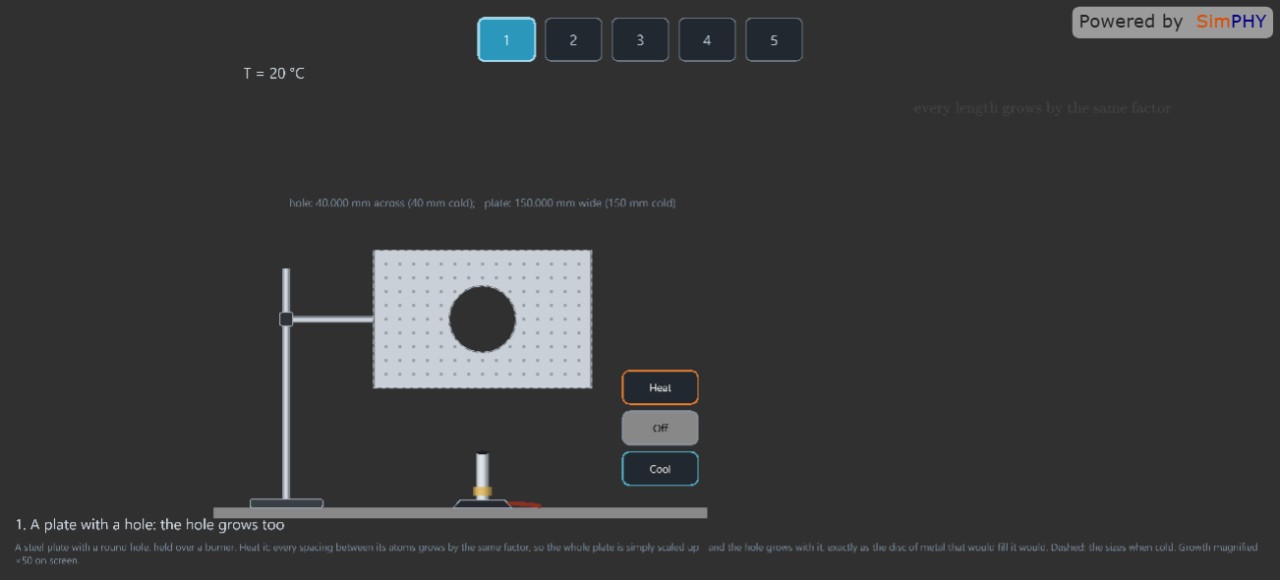
Fluid MechanicsExplore five thermal‑expansion demos: metal plate, glass tube, ball‑ri...
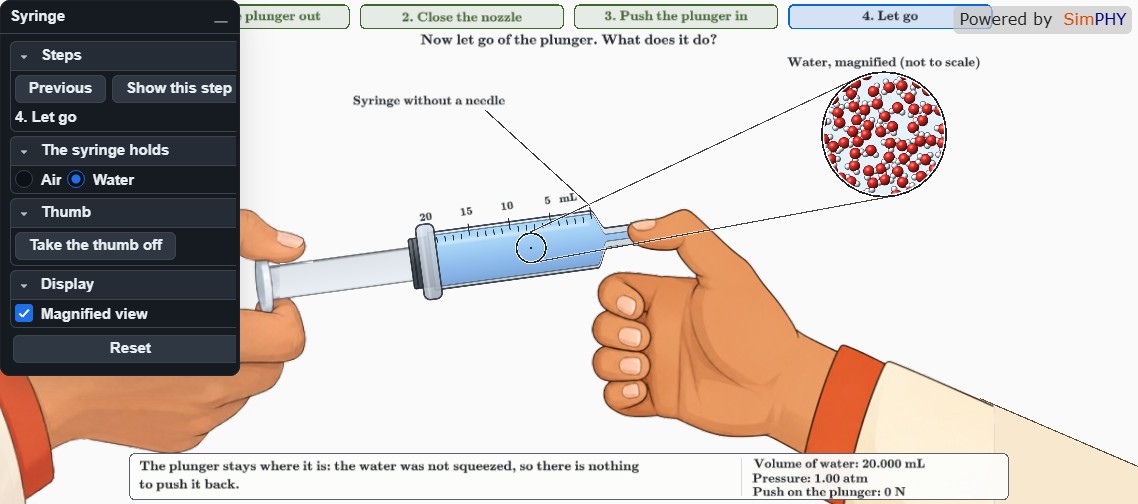
Pull the plunger, seal the tip, and see air compress while water remains unchanged, showing compressibility.
This simulation demonstrates the fundamental difference between gases and liquids in how they respond to pressure. Air particles are far apart, leaving empty space that can be reduced, while water molecules are in close contact and resist volume change. The magnified view highlights the particle spacing that underlies compressibility.
Students pull the plunger to the 20 mL mark, close the nozzle with a thumb, and slowly push the plunger in. They can observe the air being squeezed and the plunger springing back, then repeat the same steps with the syringe filled with water, noting the lack of movement. The visual comparison of particle models helps link macroscopic behavior to microscopic structure.
By interacting with the simulation, learners grasp why gases can be compressed, how pressure relates to volume, and why liquids are effectively incompressible. The activity reinforces concepts in fluid mechanics and thermodynamics, such as pressure‑volume work and the molecular basis of material properties.
Free
Explore five thermal‑expansion demos: metal plate, glass tube, ball‑ri...
 Free
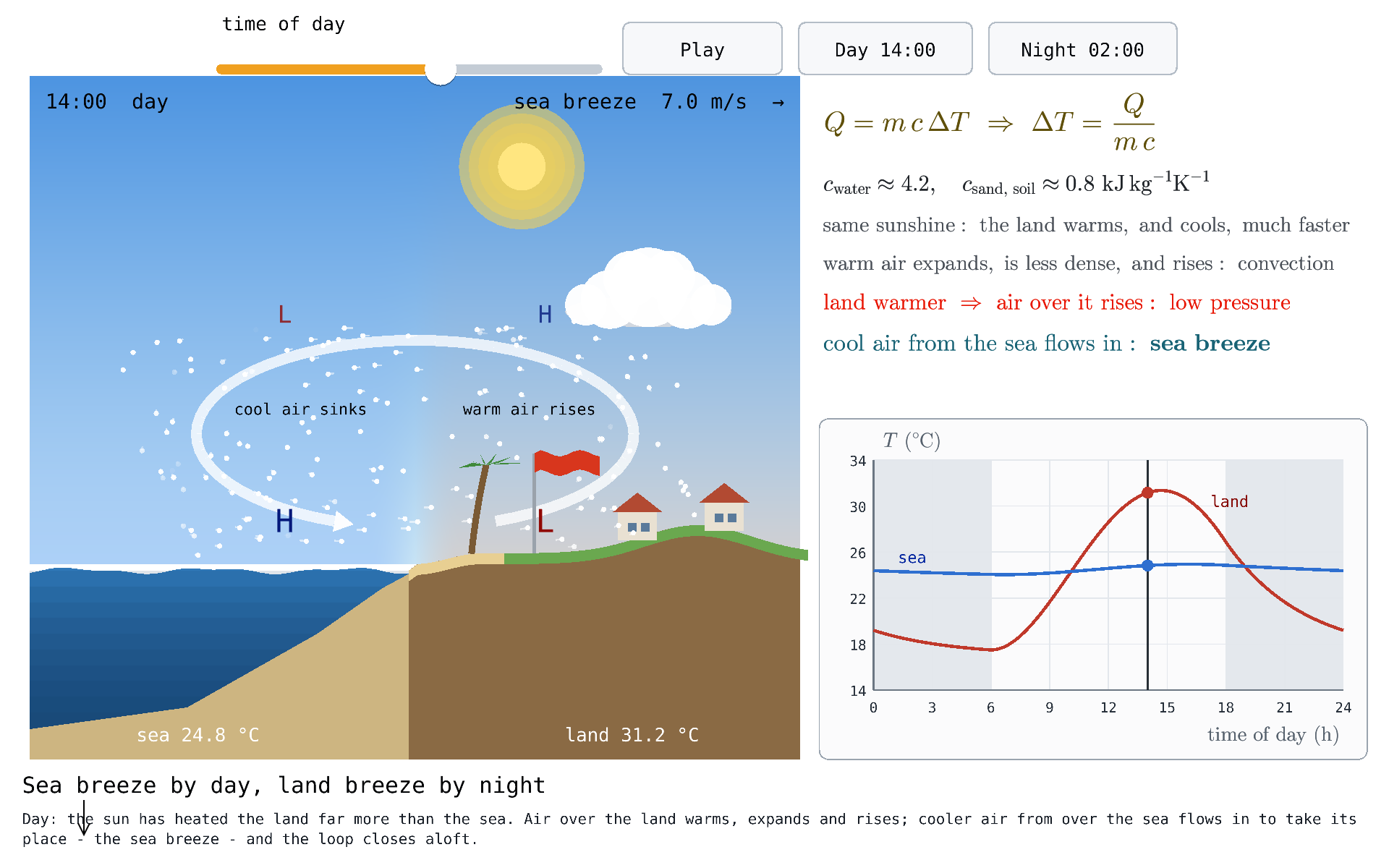
Observe how differing heat capacities of land and sea create daytime s...
 Free
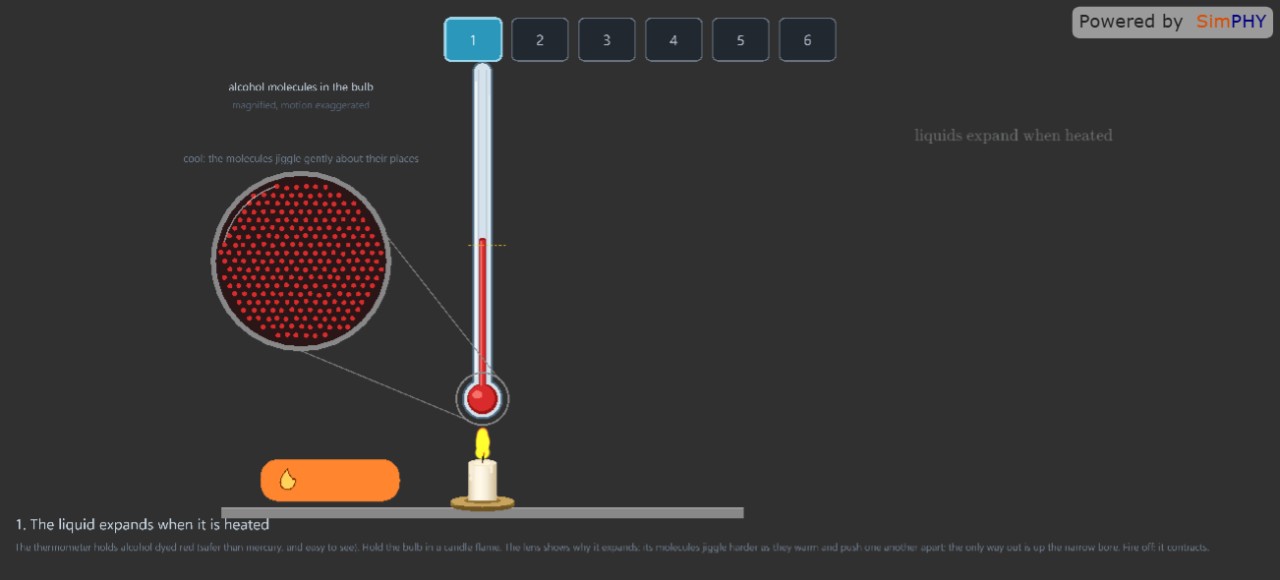
Build and use a red‑alcohol glass thermometer, watching liquid expansi...
 Free
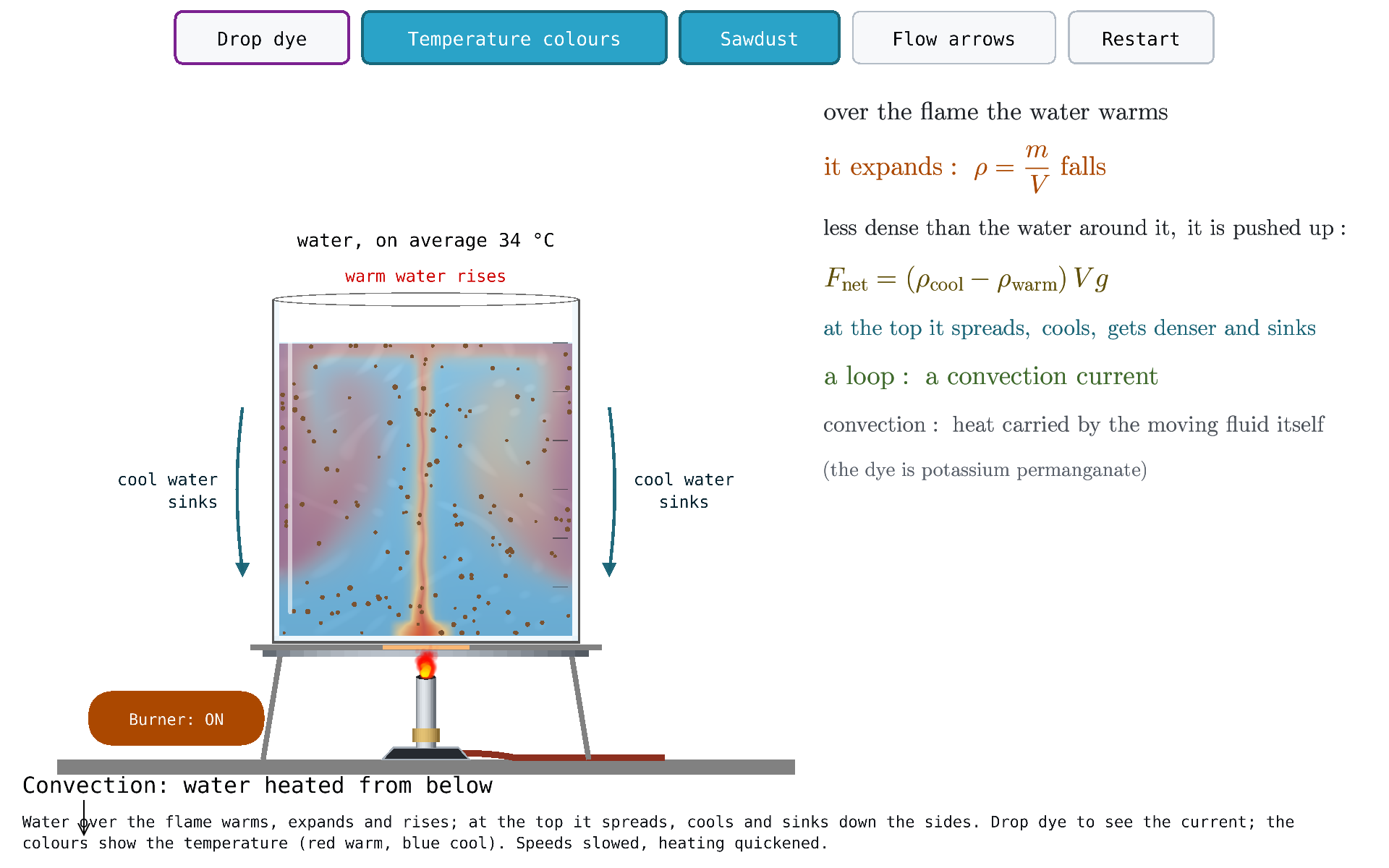
Water heated from below forms buoyancy‑driven convection loops, shown...
 Free
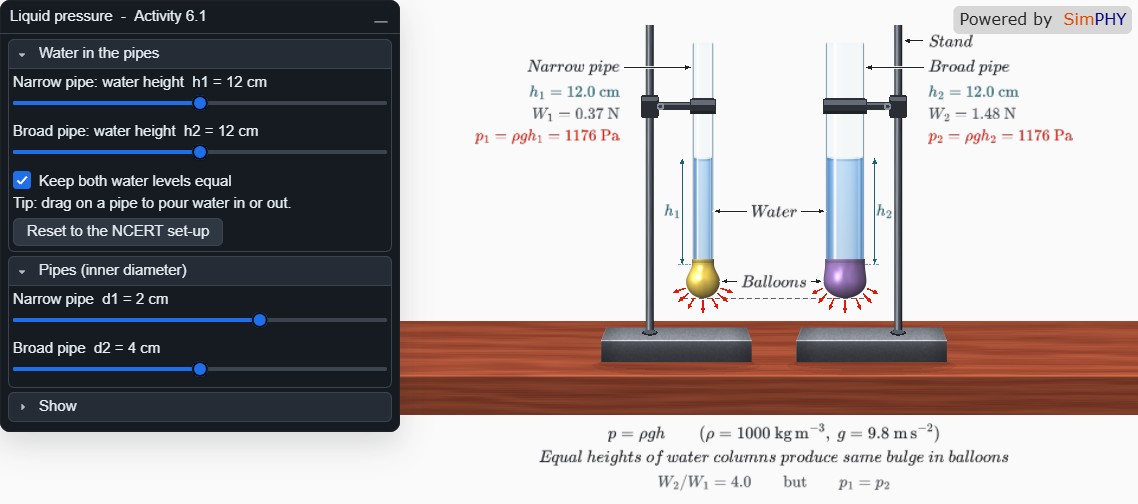
Two pipes of different widths fill with water, showing balloon bulge d...
 Free
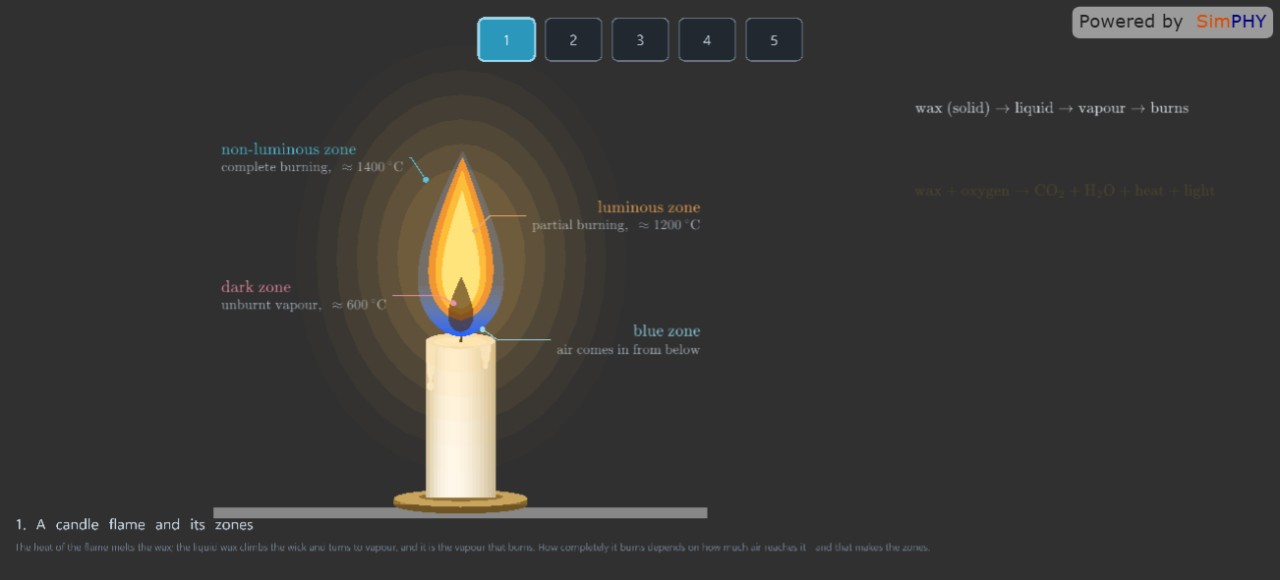
Explore the distinct zones of a candle flame—dark, luminous, outer, an...