 Free
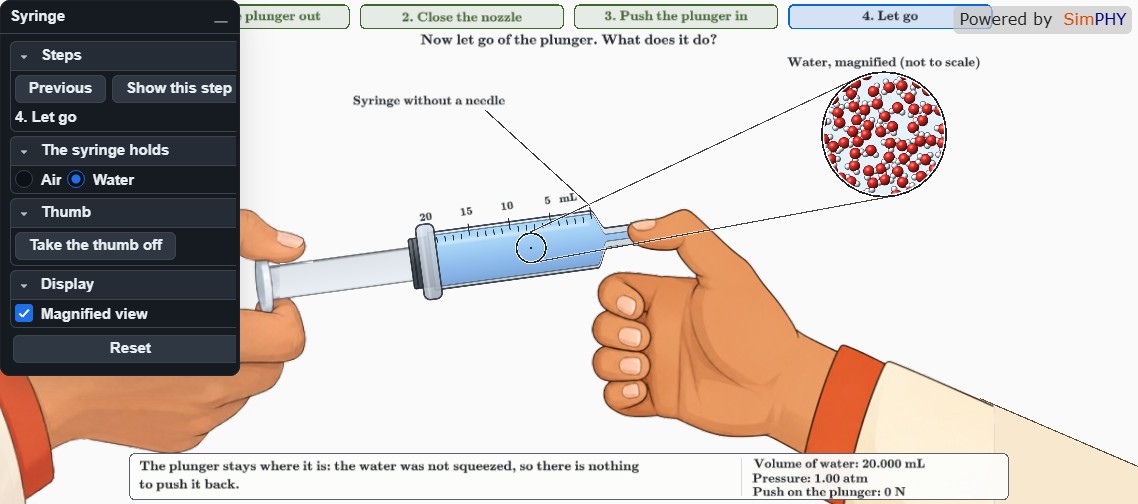
Compressing Air and Water in a Syringe
Fluid MechanicsPull the plunger, seal the tip, and see air compress while water remai...
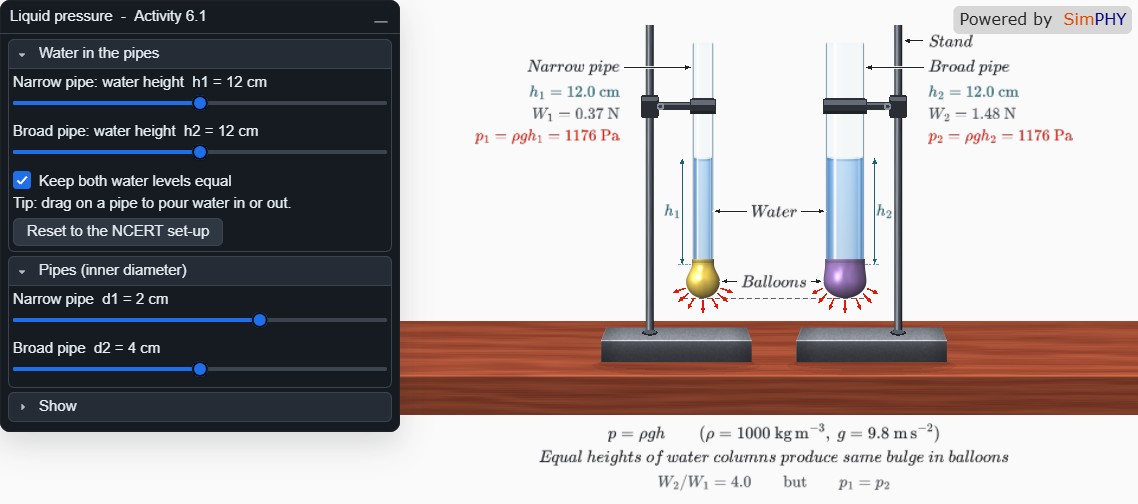
Two pipes of different widths fill with water, showing balloon bulge depends only on water height, not volume.
The simulation illustrates the hydrostatic principle that liquid pressure at a depth depends on the height of the column above it (p = ρ g h), not on the total amount of liquid or the container’s width. Water of density 1000 kg/m³ exerts a gauge pressure that pushes equally on the rubber balloons at the pipe bottoms.
Two transparent pipes of equal length but different inner diameters are clamped on stands, each closed by an identical elastic balloon. As water is added, the balloons inflate. When the water columns in both pipes reach the same height, the balloons bulge by the same amount, demonstrating that pressure is a function of depth alone. Students can watch how changing the water height alters the balloon’s expansion and compare the effect across the two pipe widths.
By observing the relationship between column height, pressure, and balloon deformation, learners connect the concepts of pressure, force, and area (F = pA). The activity reinforces the idea that a wider pipe carries a larger weight of water but also a larger area, resulting in the same pressure as a narrower pipe at equal height. This reinforces core fluid‑mechanics ideas taught in middle‑school science.
Free
Pull the plunger, seal the tip, and see air compress while water remai...
 Free
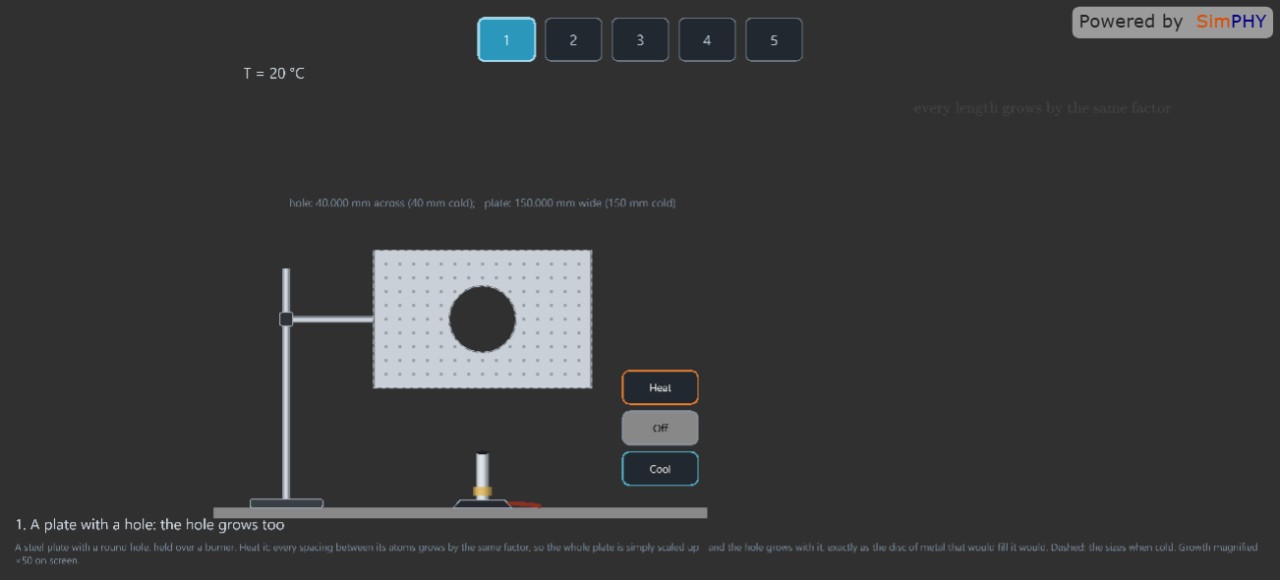
Explore five thermal‑expansion demos: metal plate, glass tube, ball‑ri...
 Free
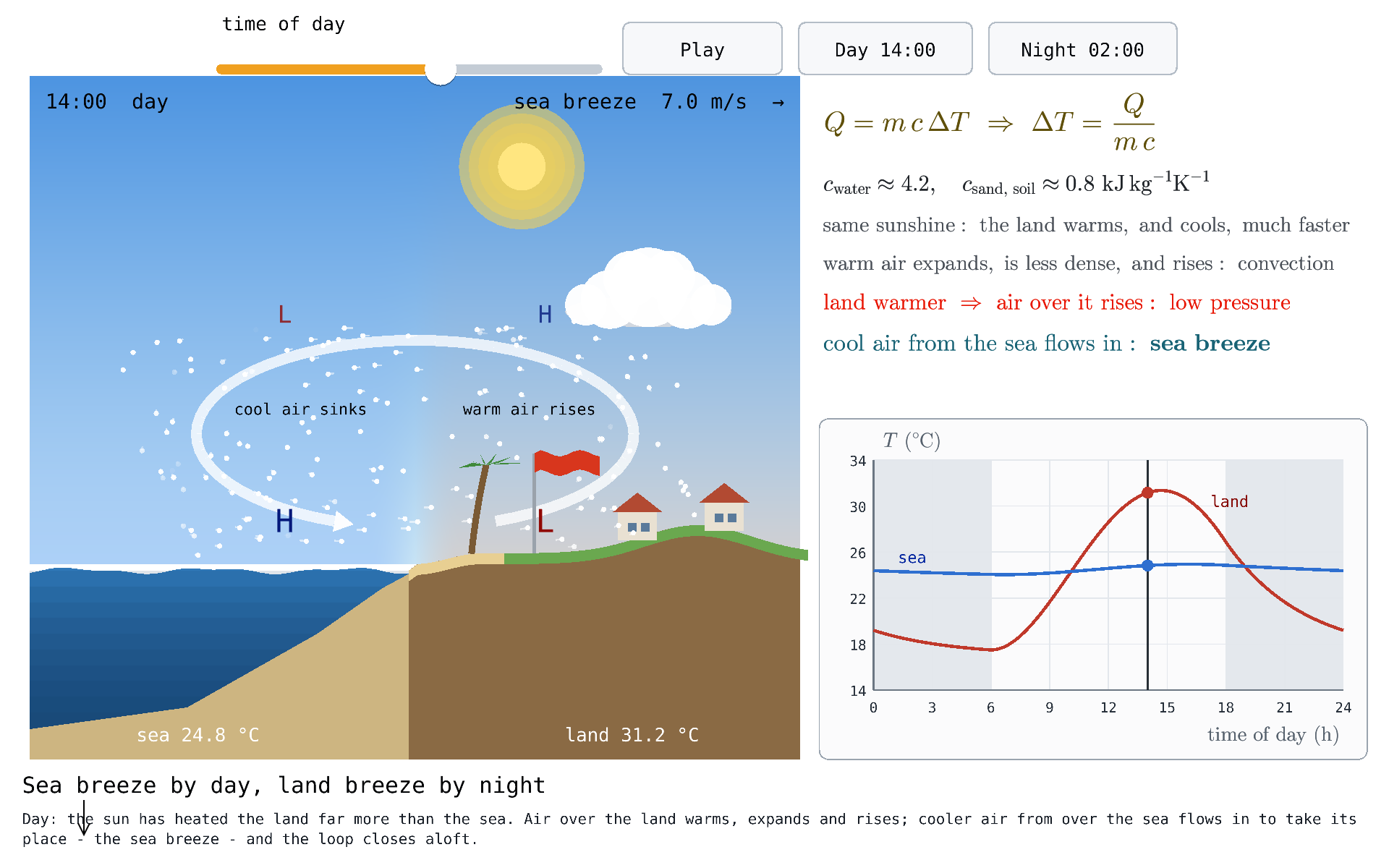
Observe how differing heat capacities of land and sea create daytime s...
 Free
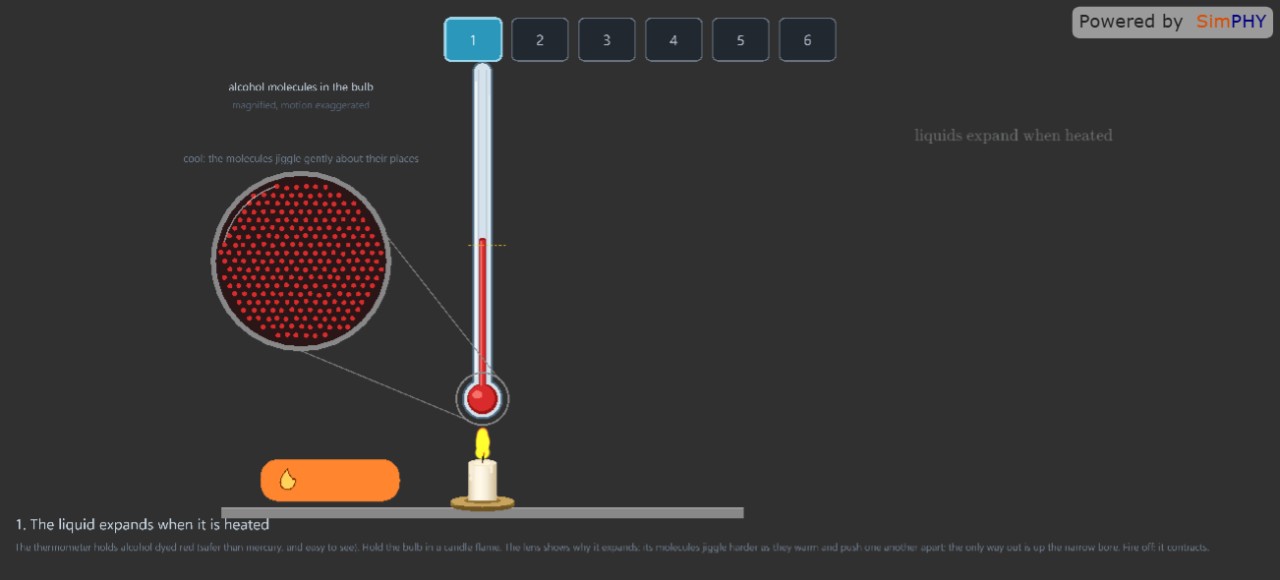
Build and use a red‑alcohol glass thermometer, watching liquid expansi...
 Free
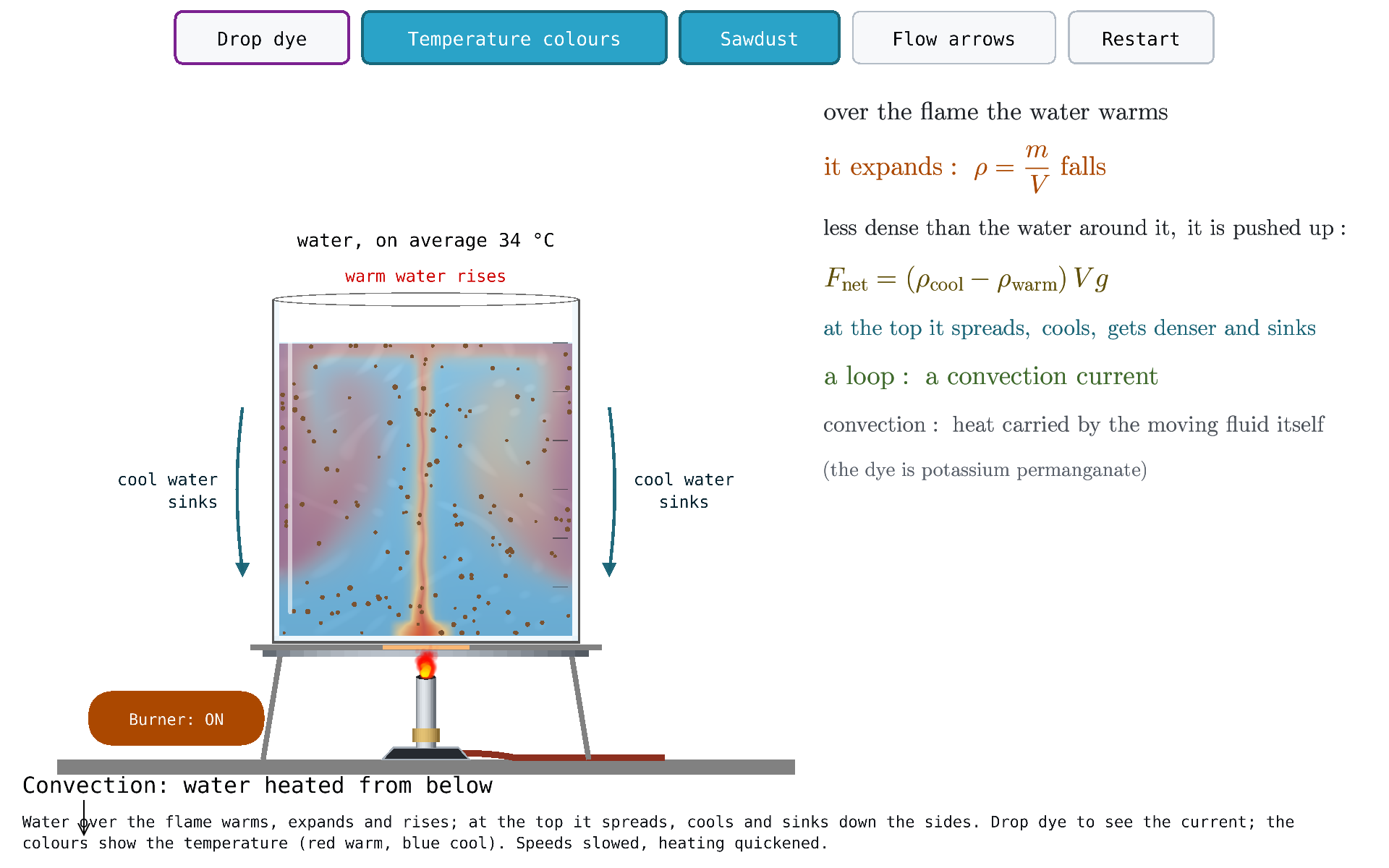
Water heated from below forms buoyancy‑driven convection loops, shown...
 Free
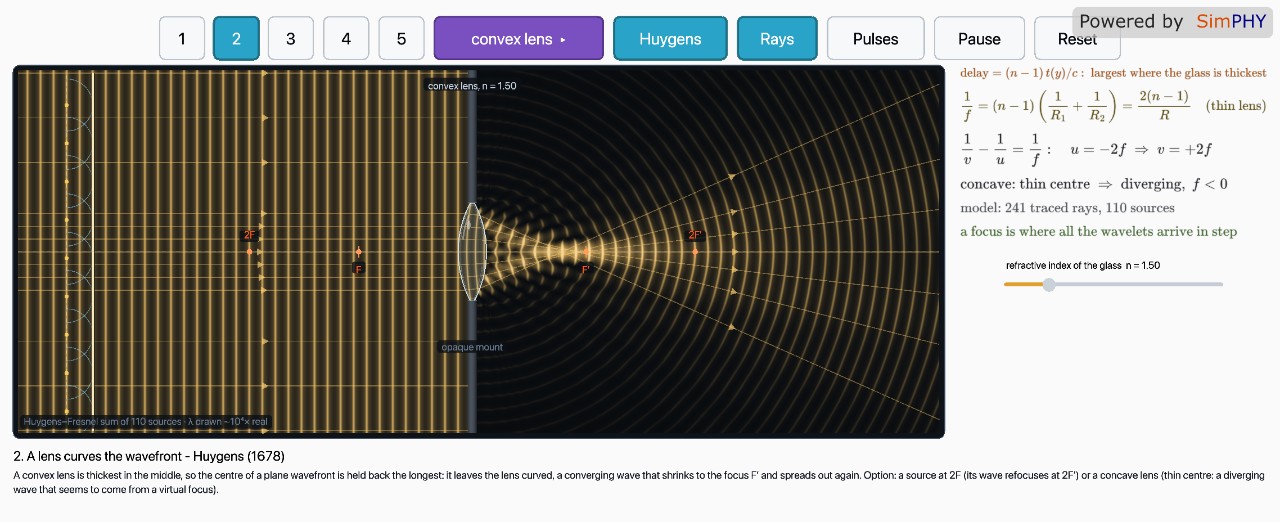
Explore Huygens’ construction and ray behavior as wavefronts pass thro...