 Free
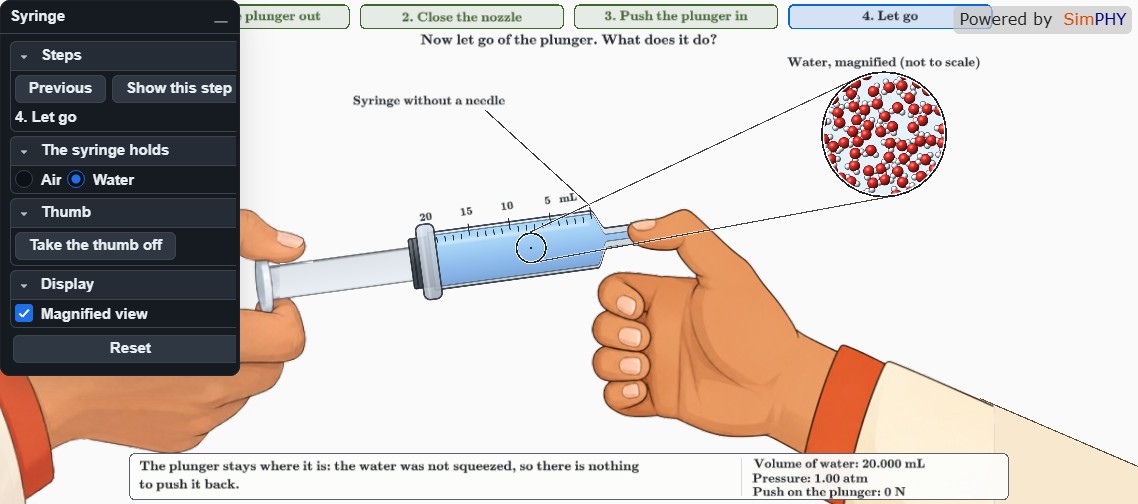
Compressing Air and Water in a Syringe
Fluid MechanicsPull the plunger, seal the tip, and see air compress while water remai...
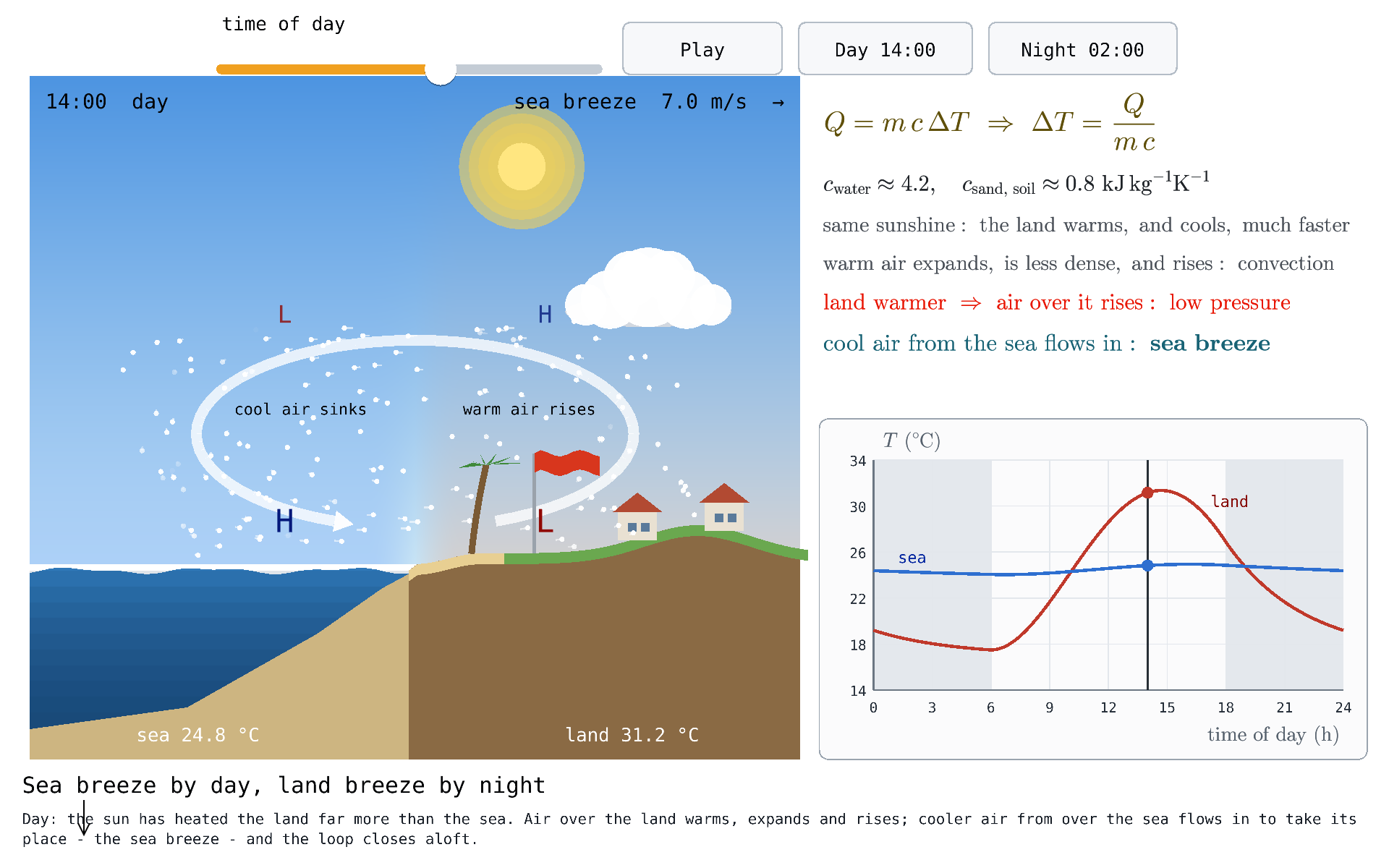
Observe how differing heat capacities of land and sea create daytime sea breezes and nighttime land breezes.
The simulation shows a cross‑section of a coastline where land and sea receive the same sunlight, but water’s specific heat is about five times larger than that of soil. This causes the land to heat up quickly by day and cool rapidly at night, while the sea temperature changes only slightly. The resulting temperature differences create pressure gradients that drive air circulation: warm air over land rises, drawing cool sea air inland as a sea breeze, and the reverse occurs at night as a land breeze.
Students can run the 24‑hour cycle automatically or control it with the time‑of‑day slider, Play/Pause button, and Day/Night shortcuts (D and N keys). The graph plots land and sea temperatures over time, and visual markers show air parcels, pressure highs and lows, clouds, and a flag that responds to the wind. By stepping forward with the arrow keys, learners can examine specific moments such as the peak afternoon breeze or the calm early morning.
Through this model, learners explore concepts of specific heat, thermal expansion, pressure‑driven flow, and basic convection. They see how thermodynamic principles translate into real‑world weather phenomena and gain insight into fluid‑mechanics behavior of atmospheric breezes.
Free
Pull the plunger, seal the tip, and see air compress while water remai...
 Free
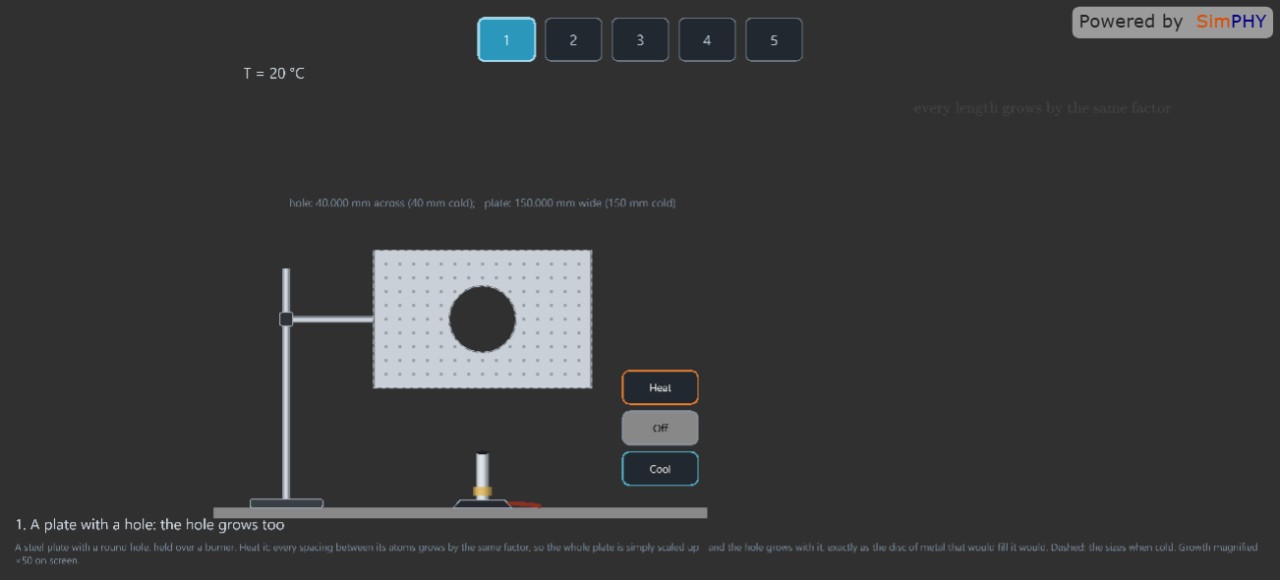
Explore five thermal‑expansion demos: metal plate, glass tube, ball‑ri...
 Free
Build and use a red‑alcohol glass thermometer, watching liquid expansi...
 Free
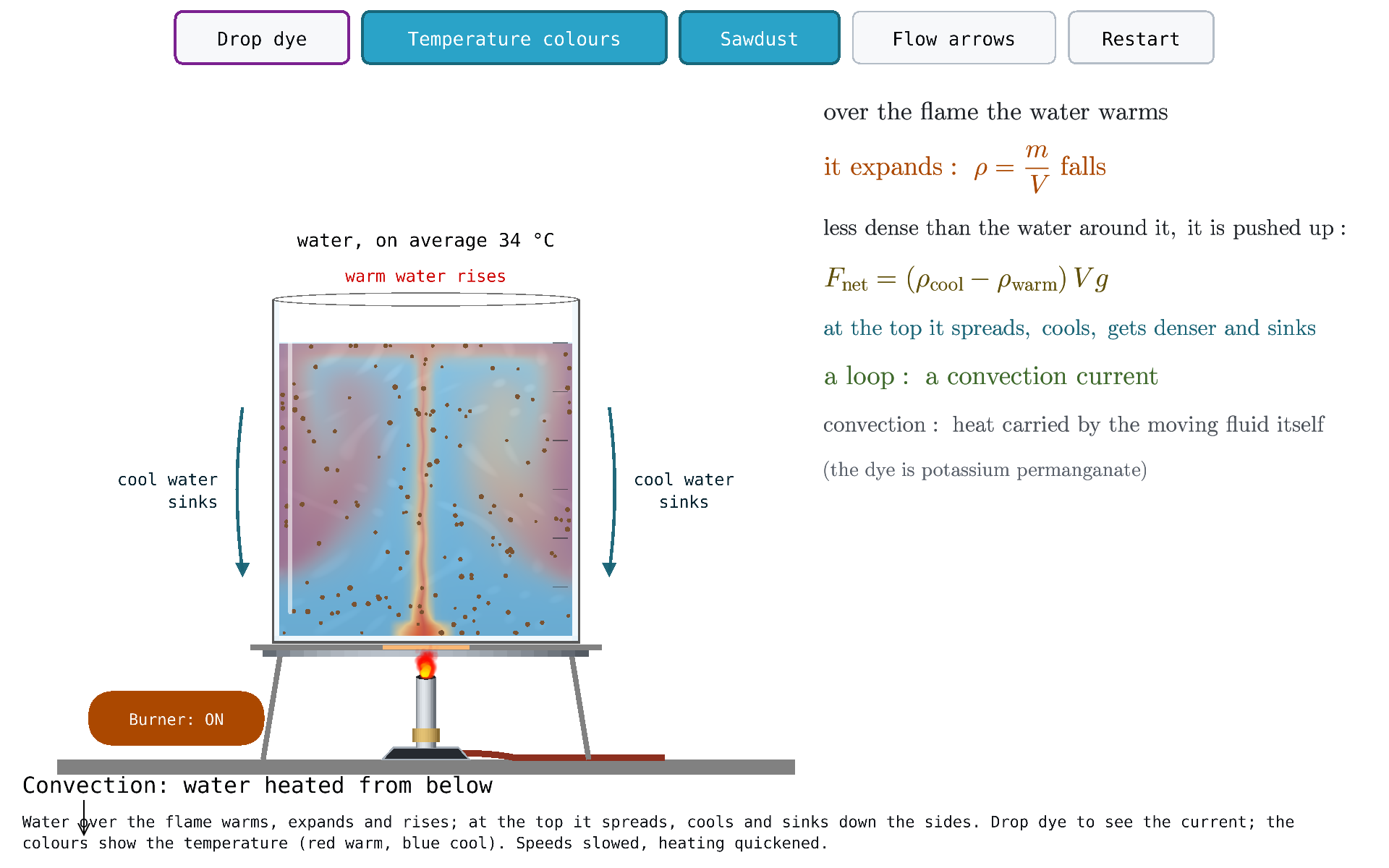
Water heated from below forms buoyancy‑driven convection loops, shown...
 Free
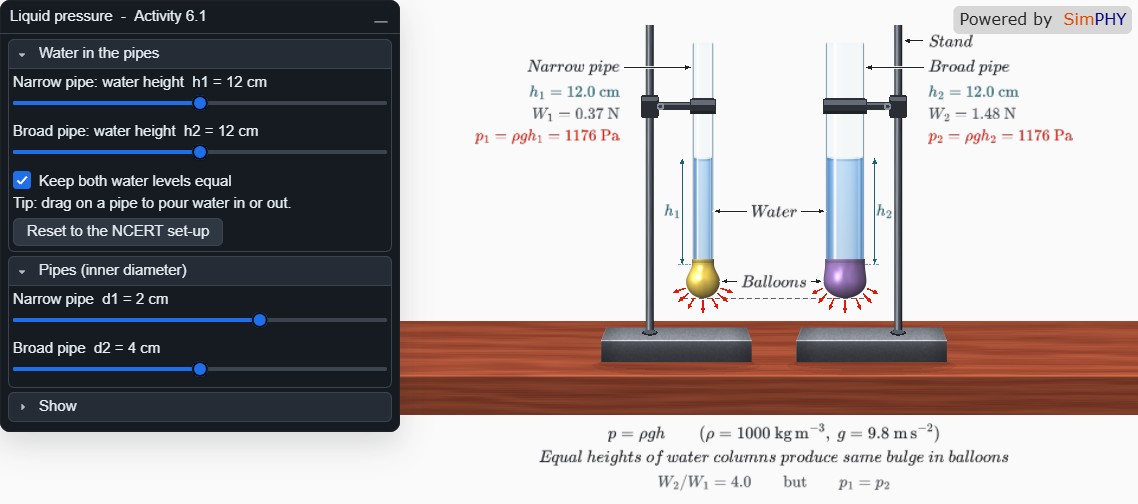
Two pipes of different widths fill with water, showing balloon bulge d...
 Free
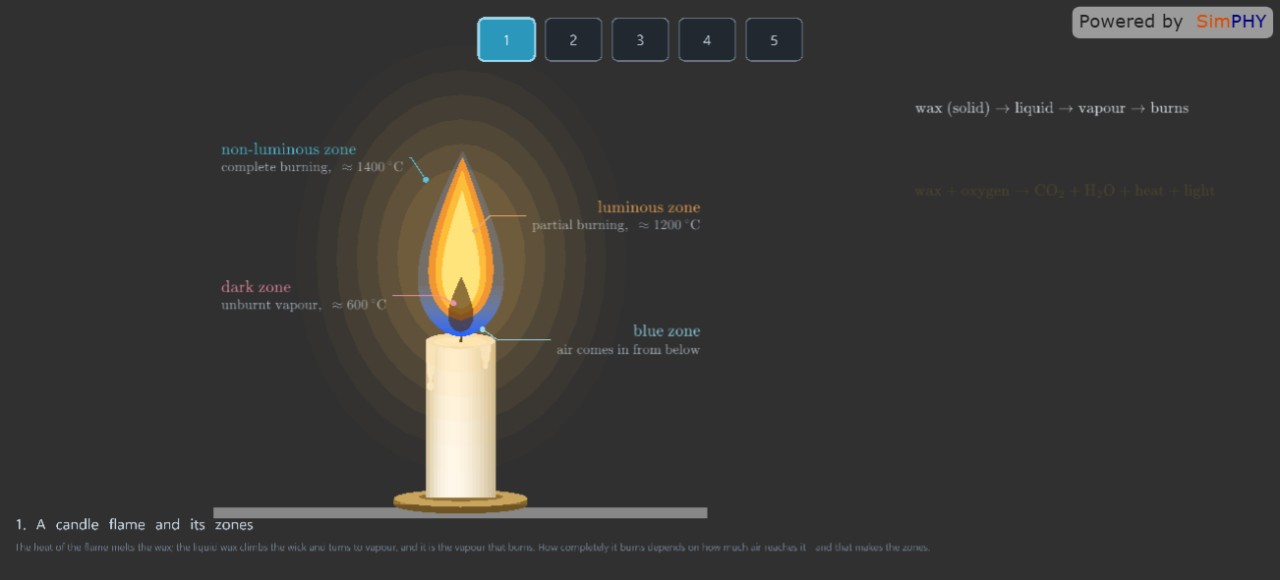
Explore the distinct zones of a candle flame—dark, luminous, outer, an...