 Free
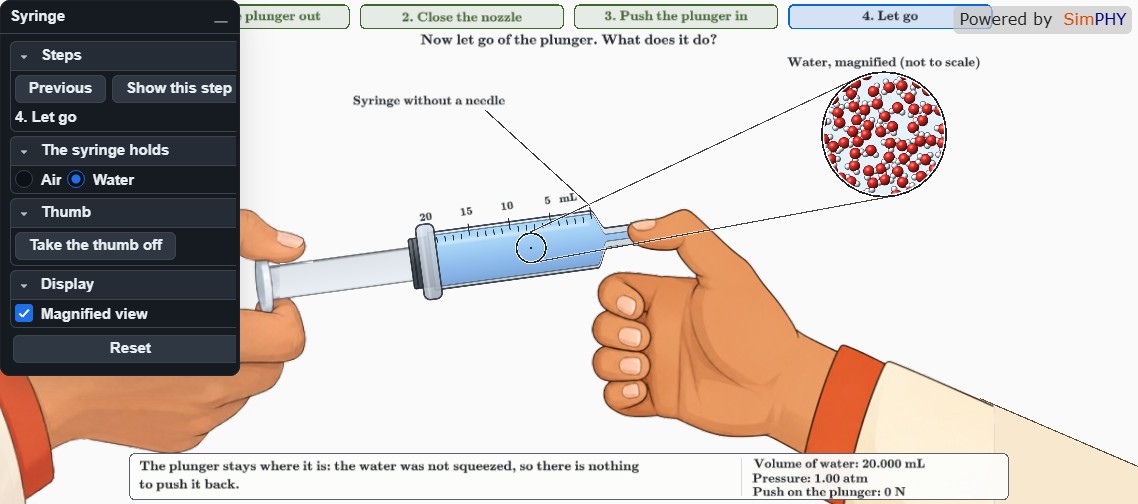
Compressing Air and Water in a Syringe
Fluid MechanicsPull the plunger, seal the tip, and see air compress while water remai...
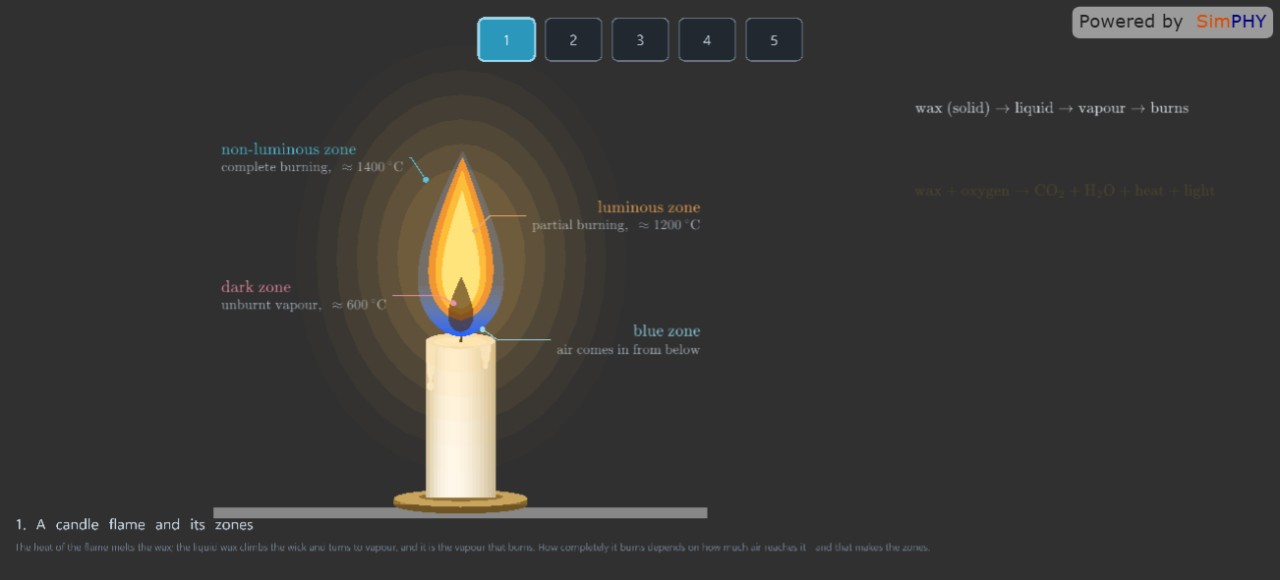
Explore the distinct zones of a candle flame—dark, luminous, outer, and blue—via step‑by‑step experiments.
A candle flame consists of several concentric zones that differ in temperature, colour and the completeness of combustion. The innermost dark zone contains unburnt wax vapour, the luminous yellow zone shows incomplete combustion with glowing carbon particles, the outer non‑luminous zone is the hottest where combustion is complete, and the blue base zone also burns completely with ample oxygen.
Students step through the zones with the numbered buttons or left/right arrow keys. Each step adds a classic experiment beside the flame – a glass tube that draws vapour out, a blackened glass plate that records soot, and a copper wire that glows red in the hottest region – and the board displays an explanation.
By observing the colour, temperature and the experimental evidence, learners see how oxygen availability controls combustion efficiency, why the flame emits light, and how temperature varies within a simple heat source.
Free
Pull the plunger, seal the tip, and see air compress while water remai...
 Free
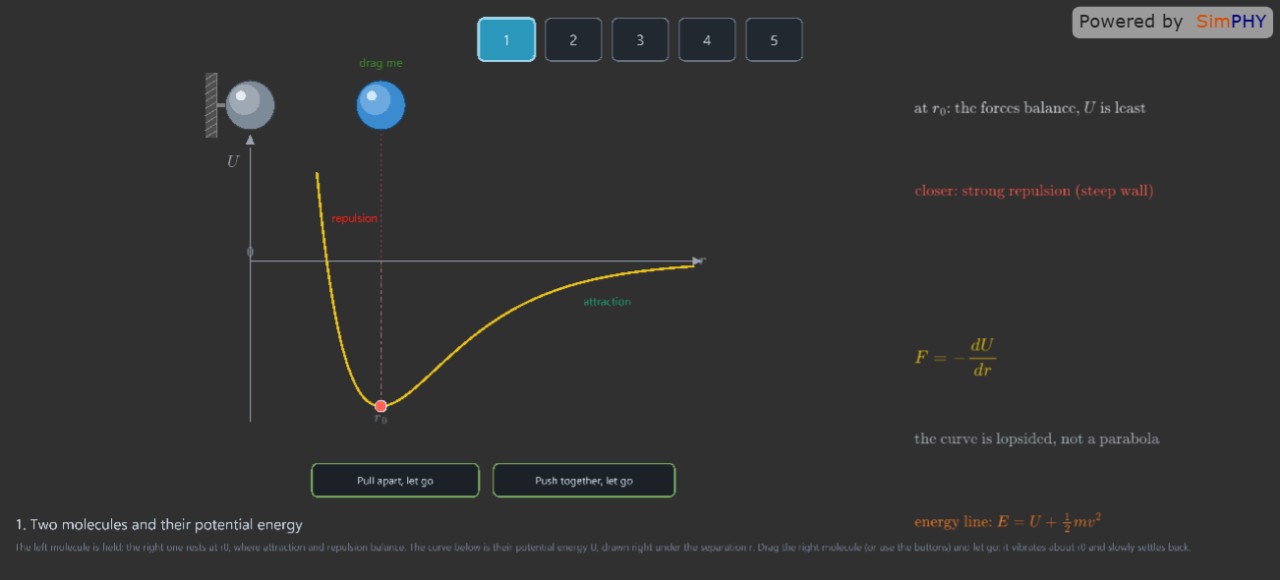
Watch how anharmonic molecular forces cause solids to expand with temp...
 Free
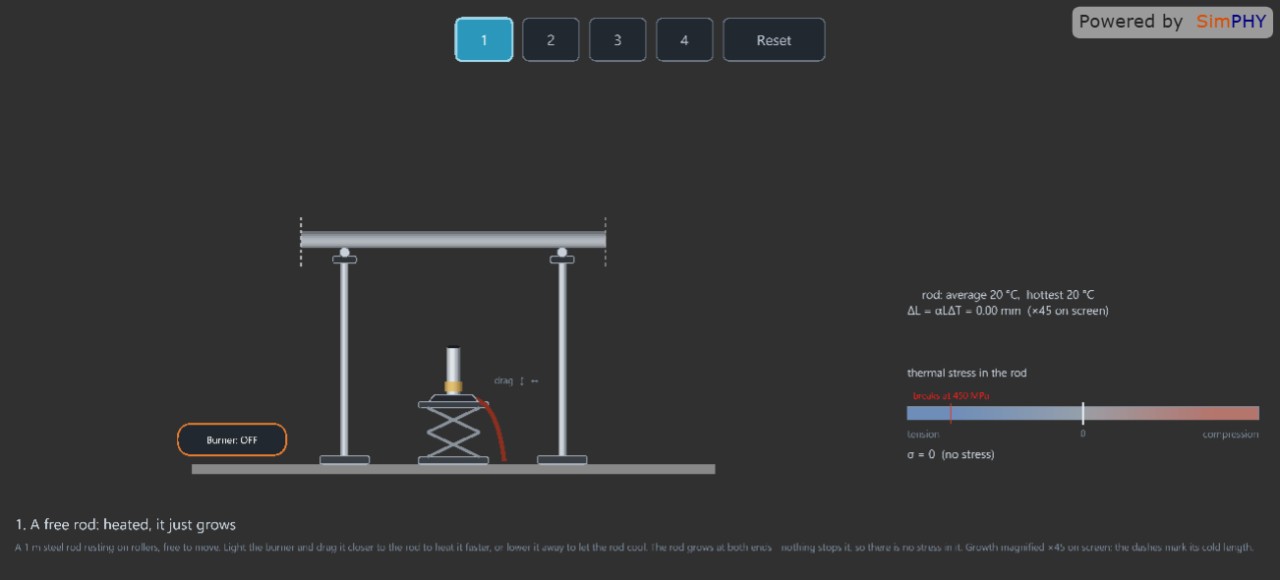
Explore how heating, constraints, and rapid cooling create thermal str...
 Free
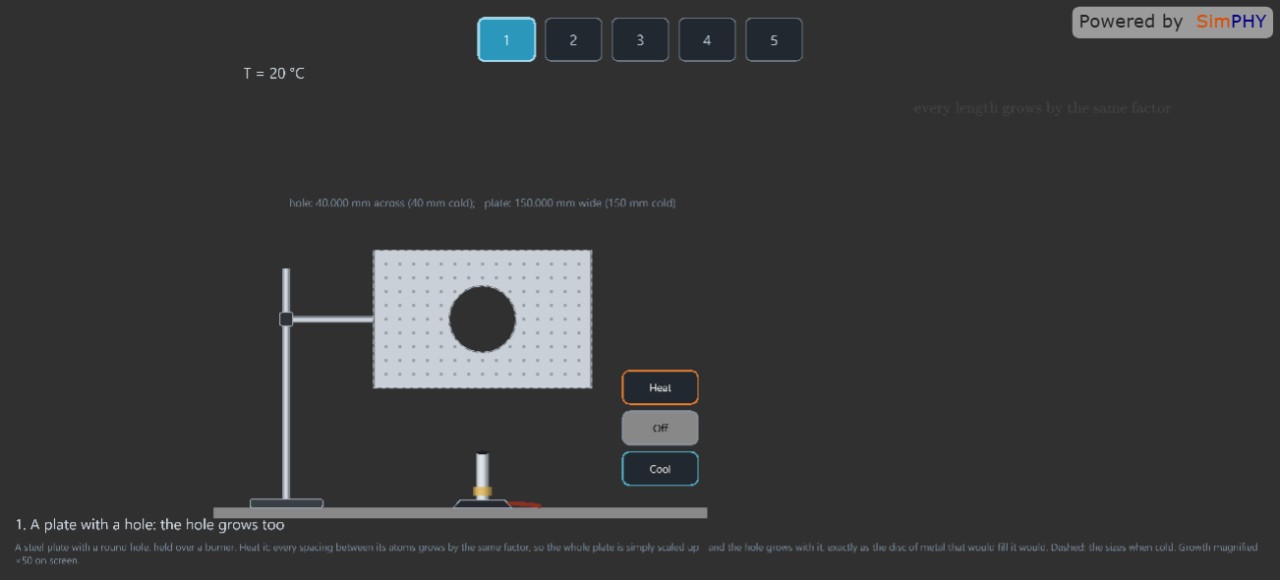
Explore five thermal‑expansion demos: metal plate, glass tube, ball‑ri...
 Free
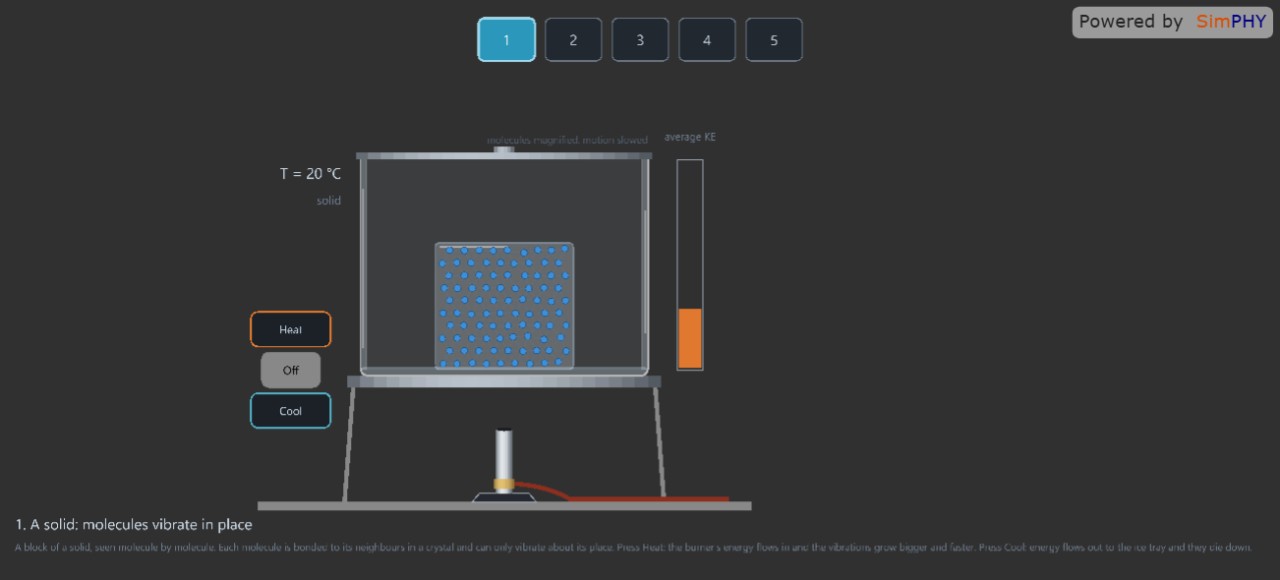
See how heating and cooling change molecular motion in solids, liquids...
 Free
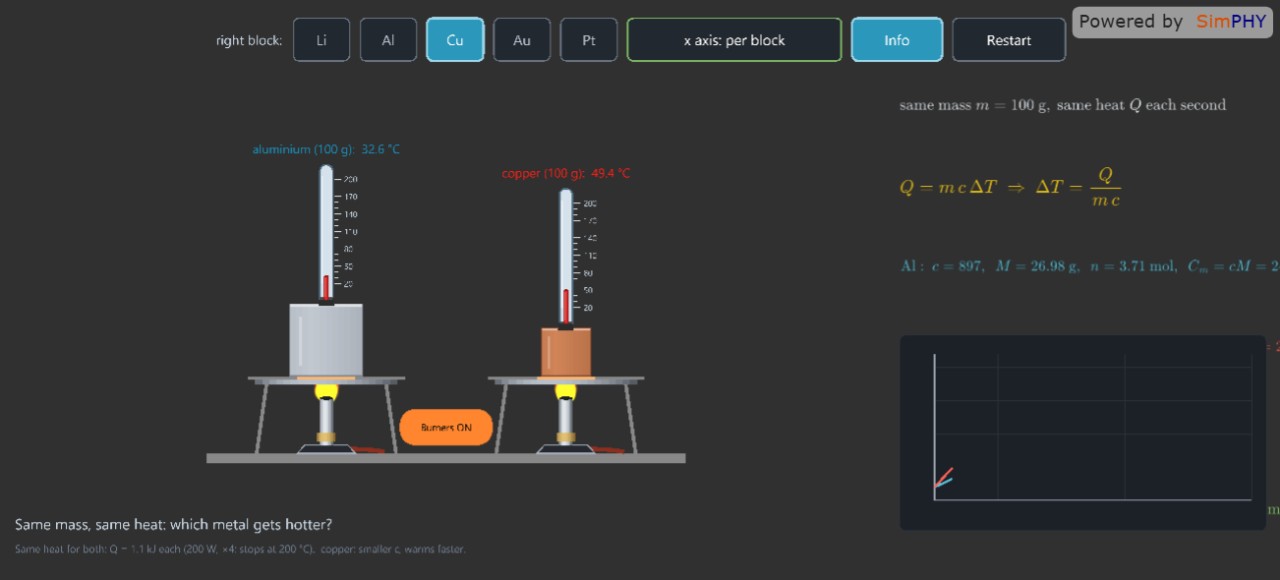
Heat 100 g aluminium and a selected metal on identical burners to comp...