 Free
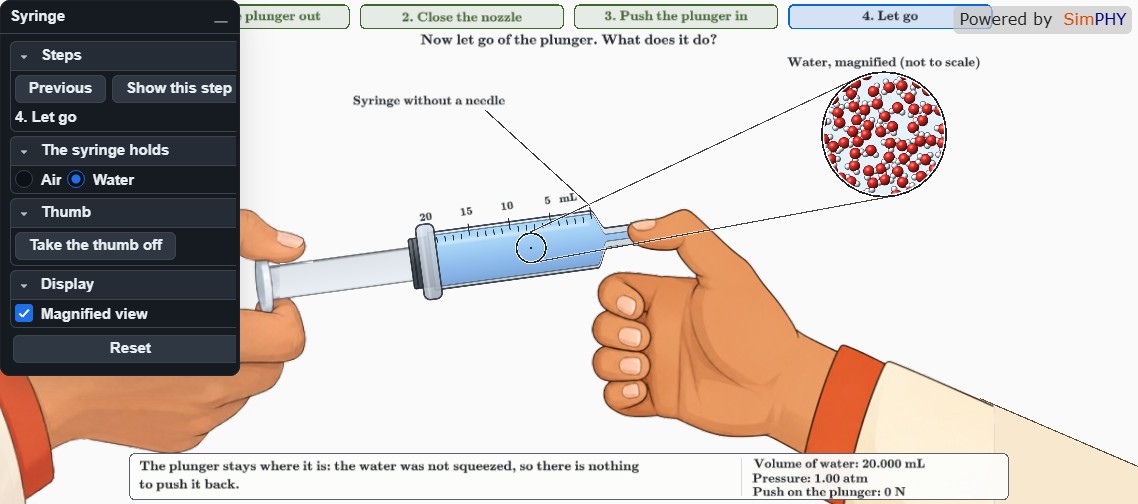
Compressing Air and Water in a Syringe
Fluid MechanicsPull the plunger, seal the tip, and see air compress while water remai...
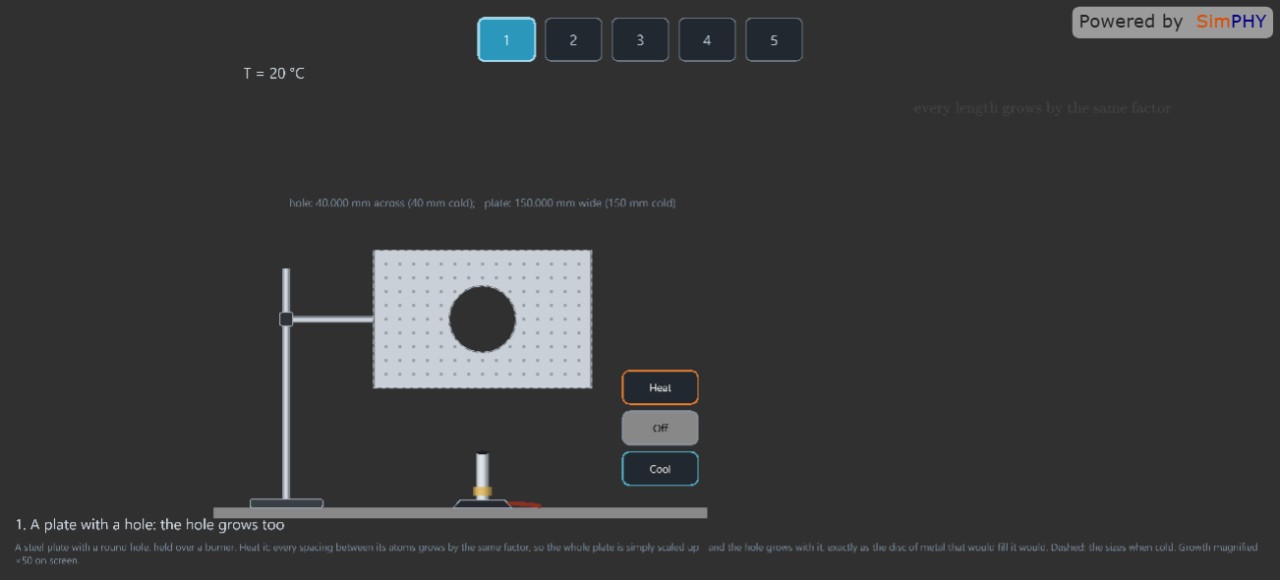
Explore five thermal‑expansion demos: metal plate, glass tube, ball‑ring, railway rails, and floating cube.
Thermal expansion describes how most materials change size when their temperature changes. Heating a solid or liquid causes its atoms to vibrate more, increasing the average separation and making the object expand; cooling has the opposite effect. This simulation visualises the effect in a clear, step‑by‑step manner.
Five classic setups are provided. A metal plate with a central hole shows the hole growing as the plate expands. A glass tube filled to the brim demonstrates liquid spilling when its expansion exceeds that of the glass. The ball‑and‑ring experiment lets students see a copper ball either drop through or become stuck as the ring or ball is heated. Railway rails illustrate why gaps are left at joints to prevent buckling. Finally, a wooden cube floating in a liquid sinks lower as the liquid expands. Each experiment includes its own Heat, Off, Cool buttons, sliders for material expansion coefficients, and toggles to select which object is heated.
Students can step through the scenarios with the numbered buttons or arrow keys, adjust the expansion coefficients, and observe how the magnified changes affect dimensions and behavior. By comparing different materials and conditions they learn the quantitative relationship between temperature change and linear or volumetric expansion, the practical engineering implications (such as rail gaps), and how expansion influences fluid levels and buoyancy.
Free
Pull the plunger, seal the tip, and see air compress while water remai...
 Free
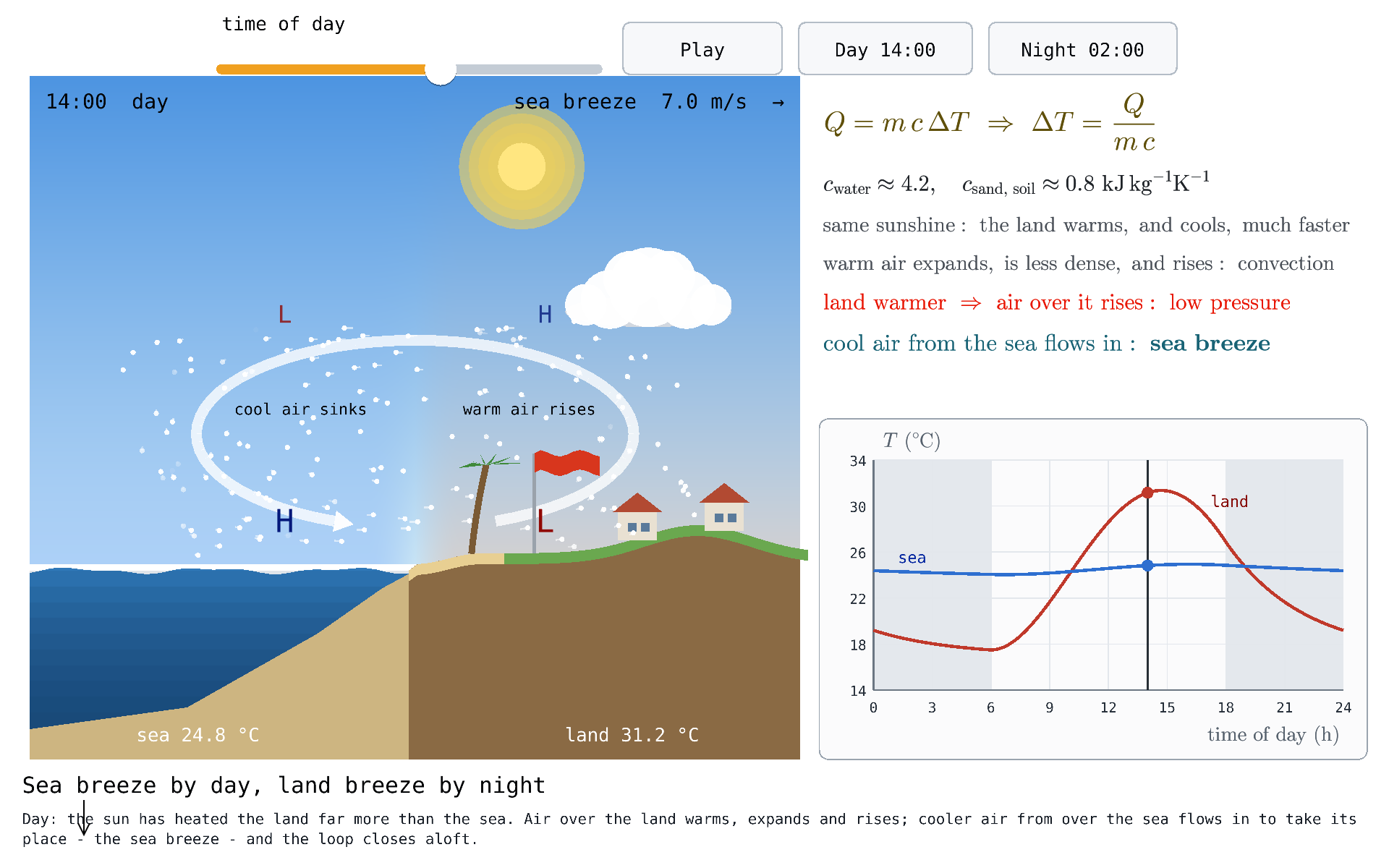
Observe how differing heat capacities of land and sea create daytime s...
 Free
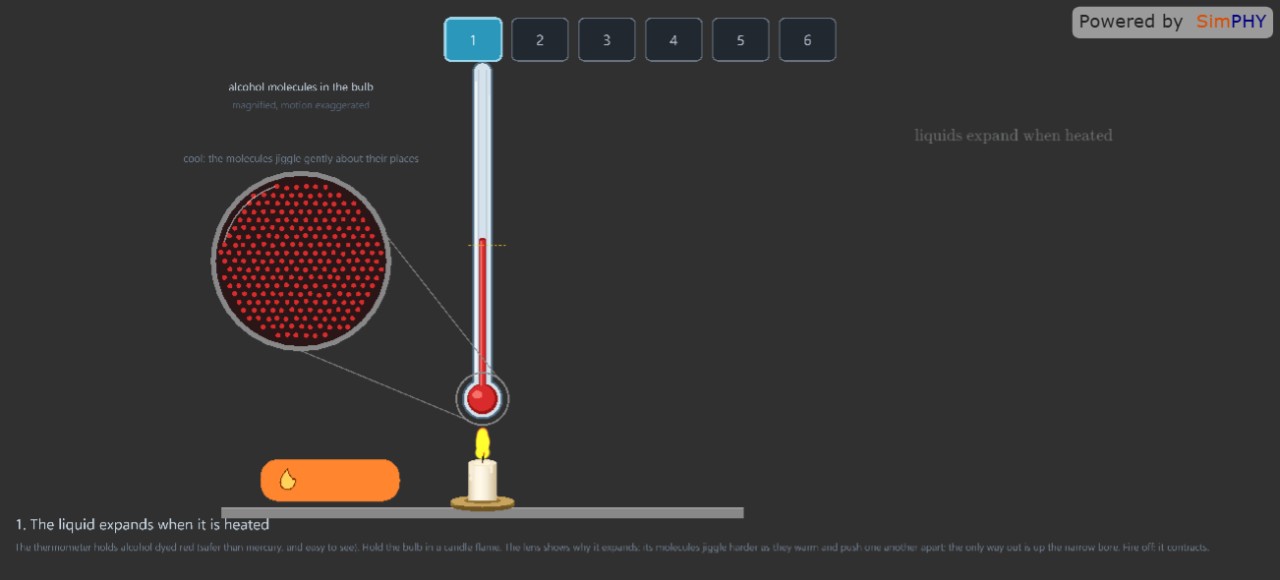
Build and use a red‑alcohol glass thermometer, watching liquid expansi...
 Free
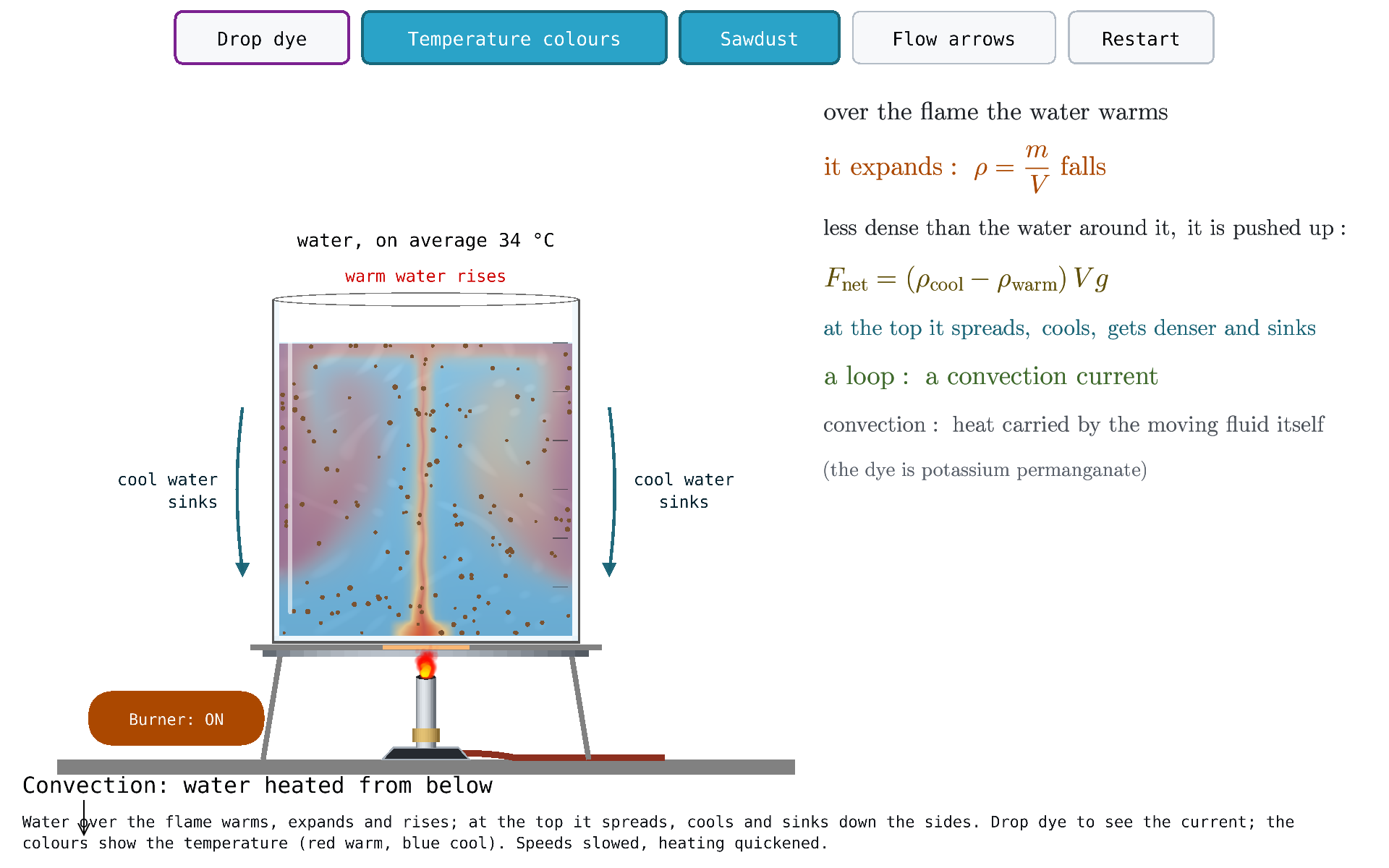
Water heated from below forms buoyancy‑driven convection loops, shown...
 Free
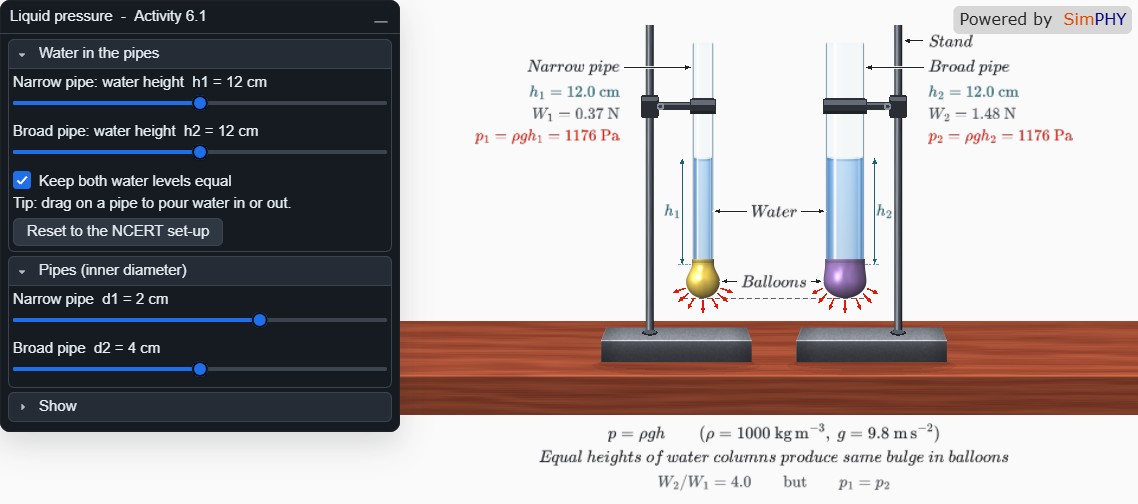
Two pipes of different widths fill with water, showing balloon bulge d...
 Free
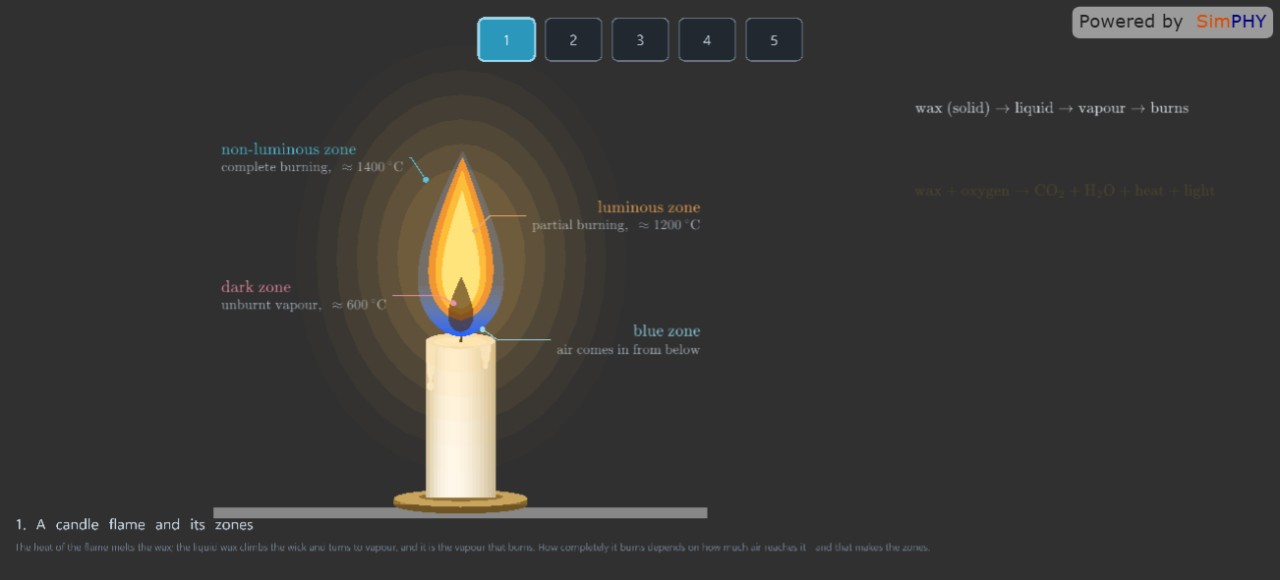
Explore the distinct zones of a candle flame—dark, luminous, outer, an...