 Free
Resonance Demonstration
Waves & OscillationsExplore standing wave formation and resonance in a rope with free or f...
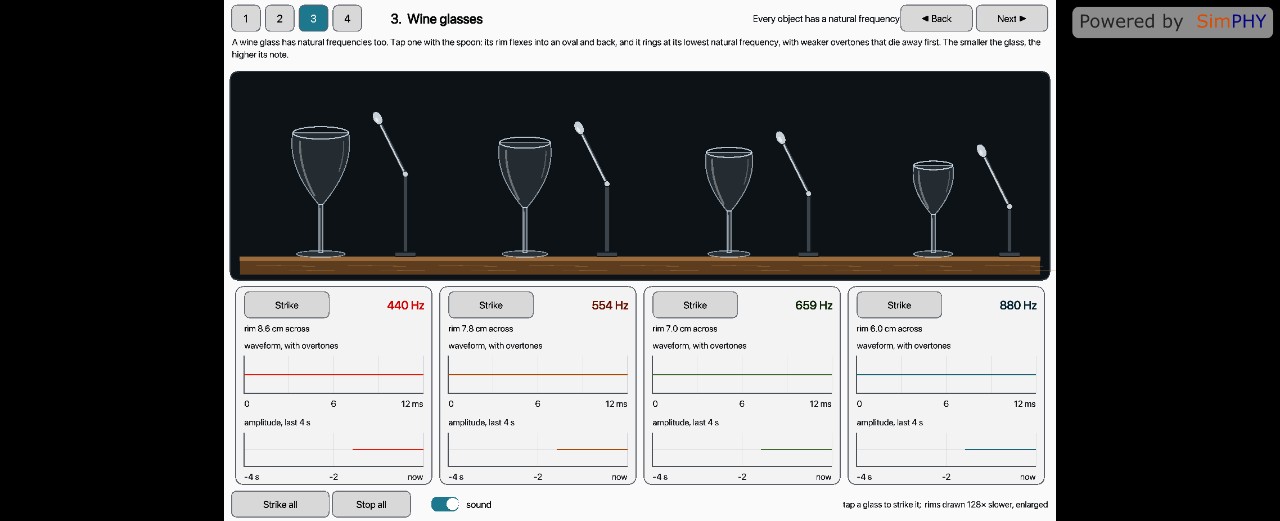
Explore how objects vibrate at their natural frequencies, from springs to tuning forks, glasses, and rods.
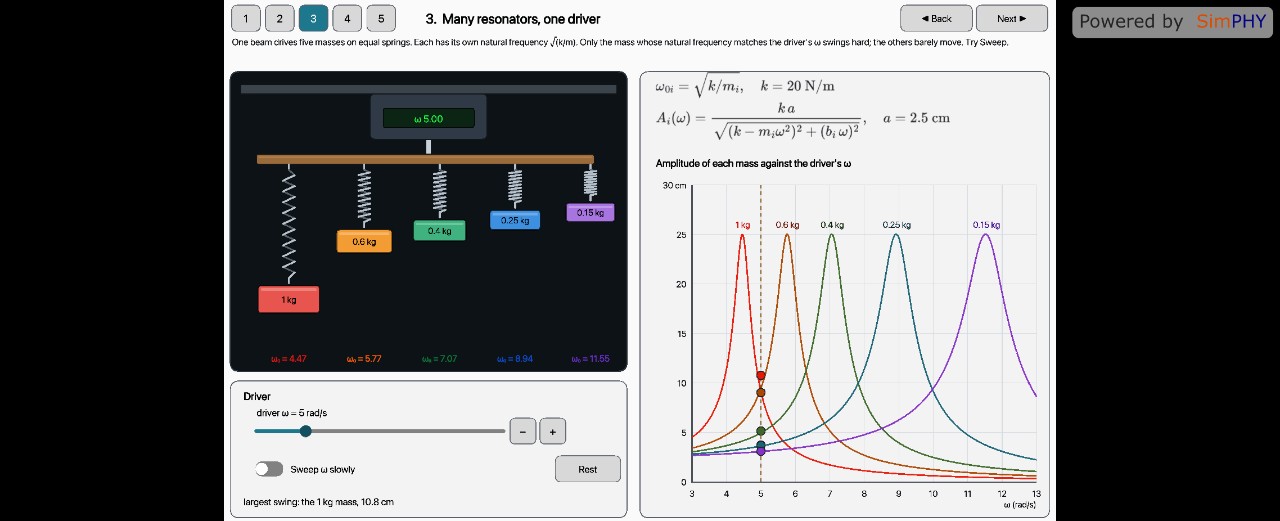
Every physical object has a characteristic natural frequency at which it prefers to oscillate when disturbed. For simple mass‑spring systems the frequency follows f = (1/2π)√(k/m), while for tuning forks, wine glasses and cantilever rods the geometry and material properties set the pitch, often scaling with length or shape.
In this simulation students can pull down a mass on a spring, strike a tuning‑fork prong, tap a glass, or hit a steel rod using on‑screen buttons or by dragging the objects. Each object then vibrates at its own frequency, producing a pure tone (or silent motion for very low frequencies) that decays over time, allowing direct comparison of periods, pitches and damping effects.
By observing the motion and listening to the sounds, learners connect mathematical formulas to real‑world phenomena, see how mass, stiffness, length and material affect vibration, and explore concepts such as resonance, overtones and damping in a hands‑on visual and auditory environment.
Free
Explore standing wave formation and resonance in a rope with free or f...
 Free
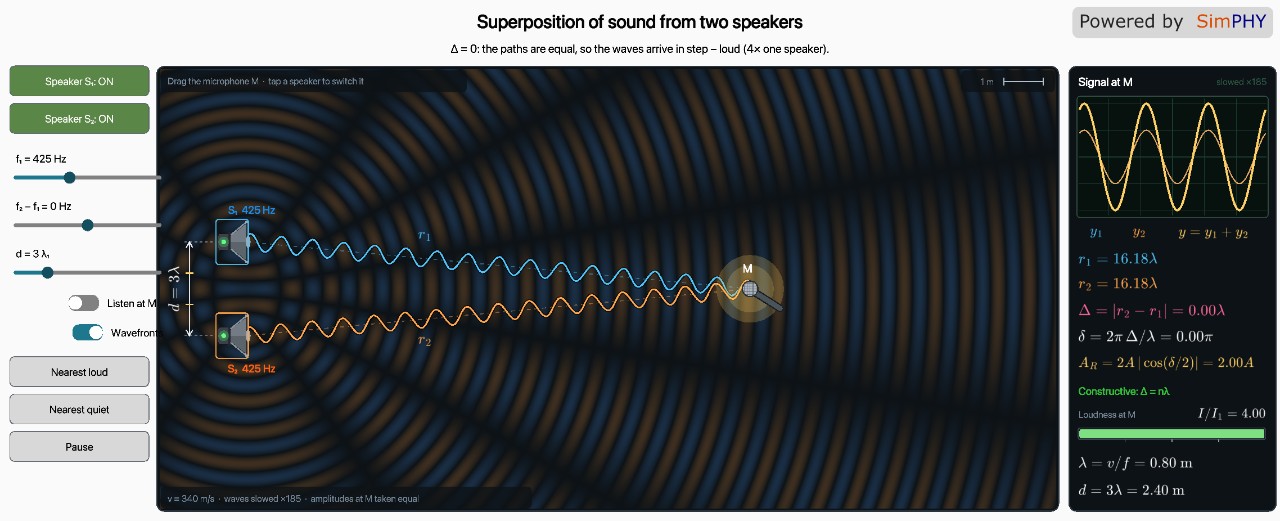
Explore interference and beats from two speakers by adjusting frequenc...
 Free
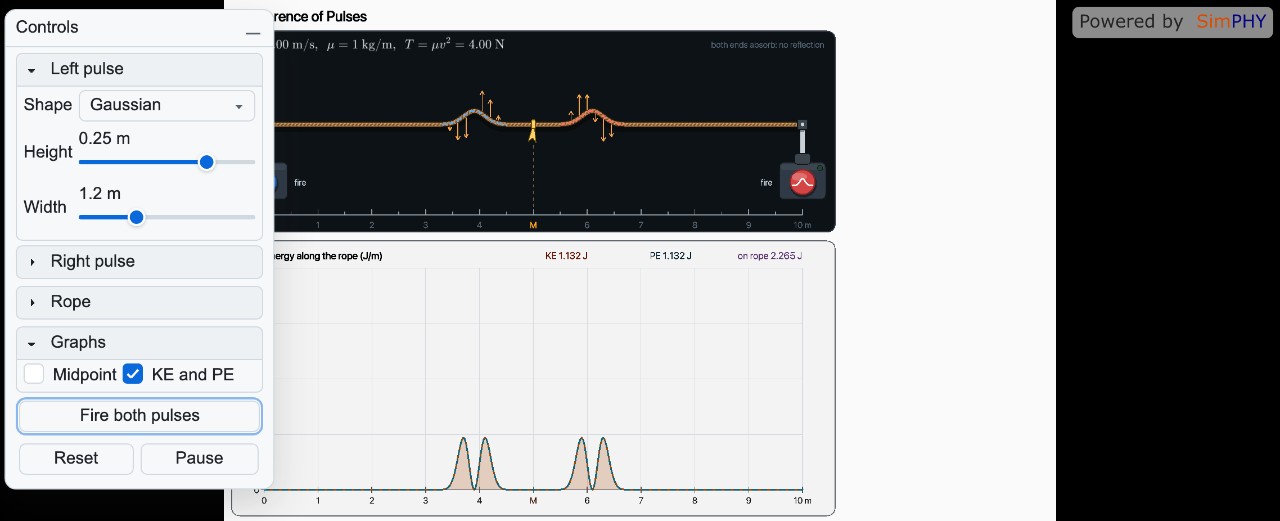
Explore how two opposite‑direction pulses on a rope superpose, using s...
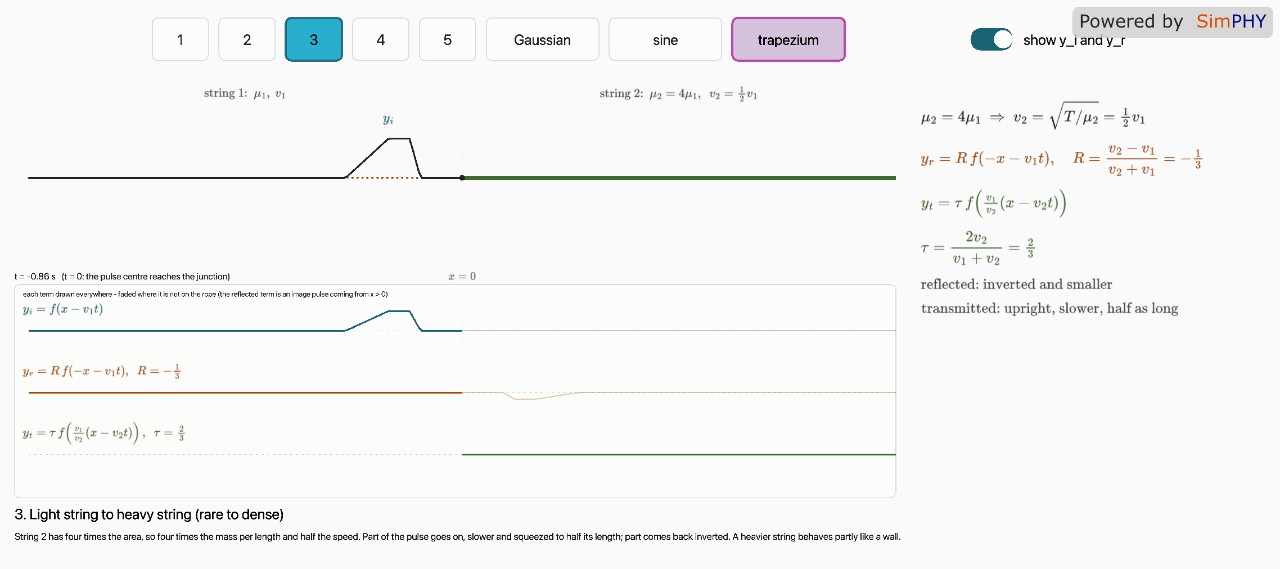 Free
Explore pulse reflection and transmission at fixed, free, and joint st...
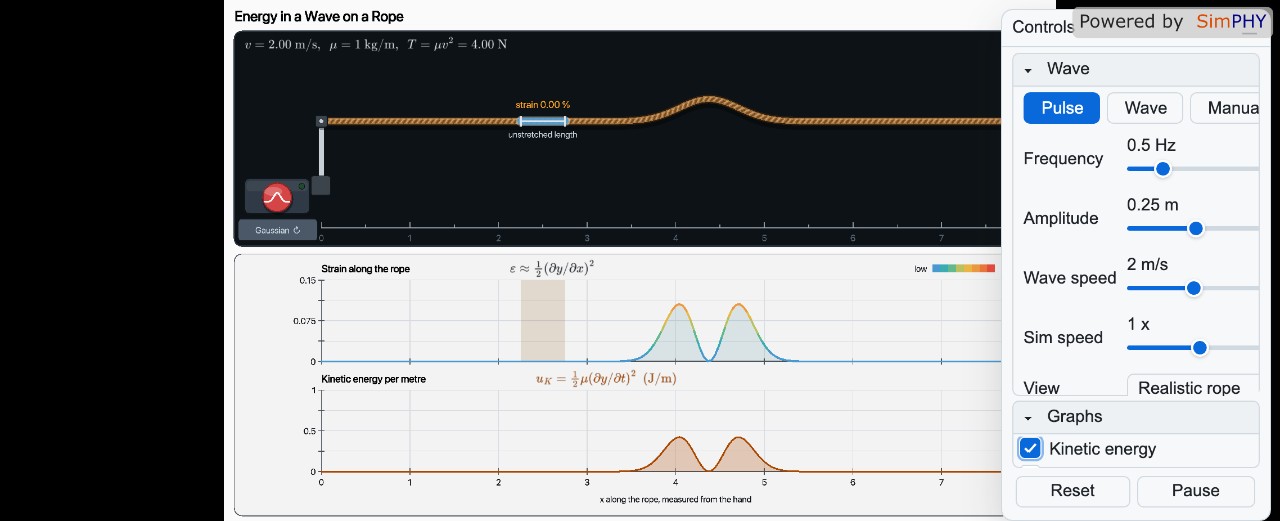 Free
Explore how wave speed, frequency and amplitude affect strain and tota...
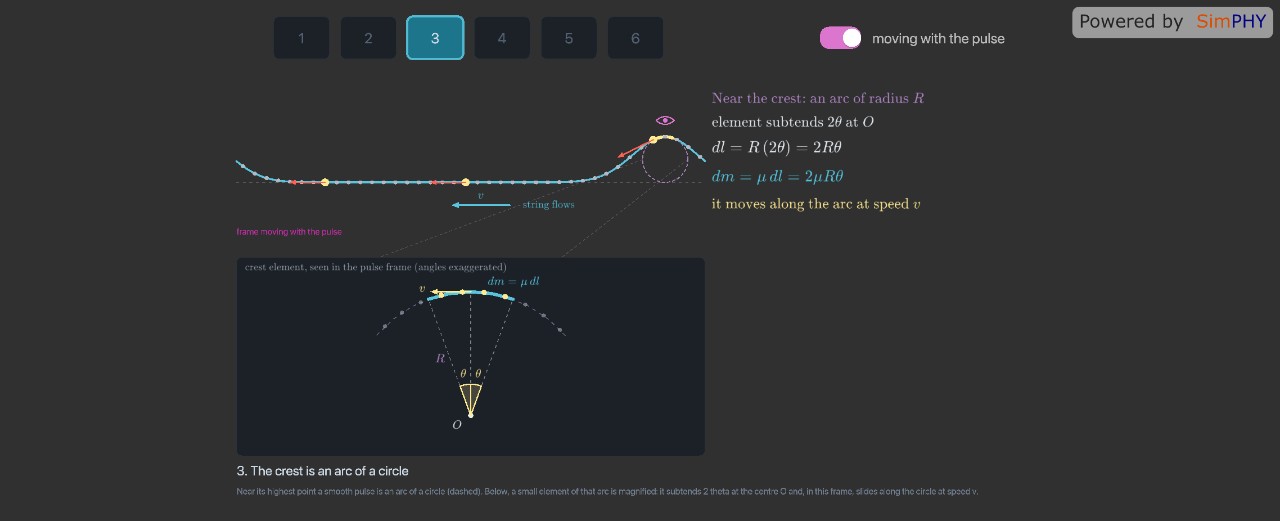 Free
Derive the wave speed v = √(T/μ) on a stretched string, switching betw...