 Free
Natural Frequency
Waves & OscillationsExplore how objects vibrate at their natural frequencies, from springs...
Explore standing wave formation and resonance in a rope with free or fixed ends using interactive steps.
The simulation visualises how standing waves develop on a rope when one end is free or fixed, illustrating the fundamental principles of resonance and natural frequencies. By observing the wave patterns, students see how boundary conditions affect node and antinode placement.
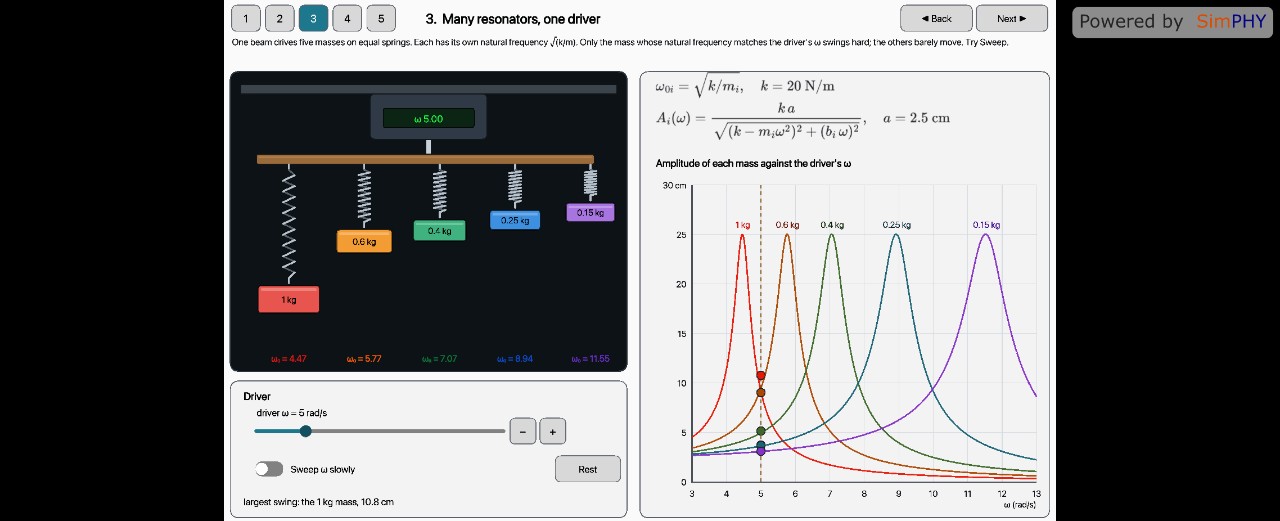
Three interactive steps let learners experiment with forced vibrations: a hand‑shaken spring attached to a cart, a vertically driven mass‑spring system, and multiple masses on a driven beam. Sliders and input fields allow adjustment of driving frequency, amplitude, mass, spring constant, and damping coefficient, while real‑time graphs plot amplitude versus frequency and displacement over time.
Through these activities students discover the resonance curve, calculate the quality factor (Q), and understand how energy is transferred and amplified at the natural frequency. The model reinforces concepts of forced oscillation, damping, and the relationship between frequency, amplitude, and system parameters.
Free
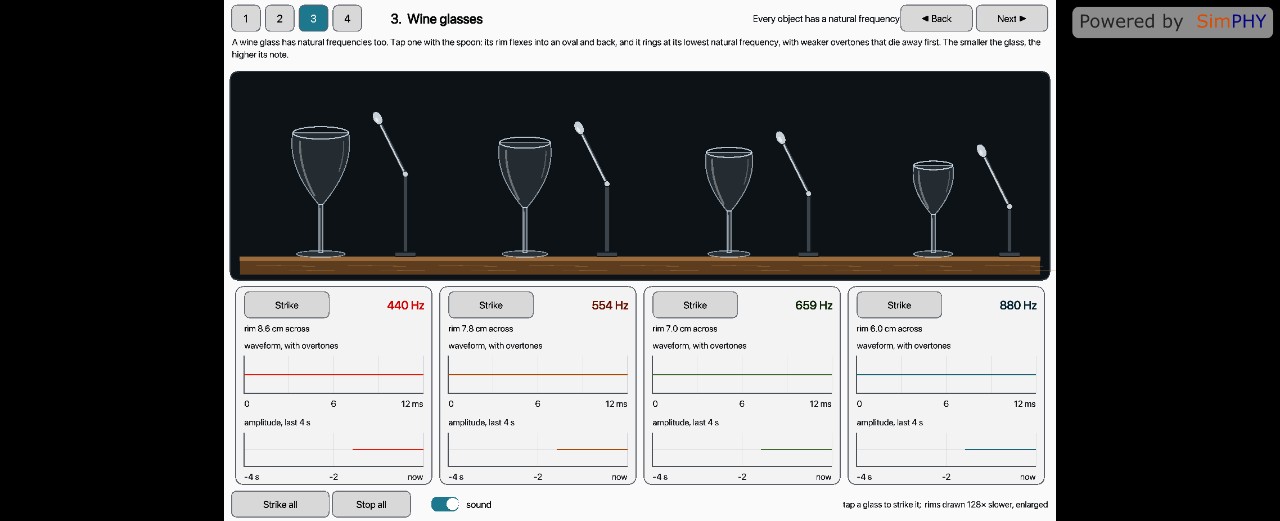
Explore how objects vibrate at their natural frequencies, from springs...
 Free
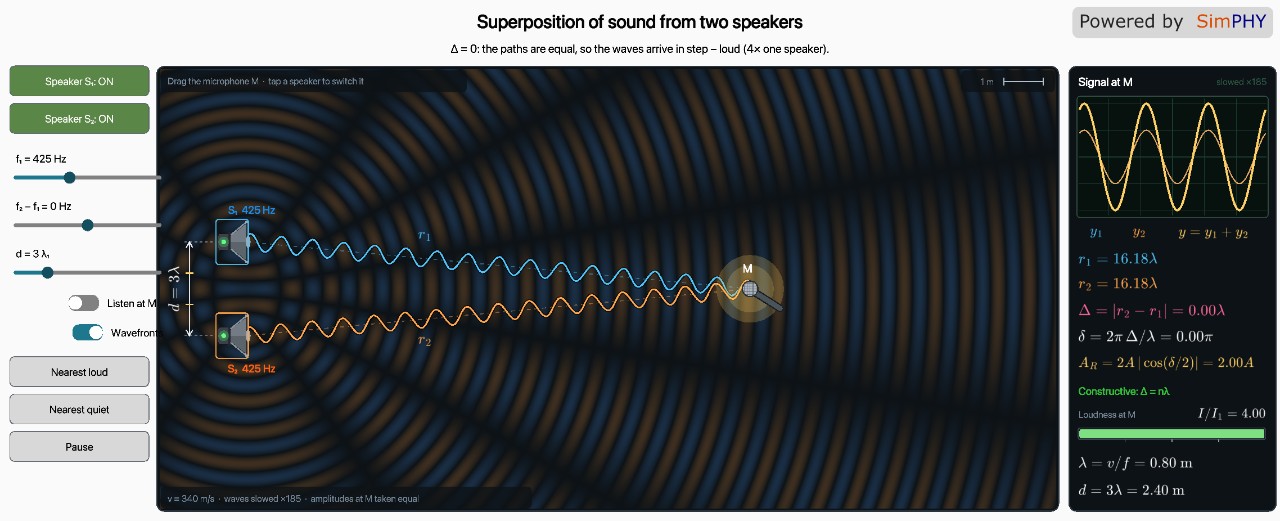
Explore interference and beats from two speakers by adjusting frequenc...
 Free
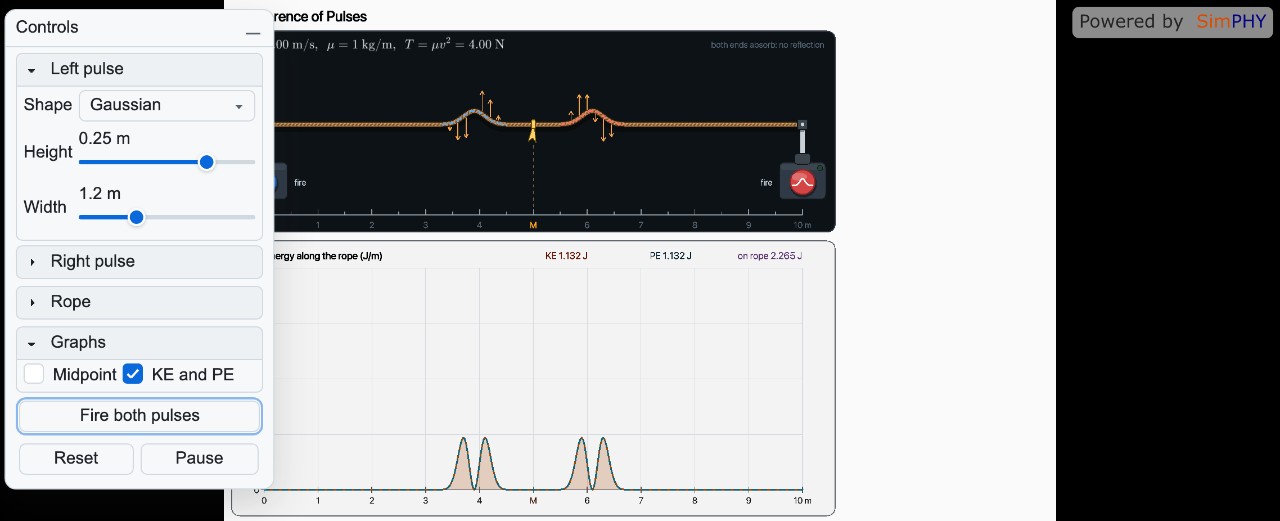
Explore how two opposite‑direction pulses on a rope superpose, using s...
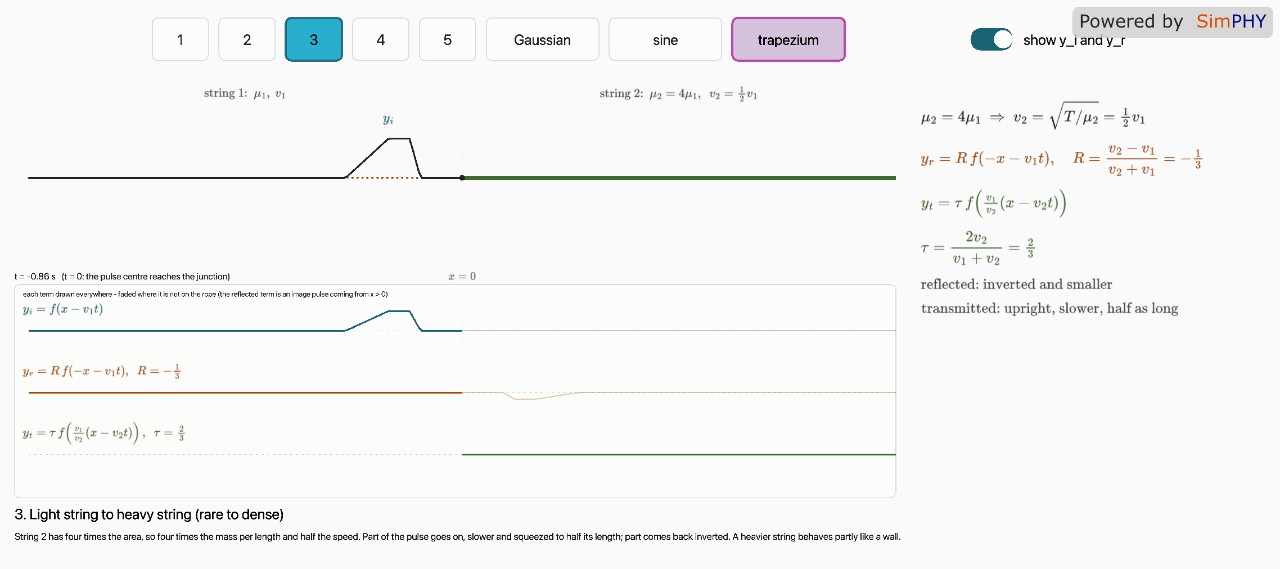 Free
Explore pulse reflection and transmission at fixed, free, and joint st...
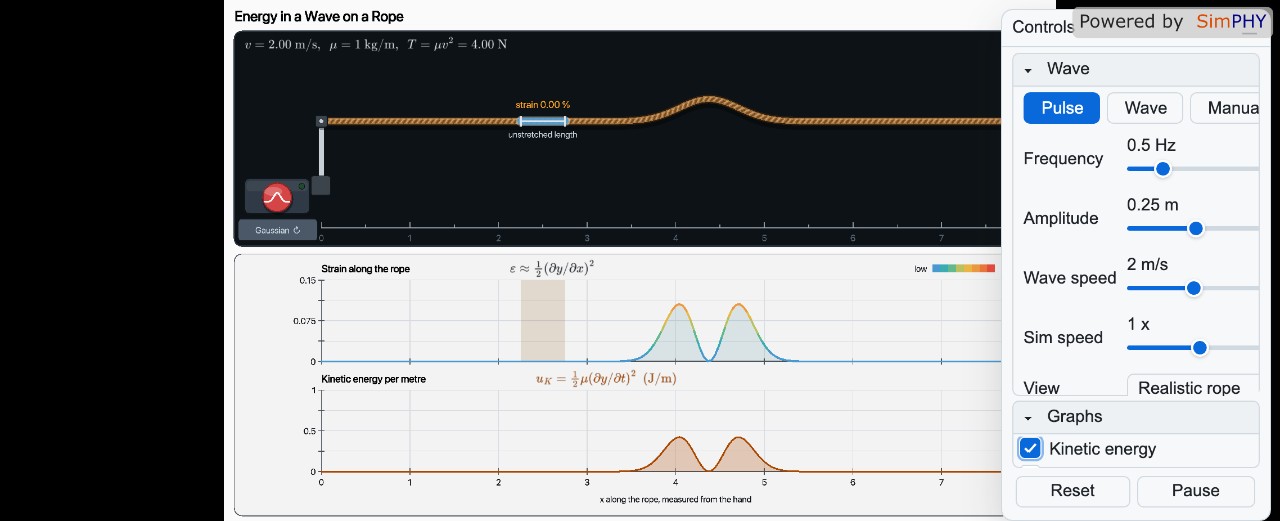 Free
Explore how wave speed, frequency and amplitude affect strain and tota...
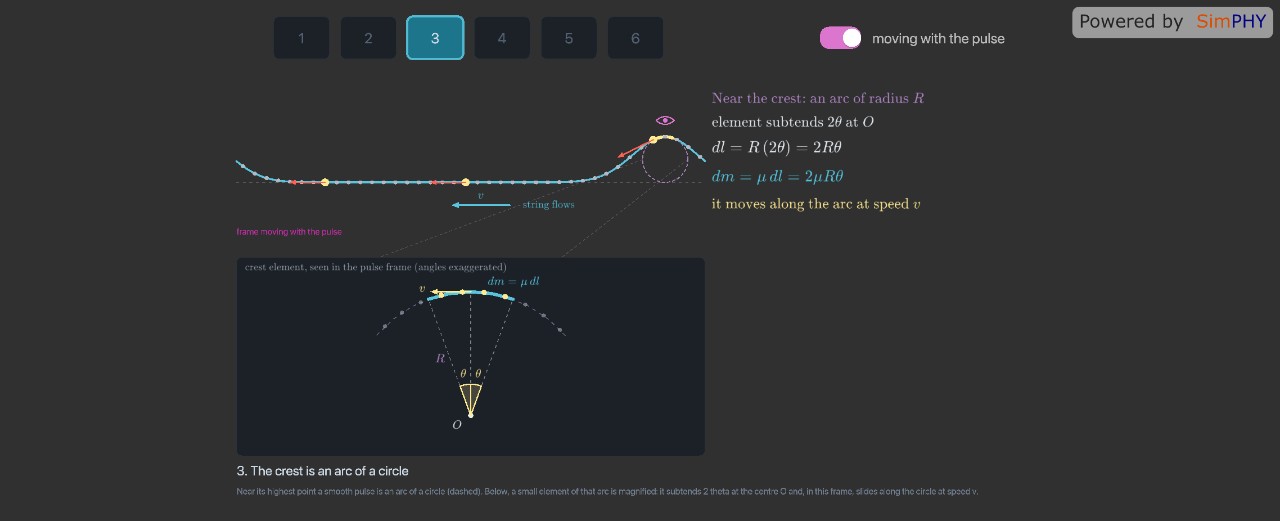 Free
Derive the wave speed v = √(T/μ) on a stretched string, switching betw...