 Free
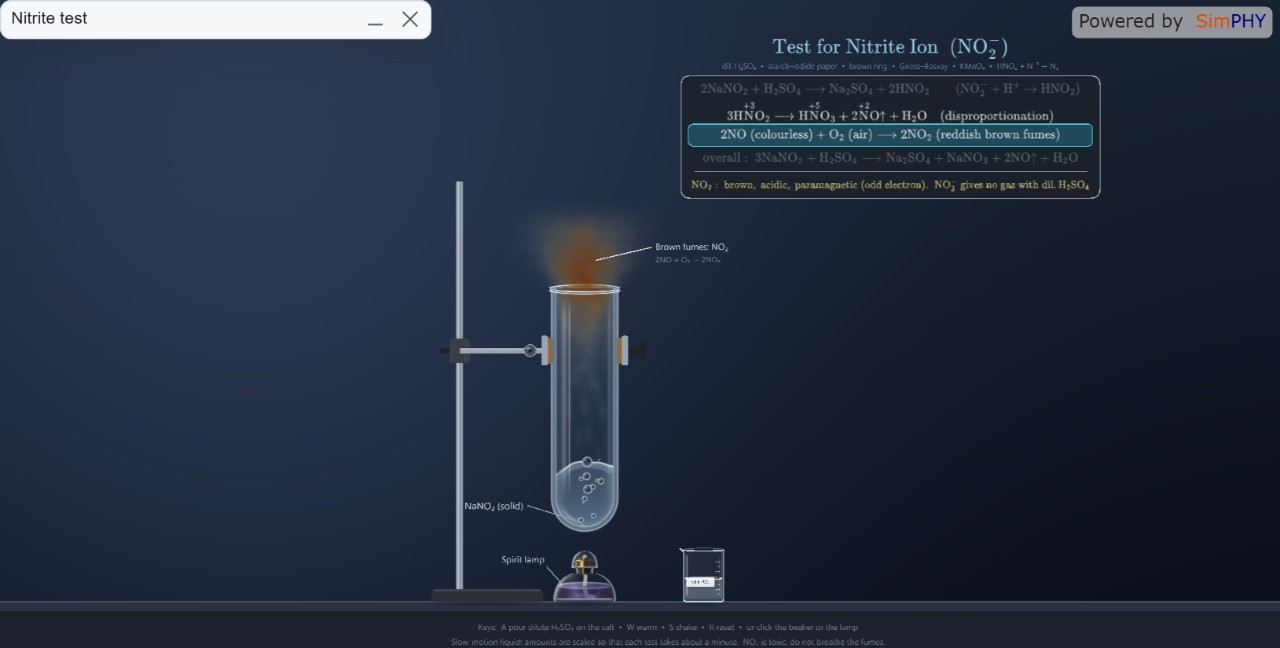
Nitrite Ion Test Suite
Practical ChemistryExplore nitrite ion tests, seeing colour changes, gas evolution, and r...
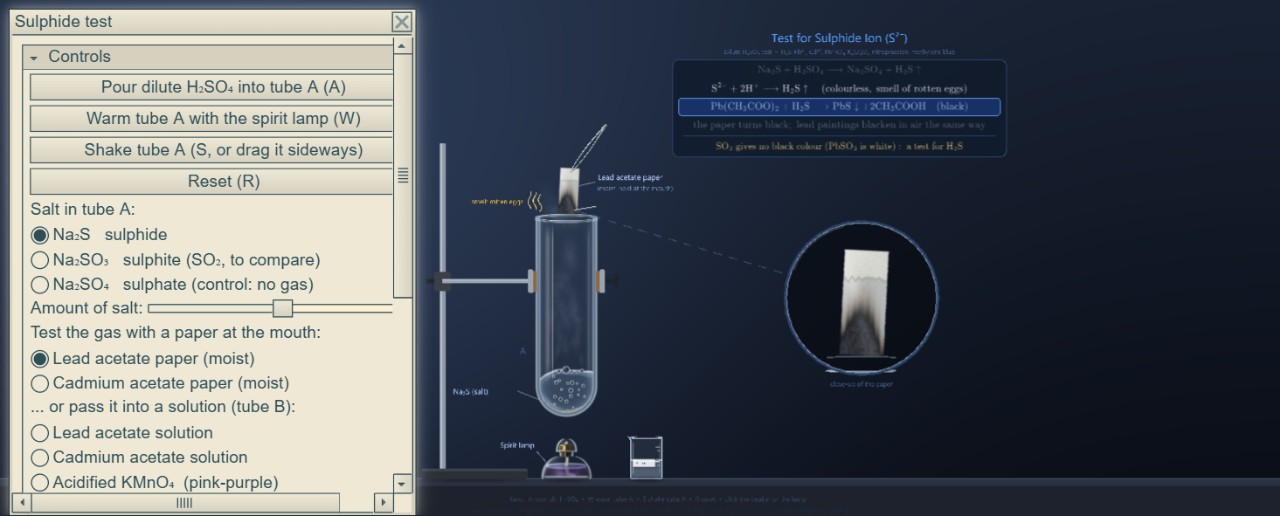
Explore qualitative tests for sulfide ions with lead acetate, cadmium acetate, permanganate and dichromate.
The simulation demonstrates classic qualitative analysis for the sulfide ion (S²⁻). By adding dilute sulfuric acid, H₂S gas is released, which can be identified by its characteristic rotten‑egg smell. Various reagents are then used to confirm the presence of sulfide through colour changes and precipitate formation.
Students can click the acid beaker to introduce H₂S, use the lead acetate paper to observe a black PbS precipitate, add cadmium acetate to see a yellow CdS solid, and introduce acidified potassium permanganate or potassium dichromate to watch redox colour changes (pink to colourless, orange to green). The spirit lamp can be used to heat the mixture, affecting reaction rates. Observations such as turbidity and colour are displayed in real time.
Through this activity learners explore gas evolution, precipitation reactions, and redox processes, and they learn how to distinguish sulfide from sulfite (SO₂) based on the lack of sulphur turbidity and different colour responses.
Free
Explore nitrite ion tests, seeing colour changes, gas evolution, and r...
 Free
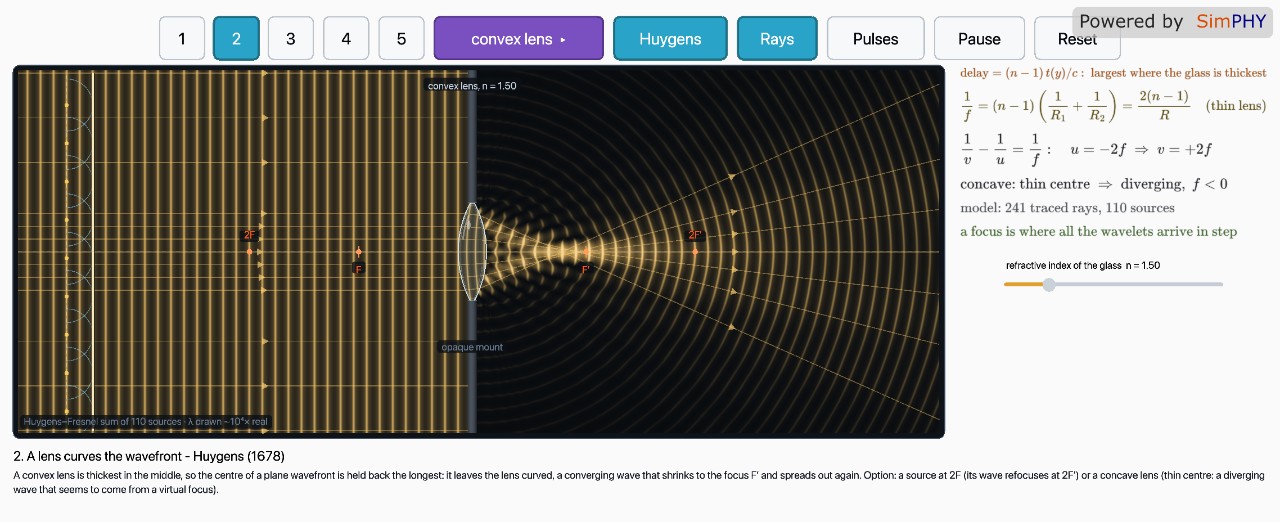
Explore Huygens’ construction and ray behavior as wavefronts pass thro...
 Free
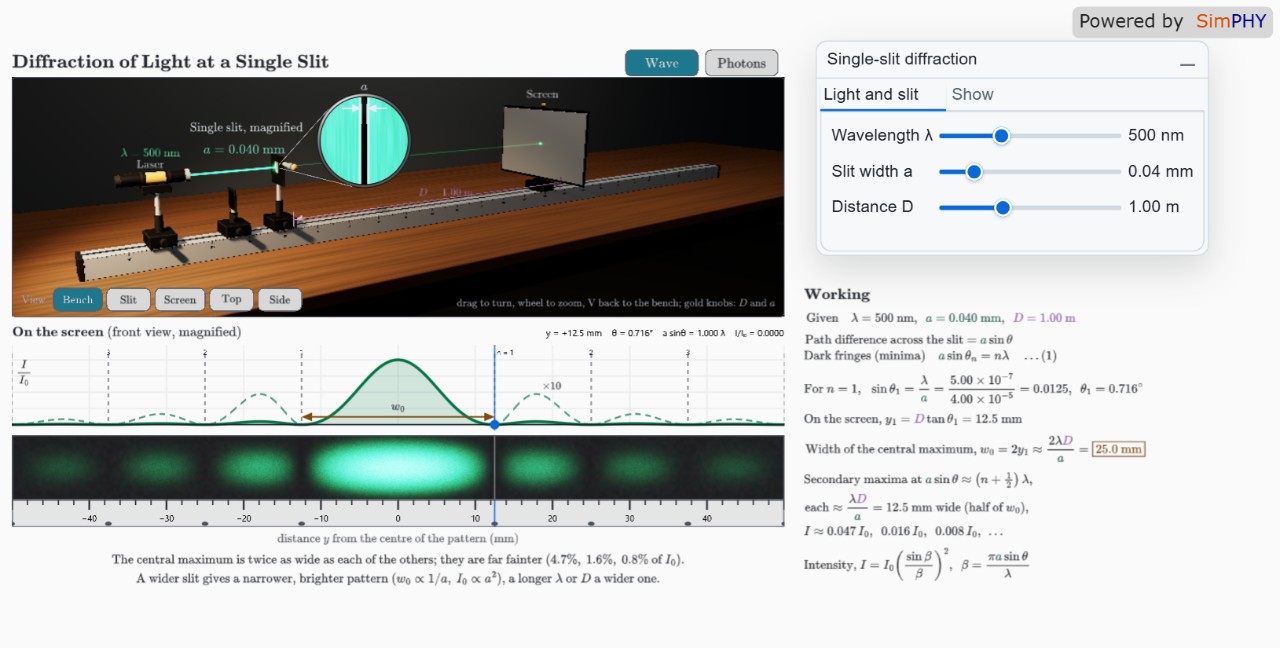
Explore how slit width, wavelength, and distance affect the Fraunhofer...
 Free
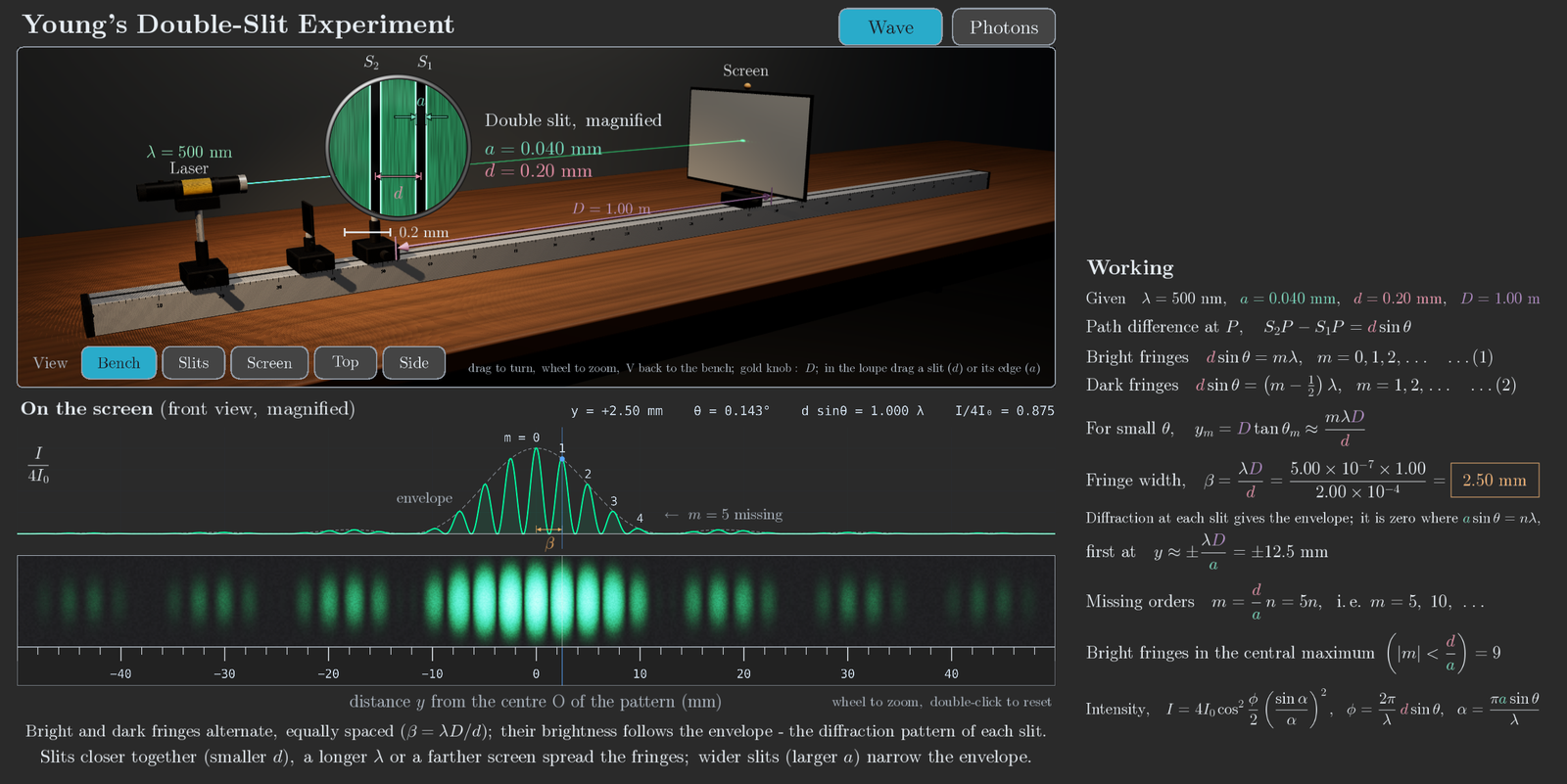
Observe interference and diffraction from a laser through adjustable s...
 Free
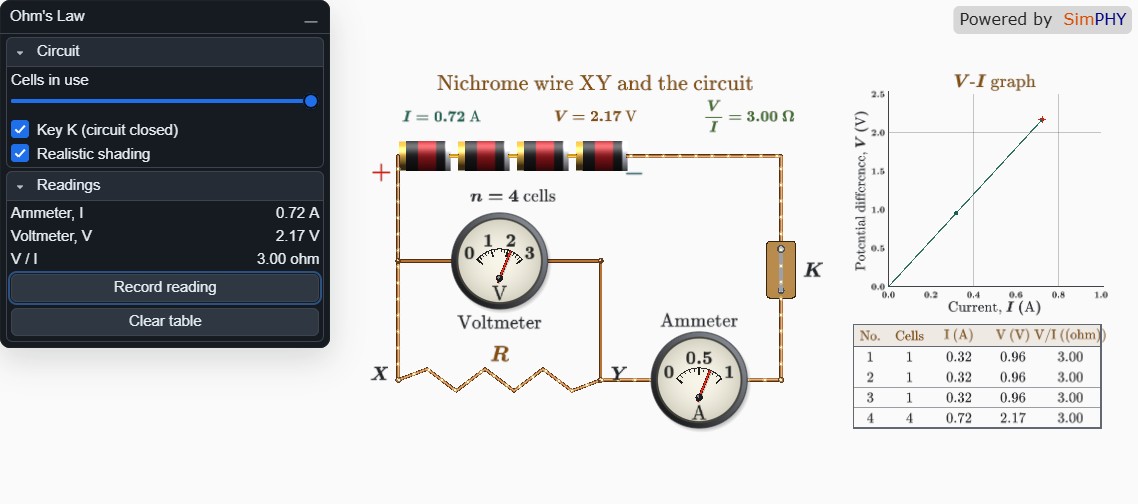
Add 1‑4 cells with a nichrome wire, close the key and read the ammeter...
 Free
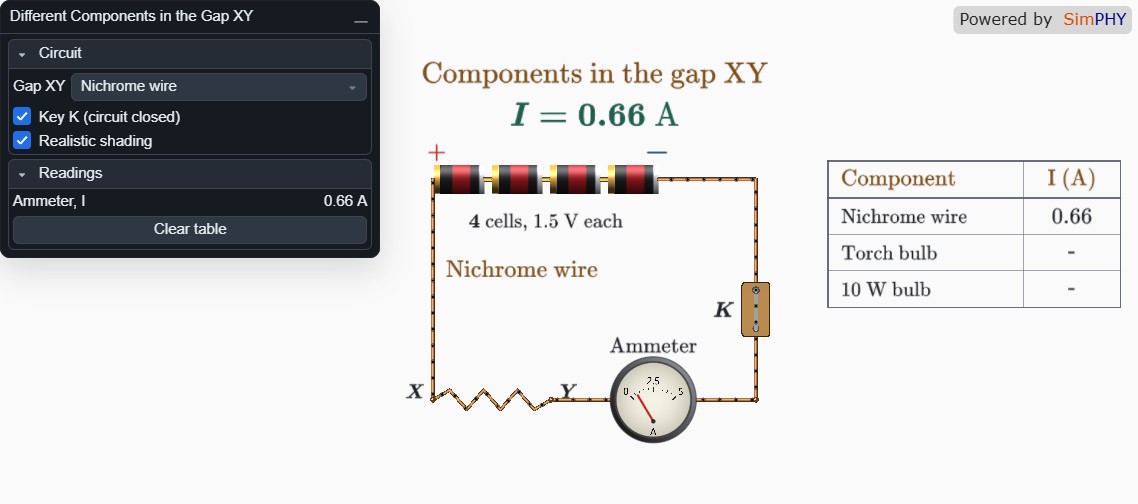
Watch how a nichrome wire, a torch bulb, and a 10 W bulb change the am...