 Free
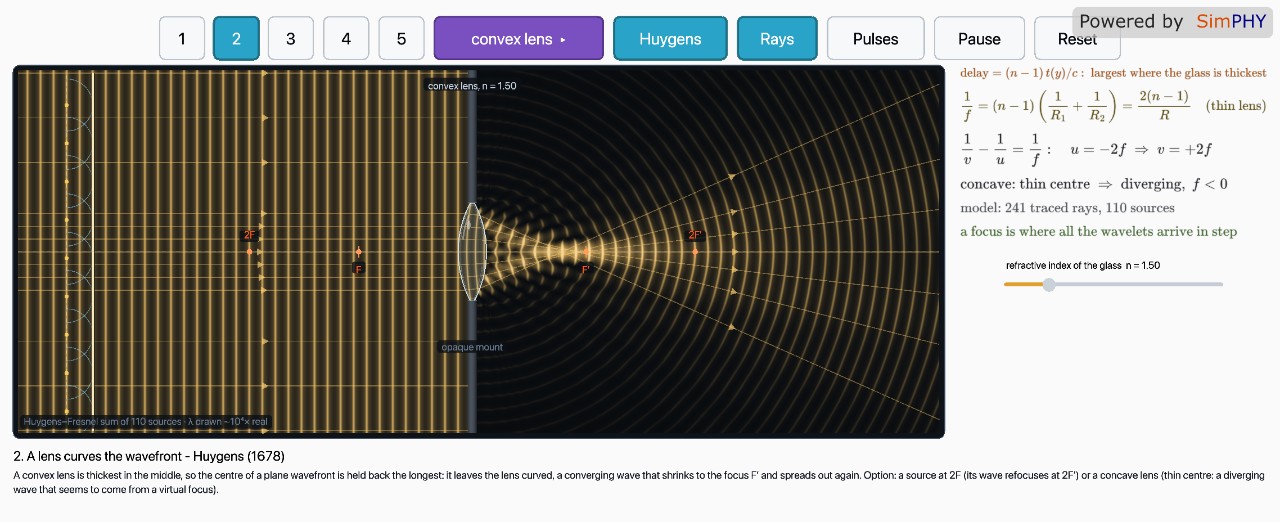
Wavefronts Through Optical Devices
Rotational MotionExplore Huygens’ construction and ray behavior as wavefronts pass thro...
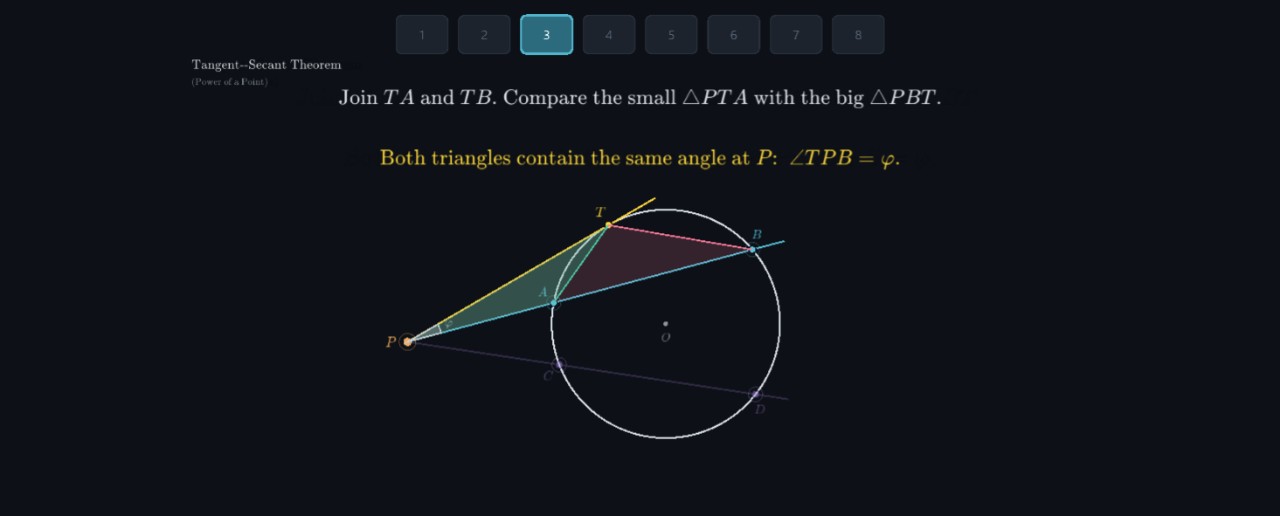
Explore the tangent‑secant theorem by adjusting a point, tangent, and secants to see PA·PB = PC·PD = PT².
The tangent‑secant theorem states that for a point P outside a circle with centre O, the product of the lengths of the two segments of any secant through P equals the square of the length of the tangent from P to the circle (PA·PB = PC·PD = PT²). This relation is also called the power of a point.
In the simulation the circle and the external point P can be moved with the mouse, and the tangent PT and the two secants PAB and PCD are drawn automatically. Step buttons at the top let students advance through a geometric proof that uses similar triangles, highlighting the equal angles and the correspondence of sides.
By changing the position of P students see how the products PA·PB and PC·PD remain equal to PT², reinforcing the concept of similar triangles and the power‑of‑a‑point theorem, useful in geometry and algebra problems.
Free
Explore Huygens’ construction and ray behavior as wavefronts pass thro...
 Free
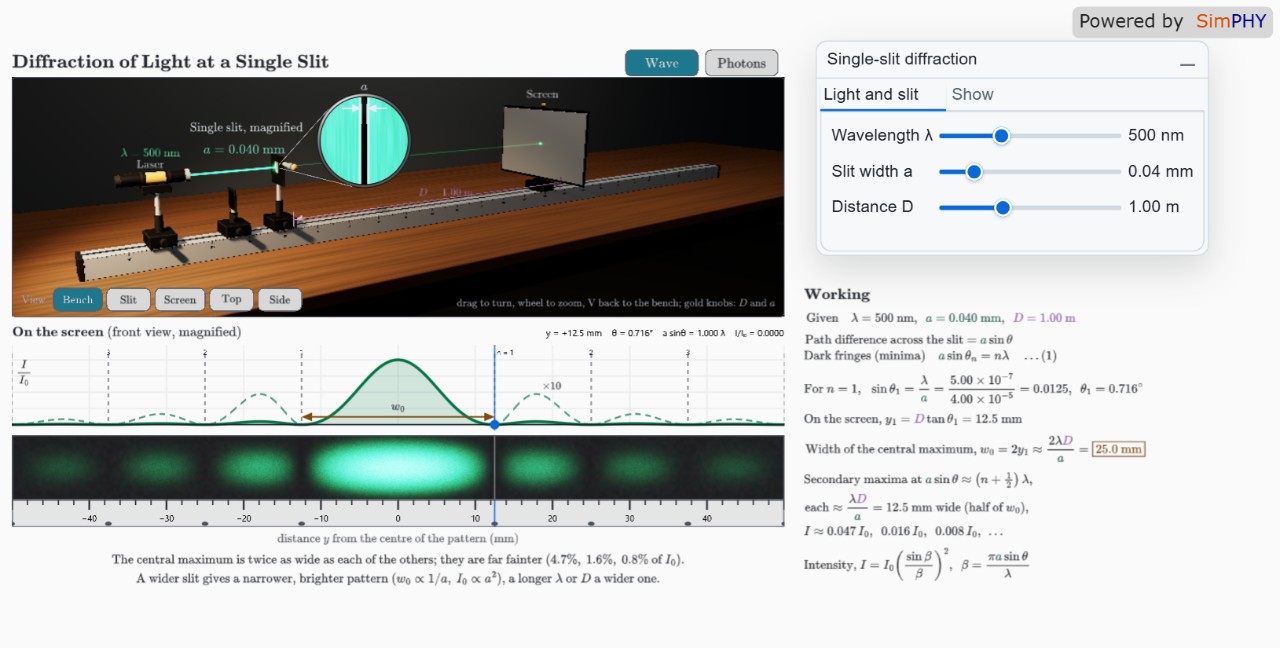
Explore how slit width, wavelength, and distance affect the Fraunhofer...
 Free
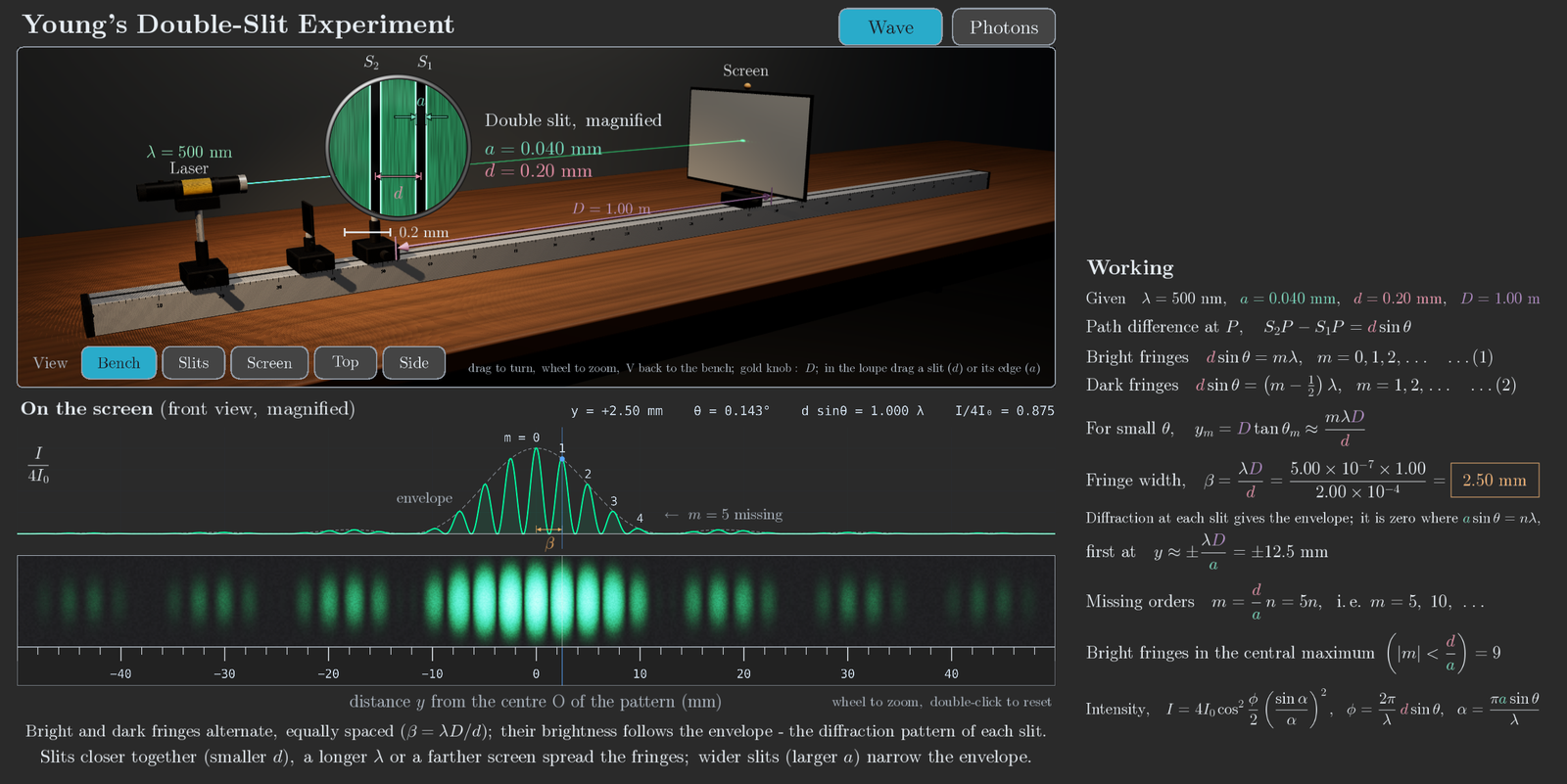
Observe interference and diffraction from a laser through adjustable s...
 Free
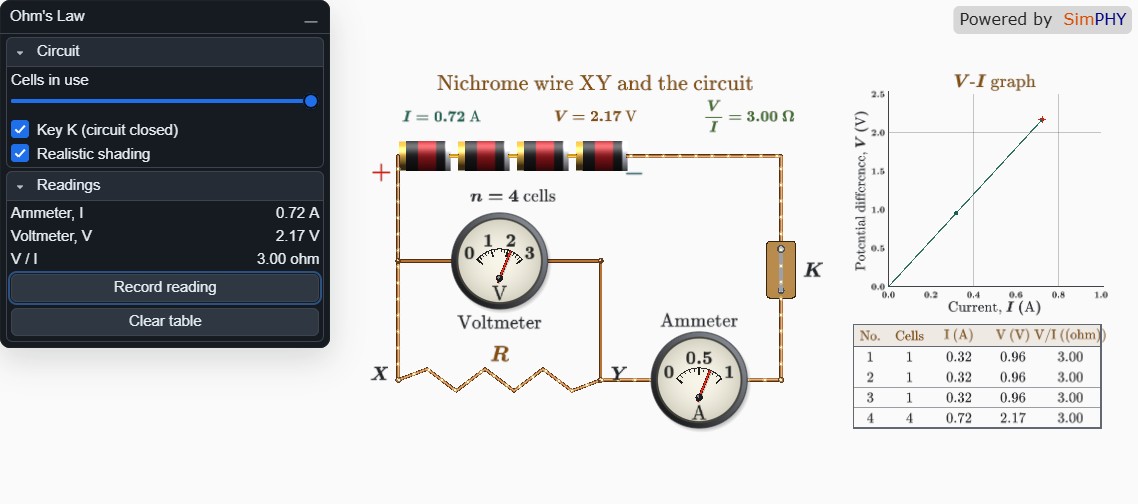
Add 1‑4 cells with a nichrome wire, close the key and read the ammeter...
 Free
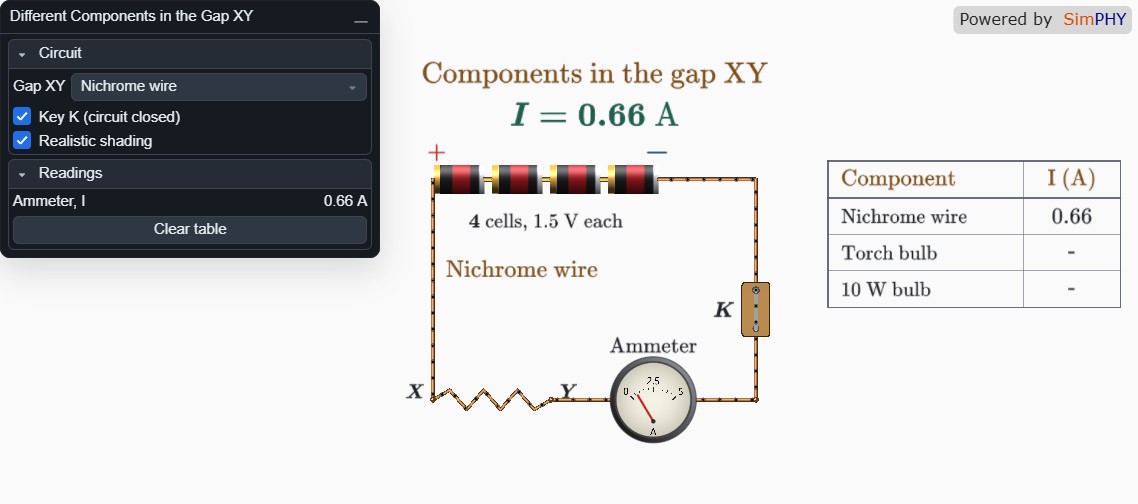
Watch how a nichrome wire, a torch bulb, and a 10 W bulb change the am...
 Free
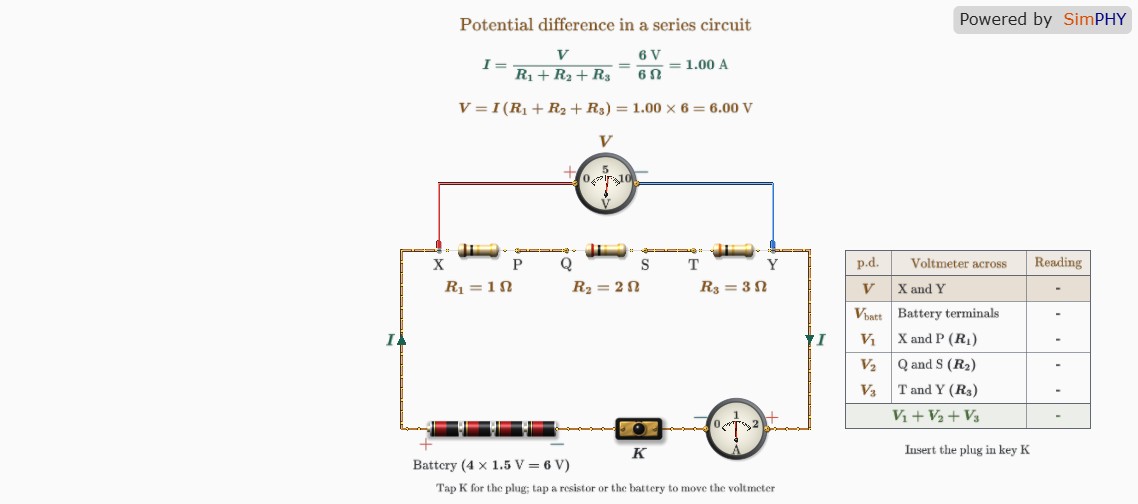
Explore how a circuit’s total voltage equals the sum of resistor volta...