 Free
Resonance Demonstration
Waves & OscillationsExplore standing wave formation and resonance in a rope with free or f...
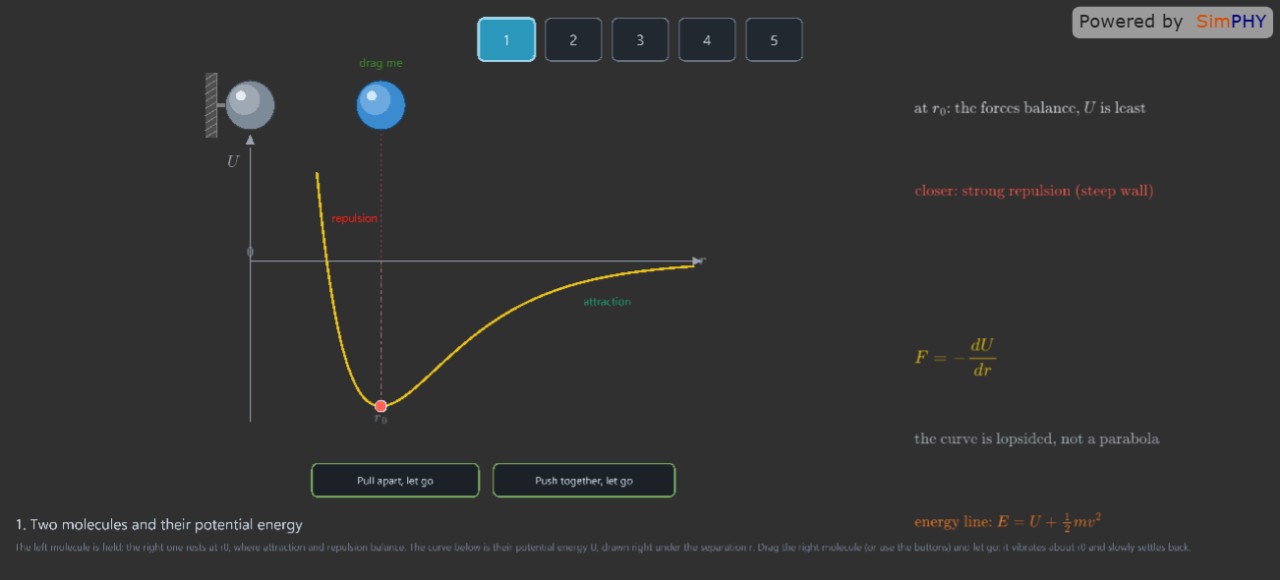
Watch how anharmonic molecular forces cause solids to expand with temperature using a slider and step buttons.
Molecules in a solid are bound by an asymmetric potential energy curve: the repulsive side is steep while the attractive side is gentle. When the solid is heated the molecules vibrate with larger energy, reaching farther out on the gentle side than they retreat on the steep side. The average separation therefore increases, producing macroscopic thermal expansion.
In the first step you can drag the right‑hand molecule (or use pull and push buttons) and release it to see the damped oscillation about its equilibrium distance. In later steps a temperature slider raises the vibrational energy; the average distance and the length of a chain or grid of molecules grow visibly. The simulation highlights why a perfectly symmetric spring would not expand.
Students explore how anharmonic potentials lead to expansion, connect microscopic motion to the bulk property of thermal expansion, and compare the behaviour to an ideal harmonic spring, reinforcing concepts in thermodynamics and vibrational physics.
Free
Explore standing wave formation and resonance in a rope with free or f...
 Free
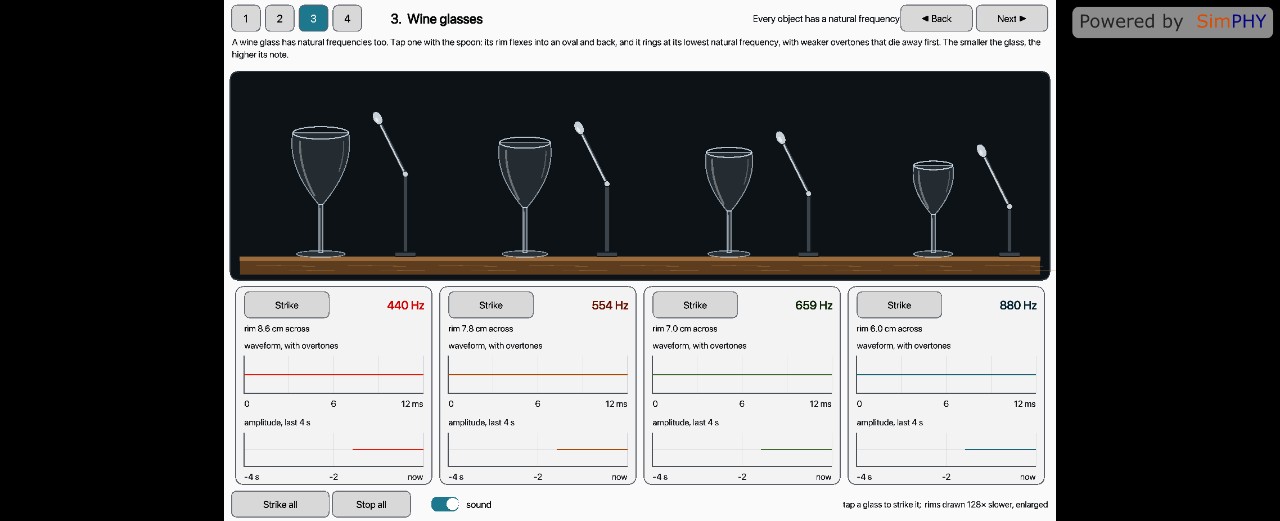
Explore how objects vibrate at their natural frequencies, from springs...
 Free
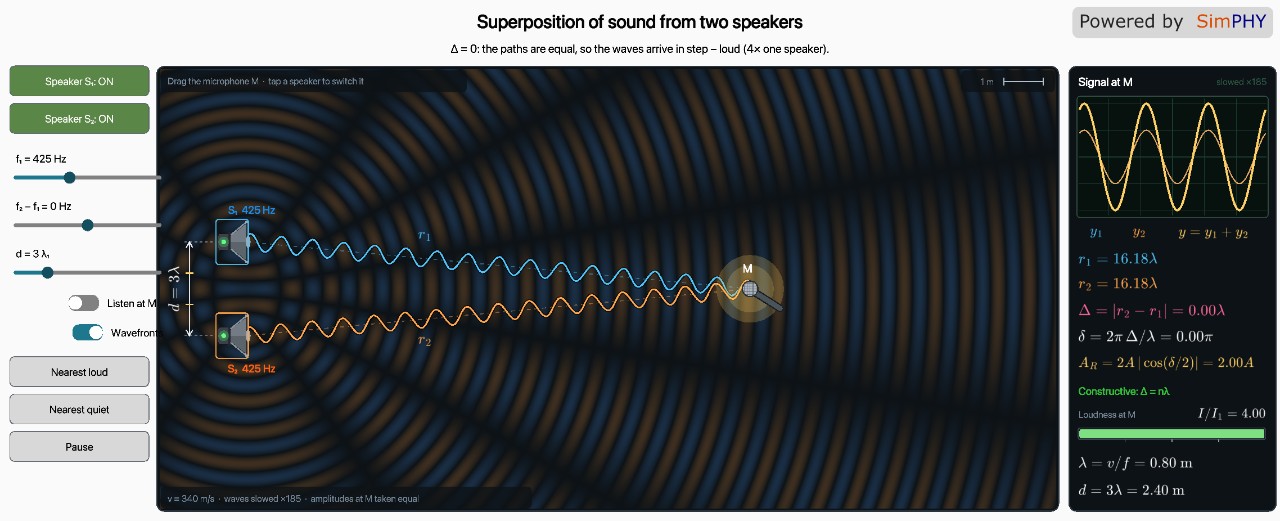
Explore interference and beats from two speakers by adjusting frequenc...
 Free
Explore how two opposite‑direction pulses on a rope superpose, using s...
 Free
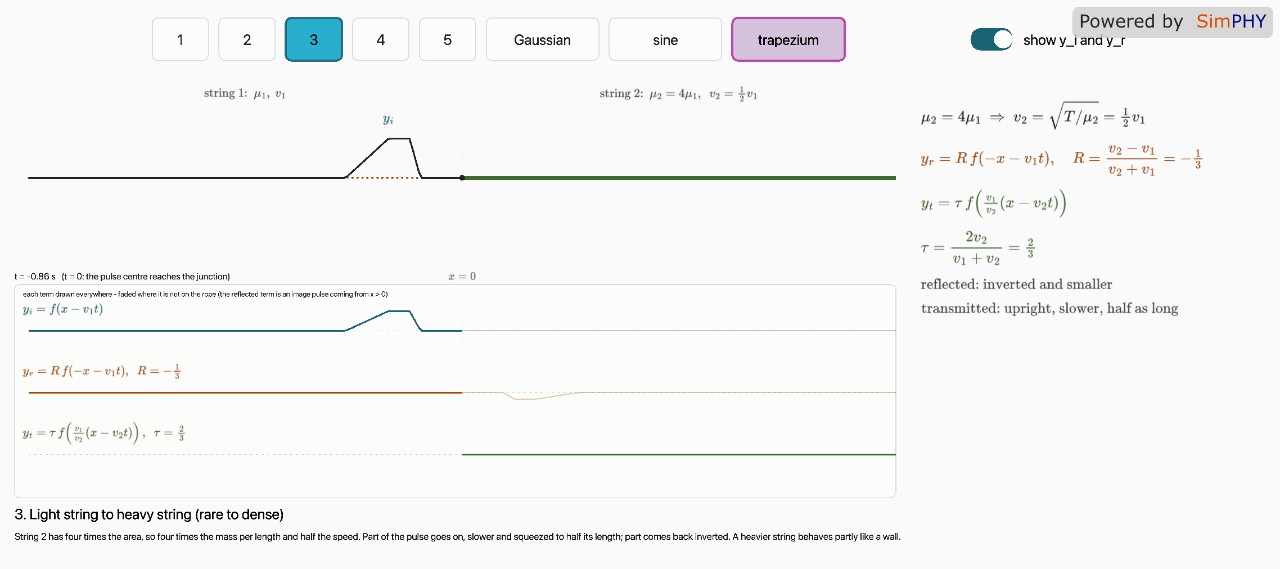
Explore pulse reflection and transmission at fixed, free, and joint st...
 Free
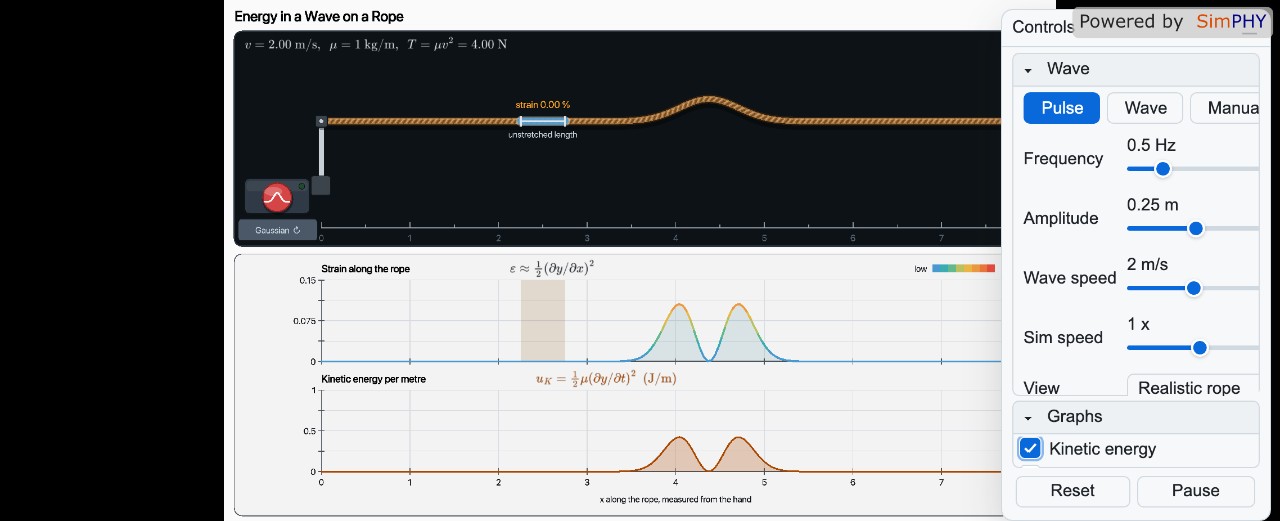
Explore how wave speed, frequency and amplitude affect strain and tota...