 Free
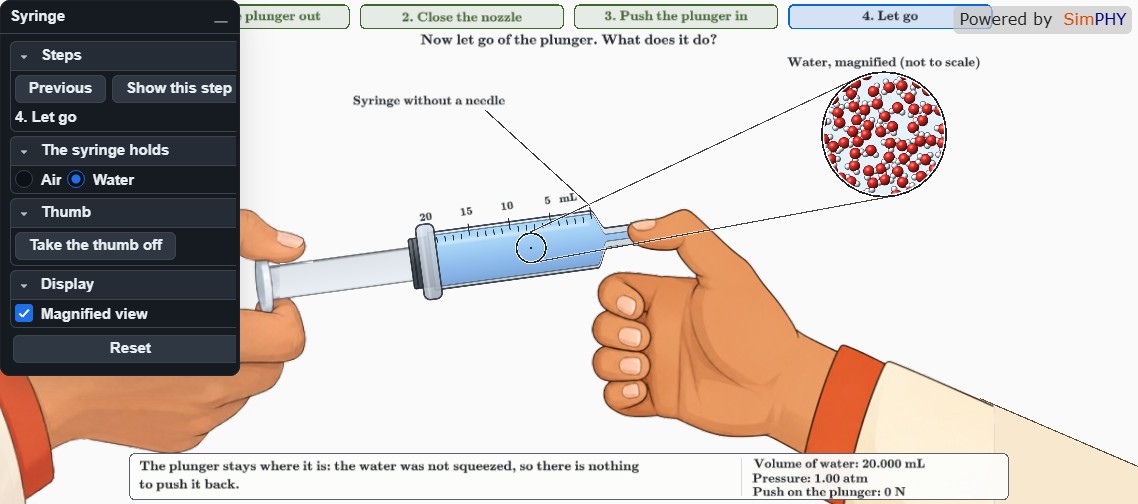
Compressing Air and Water in a Syringe
Fluid MechanicsPull the plunger, seal the tip, and see air compress while water remai...
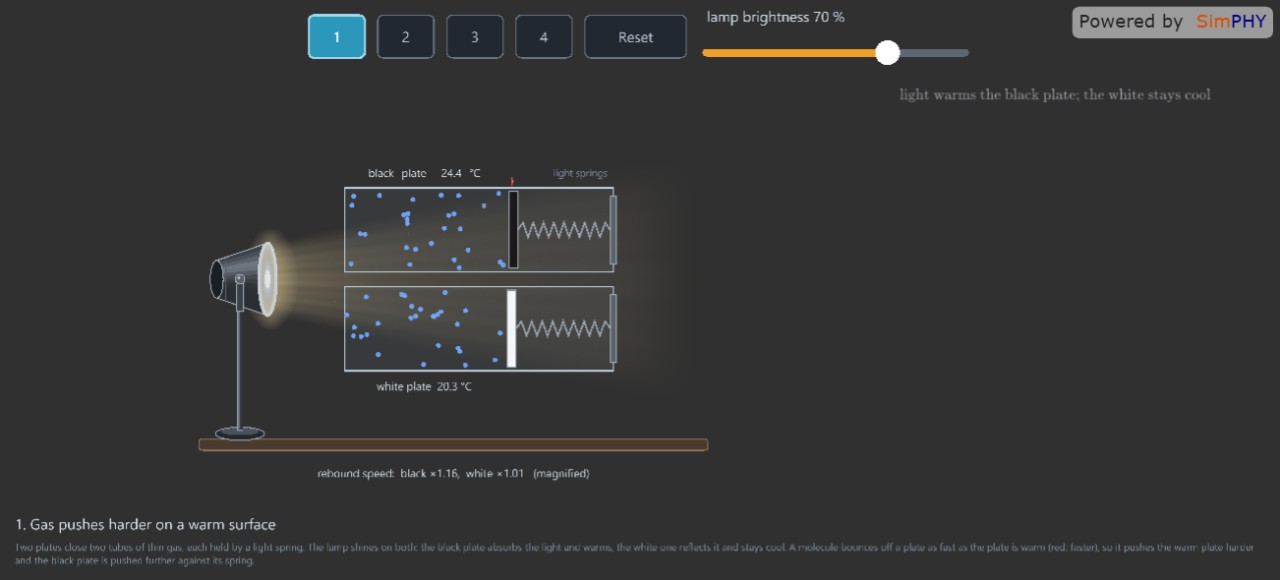
Investigate how heated black vanes push gas molecules to spin a Crookes radiometer, versus light pressure.
The Crookes radiometer demonstrates how a small temperature difference on a surface can create a measurable force on surrounding gas molecules. When the black side of a vane absorbs light, it becomes slightly warmer than the white side. Gas molecules rebound faster from the warm side, producing a net push that turns the vanes. This effect, known as thermal transpiration, is far stronger than the direct pressure of photons, which would push the white faces in the opposite direction.
Using step‑by‑step controls, students can switch the lamp on and off, adjust its brightness with a slider, and move the light source closer or farther from the vanes. In step 2 they can compare the motion with only light pressure versus the added gas effect. Step 4 adds a switch to turn the lamp on, a dimmer, and a live graph showing spin rate as the illumination changes. The simulation lets learners observe how the spin speed varies with temperature difference and illumination.
Through this interactive model, students explore kinetic theory of gases, the relationship between temperature and molecular speed, and the distinction between thermal forces and radiation pressure. They gain insight into thermodynamic concepts such as heat transfer, pressure gradients, and energy conversion in a simple, visual experiment.
Free
Pull the plunger, seal the tip, and see air compress while water remai...
 Free
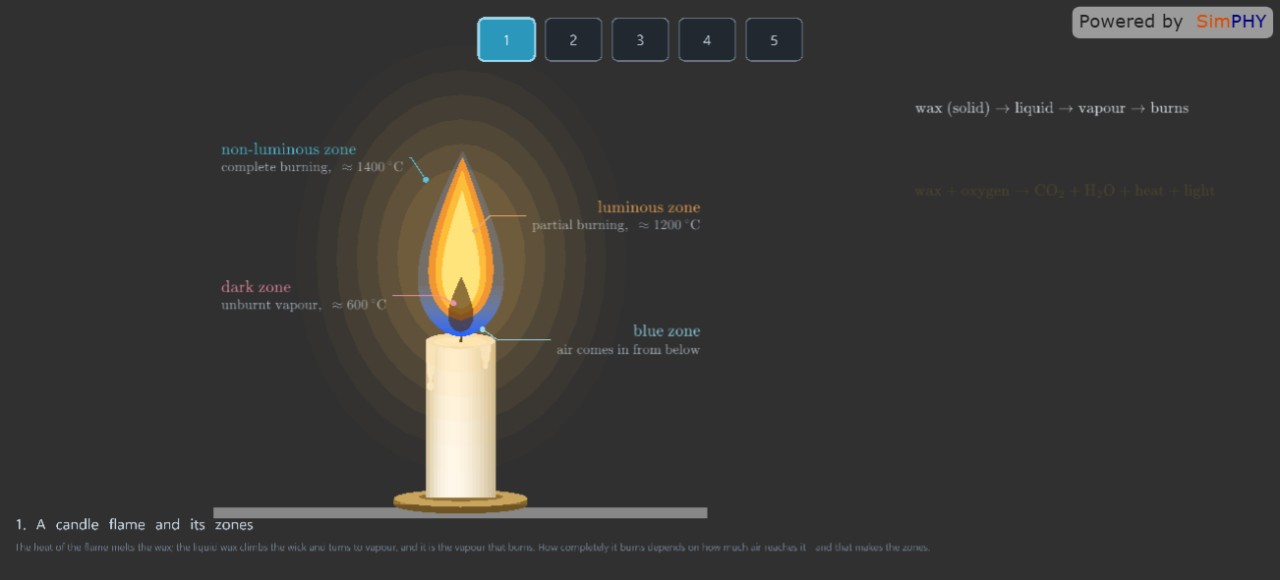
Explore the distinct zones of a candle flame—dark, luminous, outer, an...
 Free
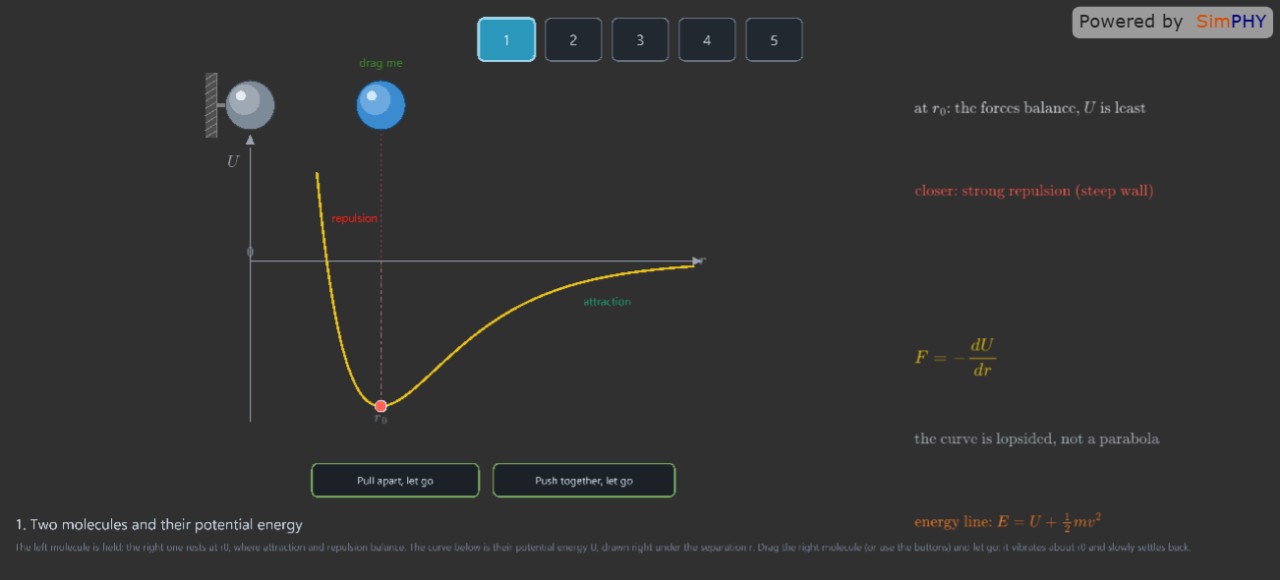
Watch how anharmonic molecular forces cause solids to expand with temp...
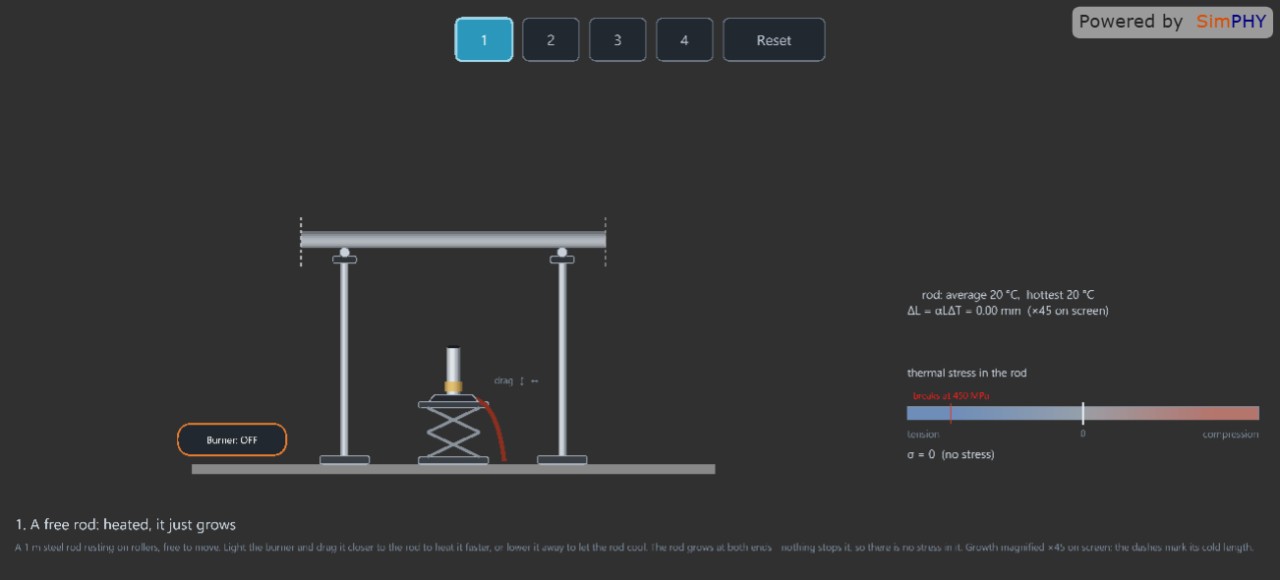 Free
Explore how heating, constraints, and rapid cooling create thermal str...
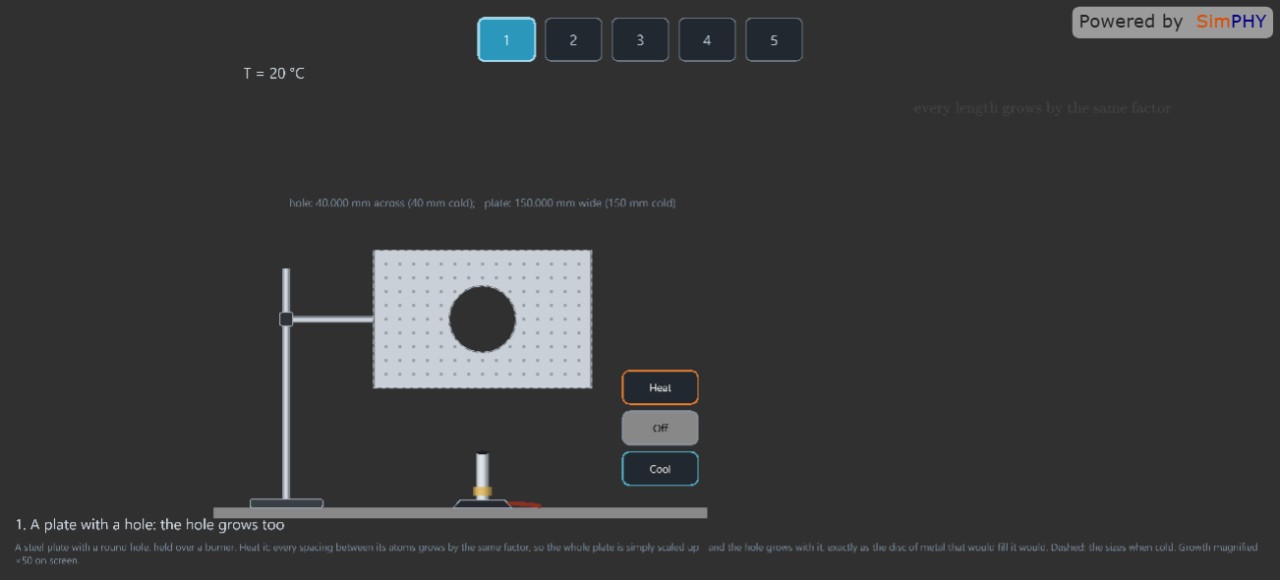 Free
Explore five thermal‑expansion demos: metal plate, glass tube, ball‑ri...
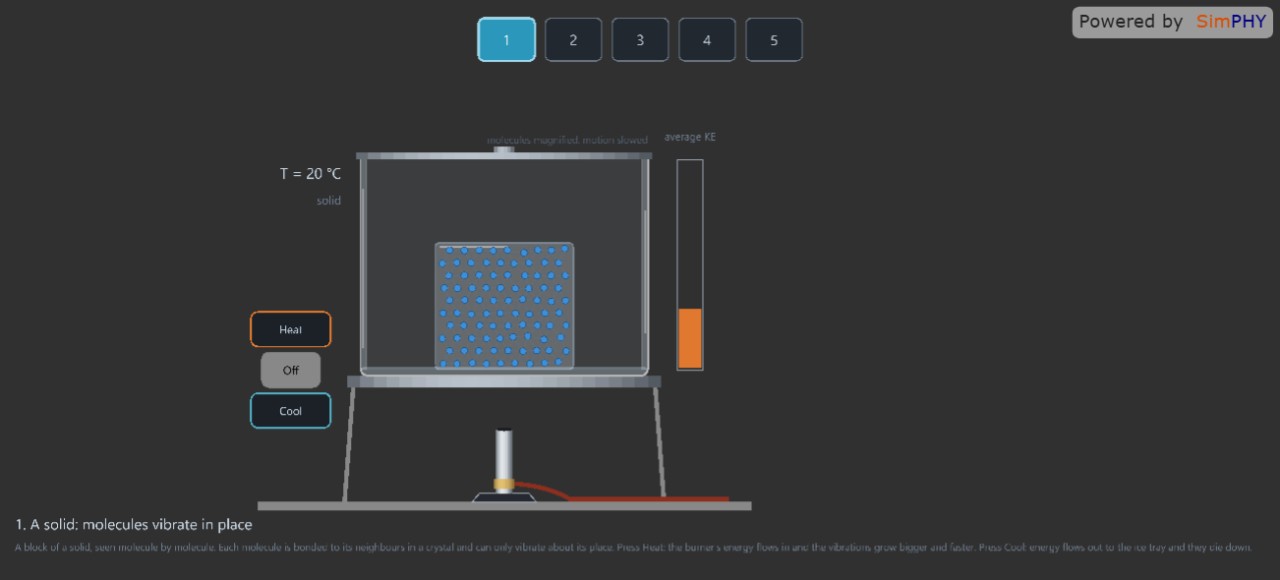 Free
See how heating and cooling change molecular motion in solids, liquids...