 Free
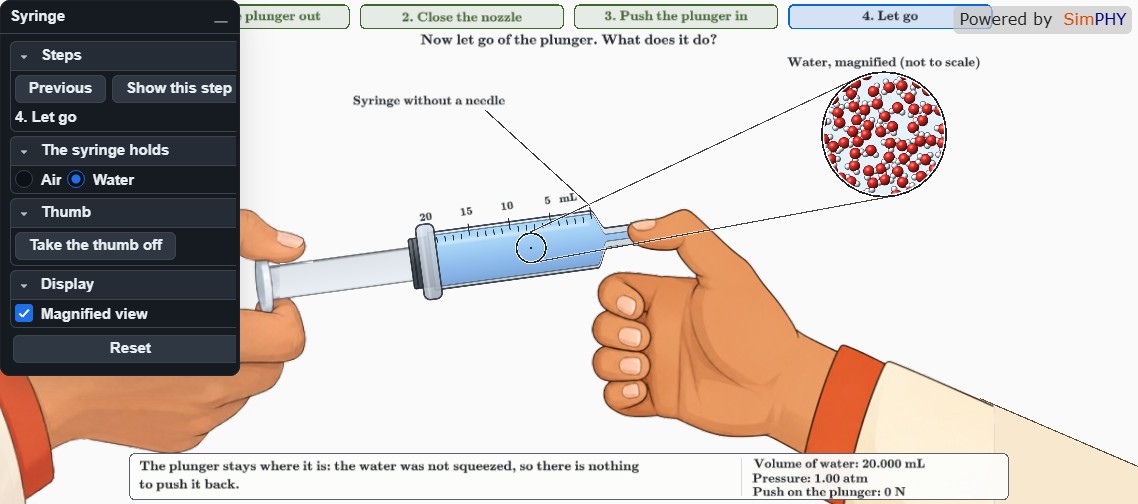
Compressing Air and Water in a Syringe
Fluid MechanicsPull the plunger, seal the tip, and see air compress while water remai...
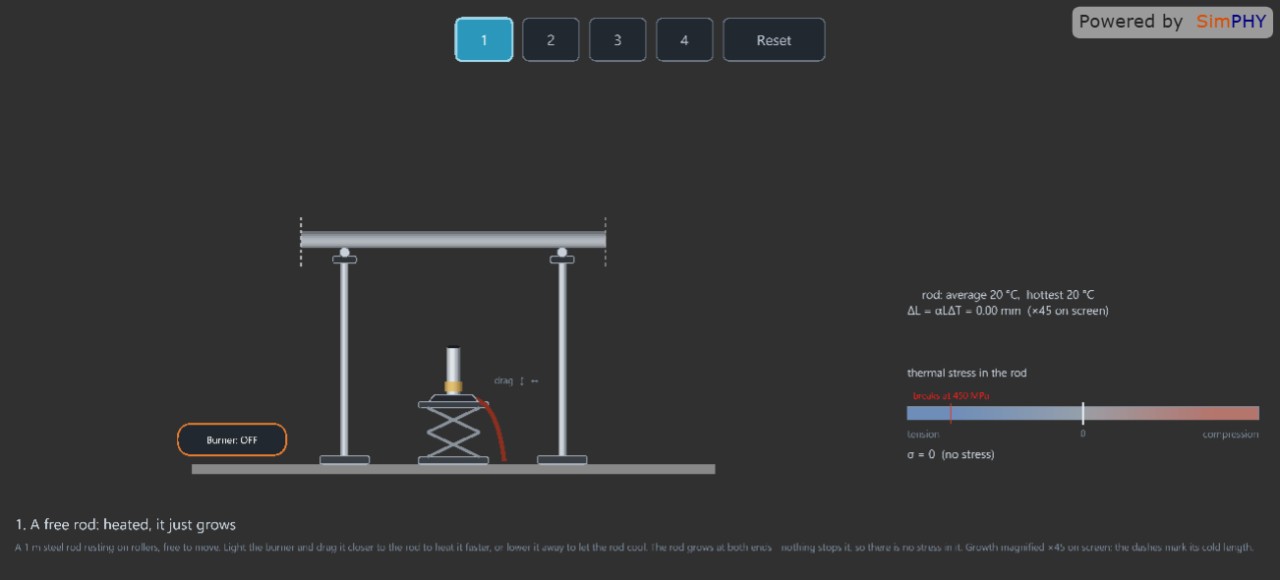
Explore how heating, constraints, and rapid cooling create thermal stress and failure in a steel rod.
When a steel rod is heated it expands. If the ends are free the rod simply grows, but if its motion is constrained the expansion generates internal forces. The stress is given by σ = Y α ΔT, where Y is Young's modulus and α the coefficient of thermal expansion. This simulation shows how different constraints turn ordinary expansion into compressive or tensile stress.
Students step through four scenarios using numbered buttons: a free rod on rollers, a rod trapped between rigid walls, a rod held by threaded nuts that are tightened while hot, and finally a hot rod that is rapidly cooled with water. They can drag the burner closer to change heating rate, turn the burner on or off, tighten the nuts, and start or stop the water flow. Observing the rod’s motion and the forces on the walls or nuts makes the abstract formulas concrete.
By comparing the four cases, learners see how thermal stress depends on boundary conditions, how tension can be introduced by fixing a hot rod, and how a sudden temperature gradient (thermal shock) can exceed the material’s strength and cause fracture. The activity reinforces concepts of thermal expansion, stress‑strain relations, and material failure in a hands‑on visual way.
Free
Pull the plunger, seal the tip, and see air compress while water remai...
 Free
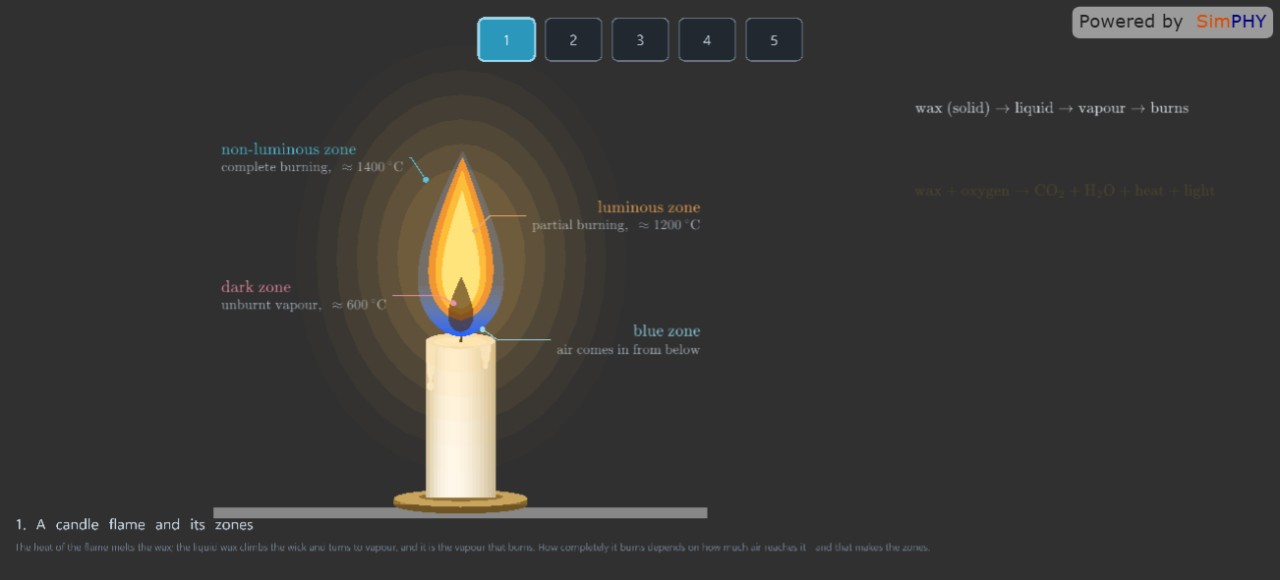
Explore the distinct zones of a candle flame—dark, luminous, outer, an...
 Free
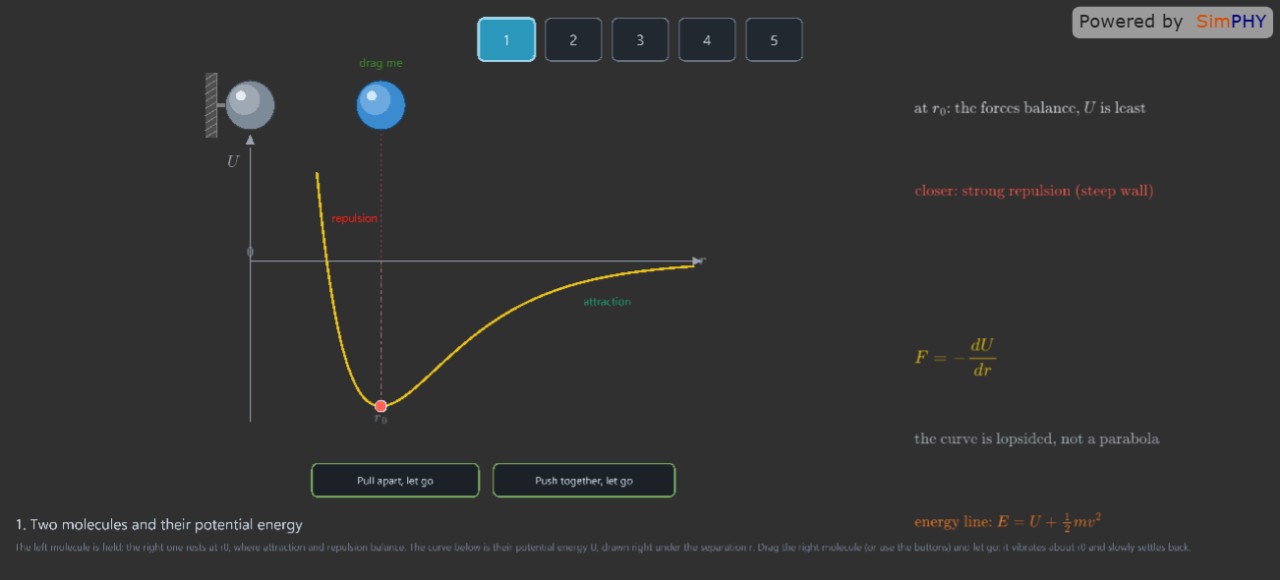
Watch how anharmonic molecular forces cause solids to expand with temp...
 Free
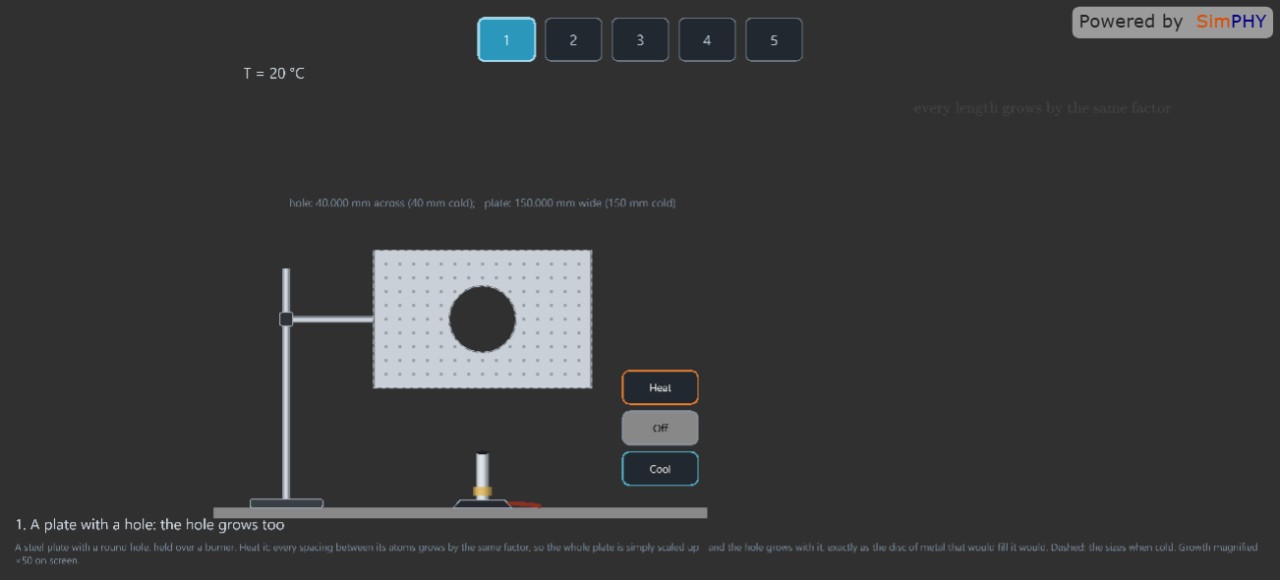
Explore five thermal‑expansion demos: metal plate, glass tube, ball‑ri...
 Free
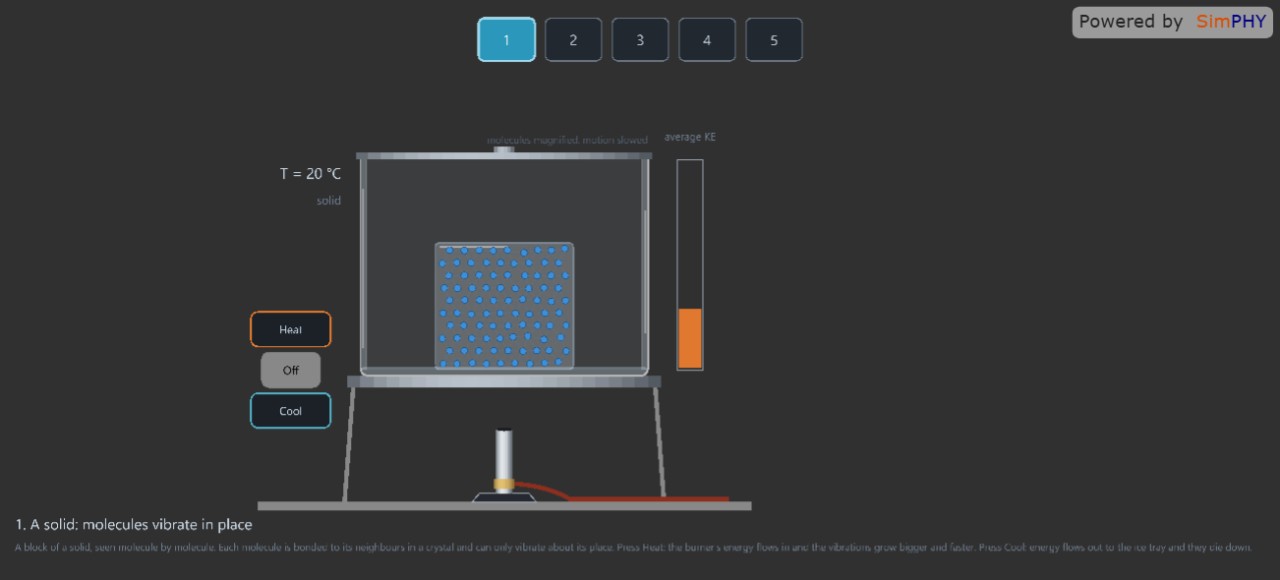
See how heating and cooling change molecular motion in solids, liquids...
 Free
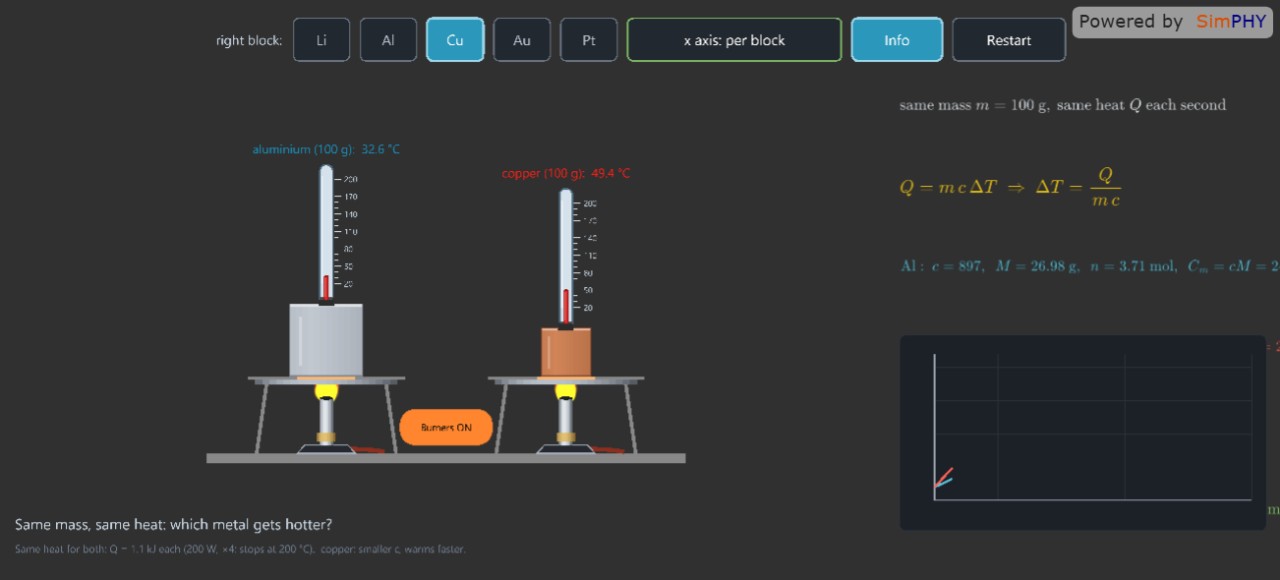
Heat 100 g aluminium and a selected metal on identical burners to comp...