 Free
Metallic Lustre and Abrasive Wear of Metals
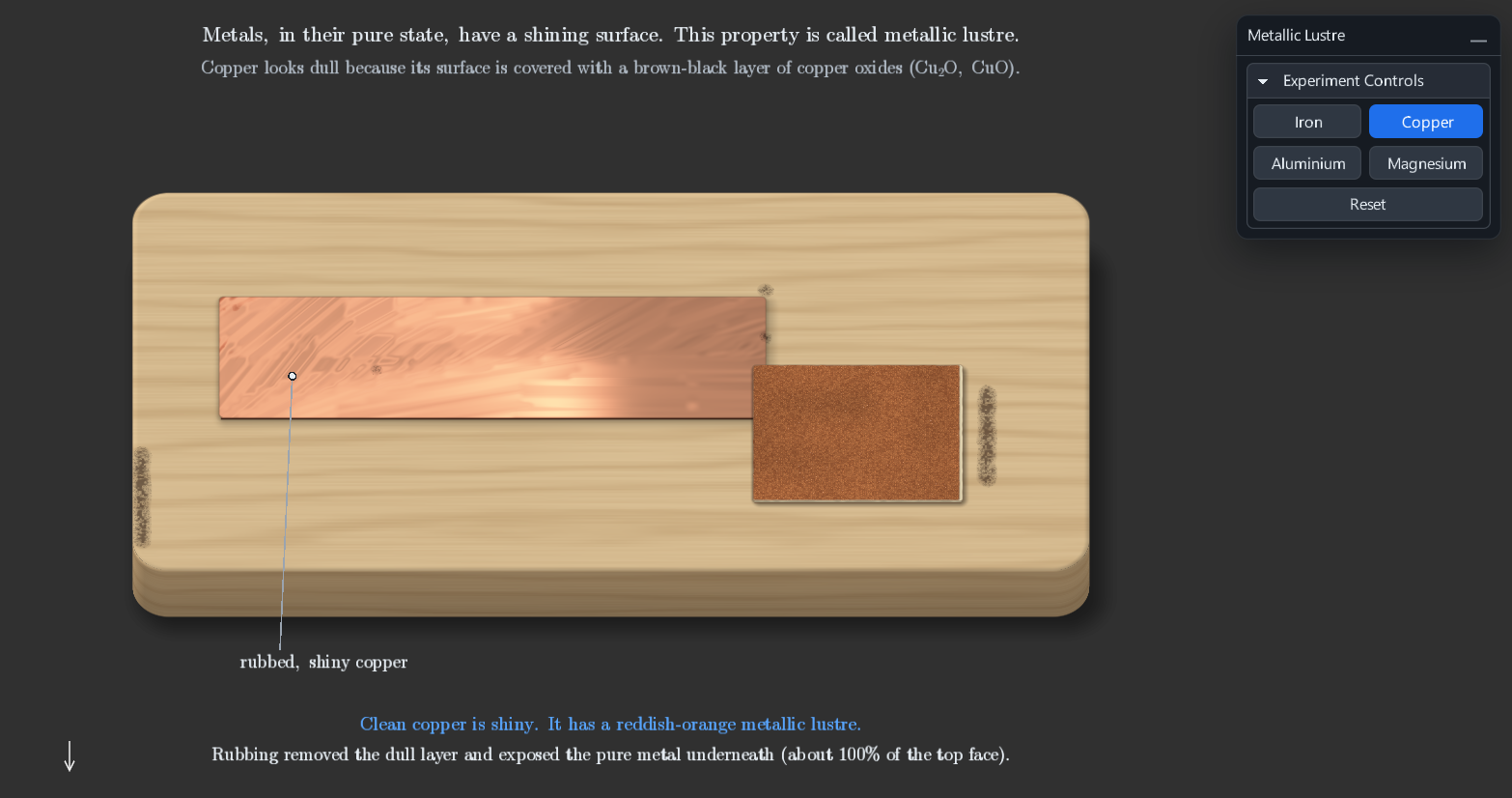
Metal and Non MetalRub sandpaper over metal strips to strip away oxide layers, revealing...
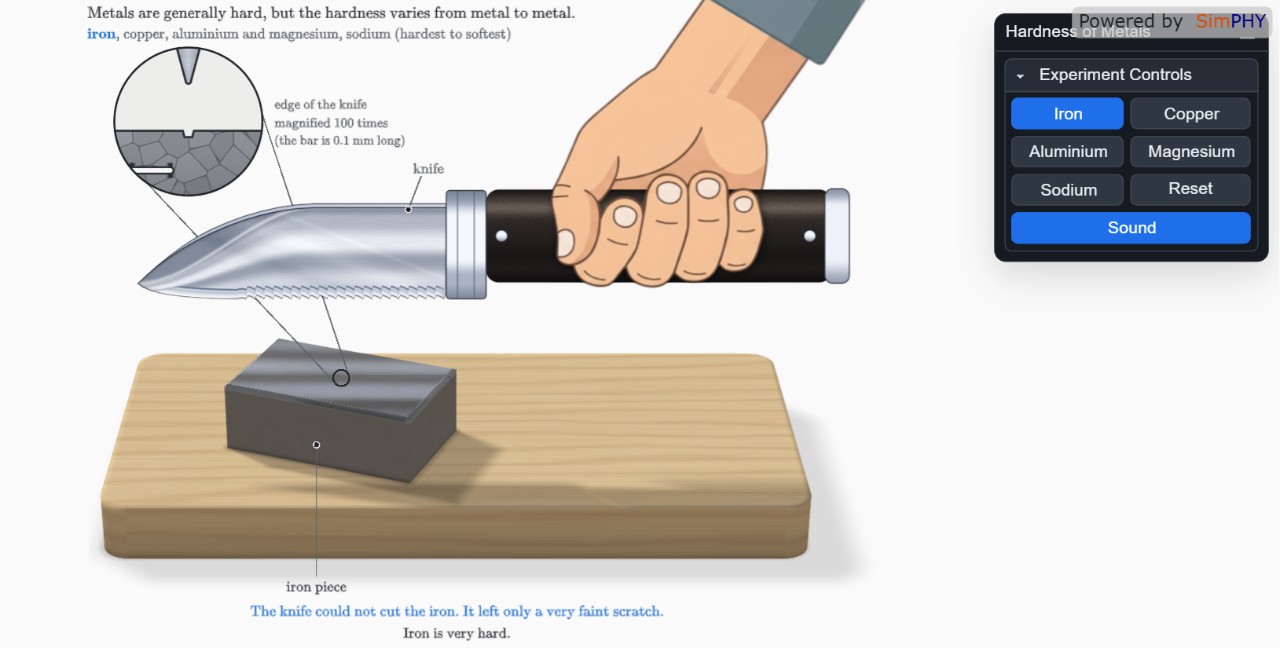
Explore how metals resist a knife’s edge, observing indentation depth and groove formation as hardness…
The simulation visualises the concept of hardness by modelling a sharp knife pressing into different metal pieces. The knife edge acts as a wedge; as the hand pushes, the force increases until it matches the metal’s indentation hardness, creating a groove whose depth reflects the material’s resistance. Elastic deformation produces only a faint scratch, while plastic deformation leaves a permanent groove.
Students can select a metal—iron, copper, aluminium, magnesium, or sodium—and drag the knife downward. An arrow indicates the applied force, and a magnified view shows how deeply the edge sinks. The groove depth and shape change with each metal, illustrating relative hardness. A sound button toggles realistic audio cues.
By interacting with the model, learners discover why some metals are cut easily while others resist cutting, linking force, pressure, and material properties. The activity reinforces class‑10 NCERT topics on metal hardness and the mechanical behaviour of solids.
Free
Rub sandpaper over metal strips to strip away oxide layers, revealing...
 Free
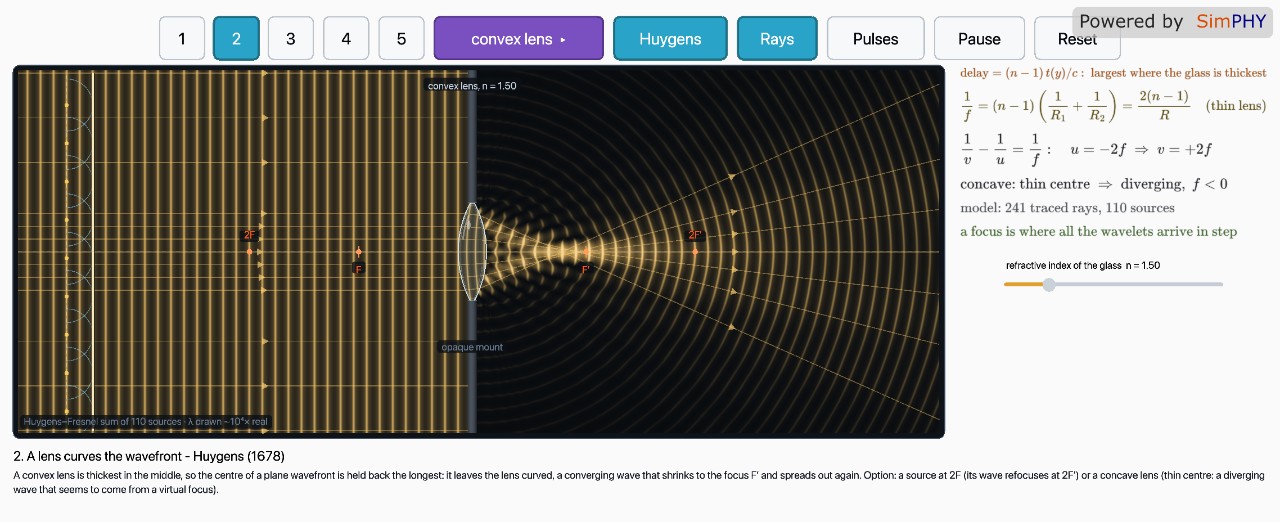
Explore Huygens’ construction and ray behavior as wavefronts pass thro...
 Free
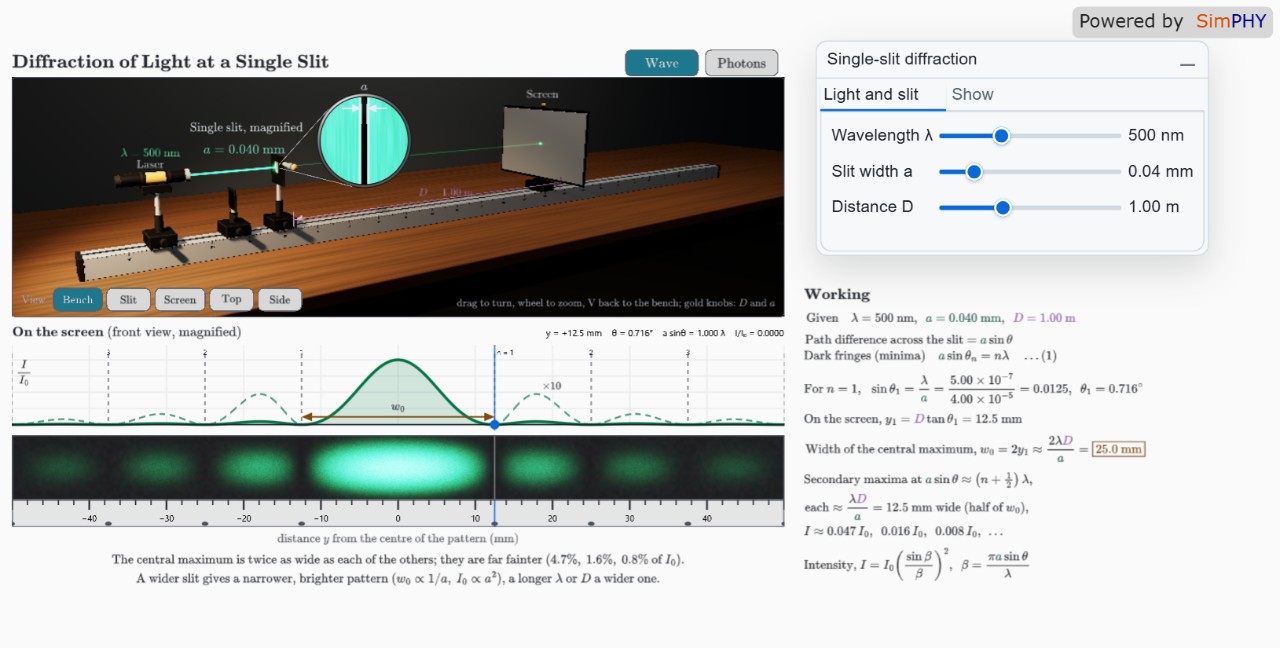
Explore how slit width, wavelength, and distance affect the Fraunhofer...
 Free
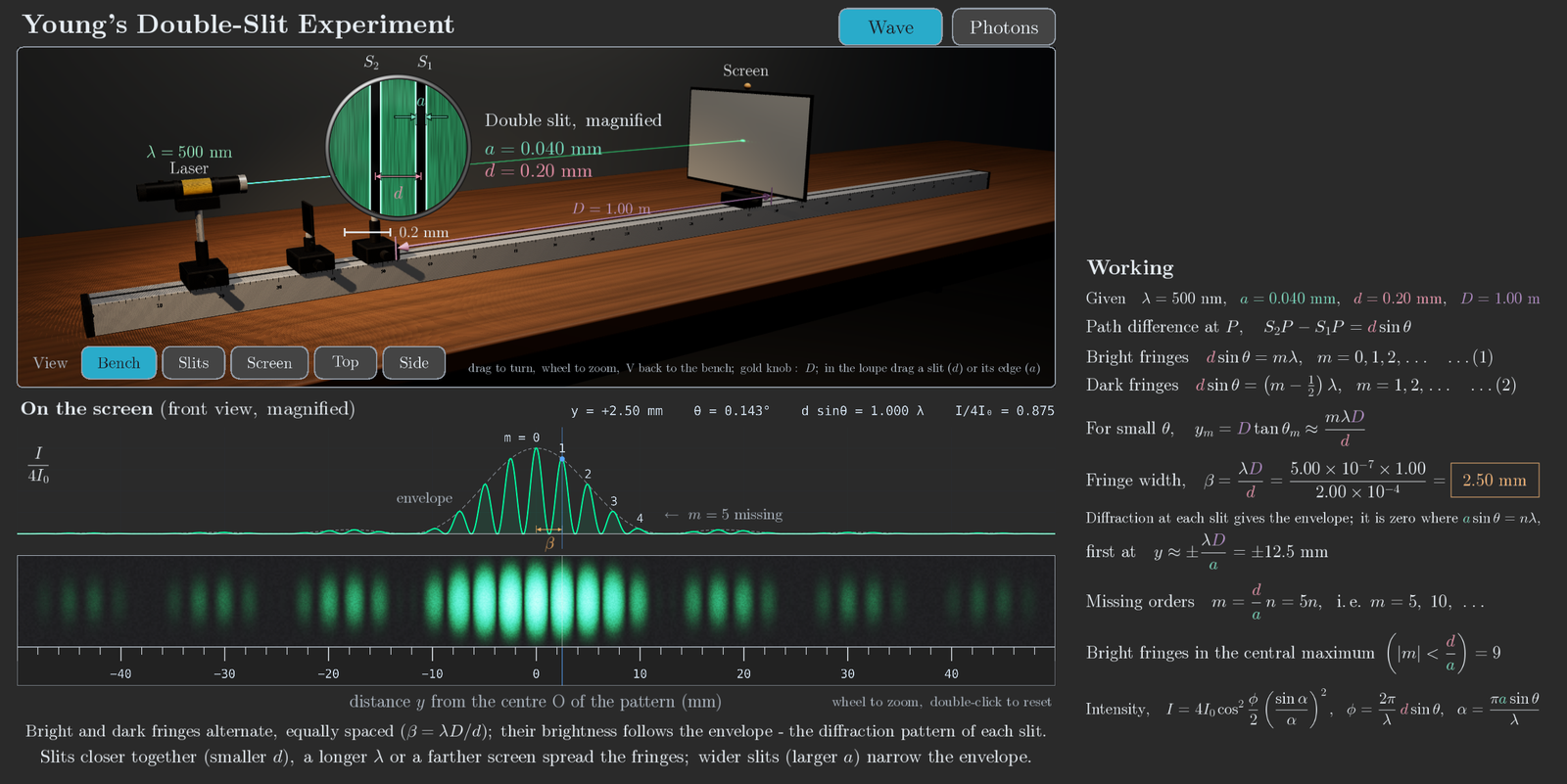
Observe interference and diffraction from a laser through adjustable s...
 Free
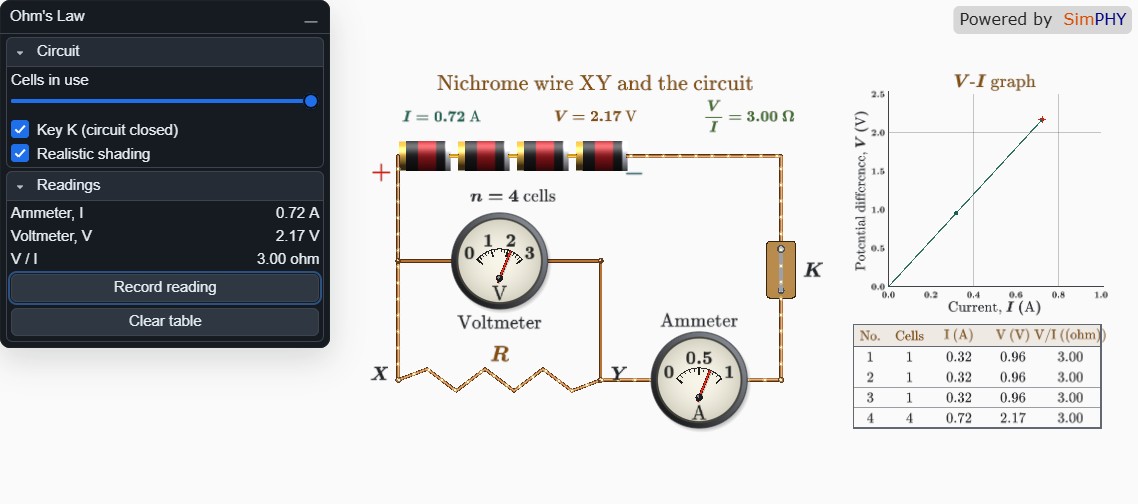
Add 1‑4 cells with a nichrome wire, close the key and read the ammeter...
 Free
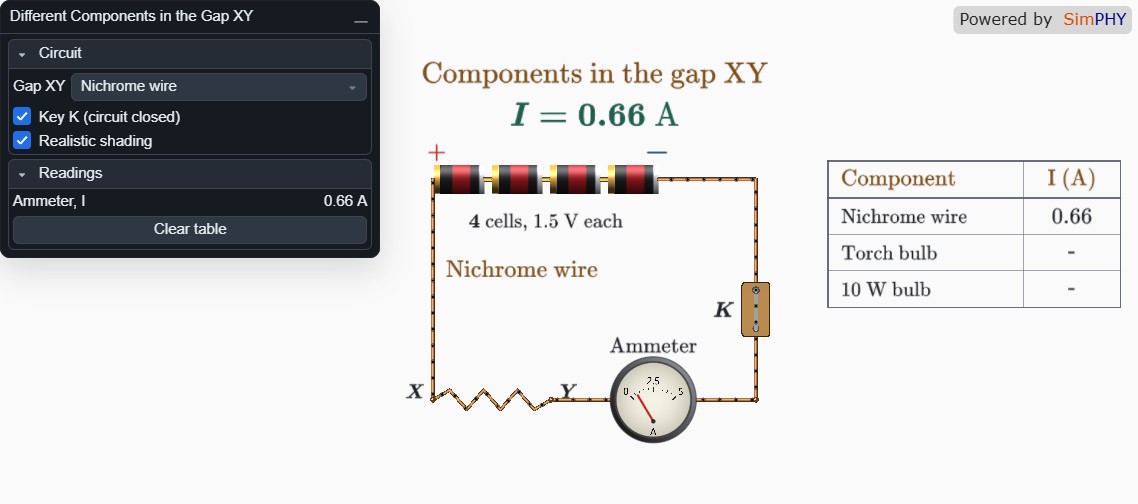
Watch how a nichrome wire, a torch bulb, and a 10 W bulb change the am...