 Free
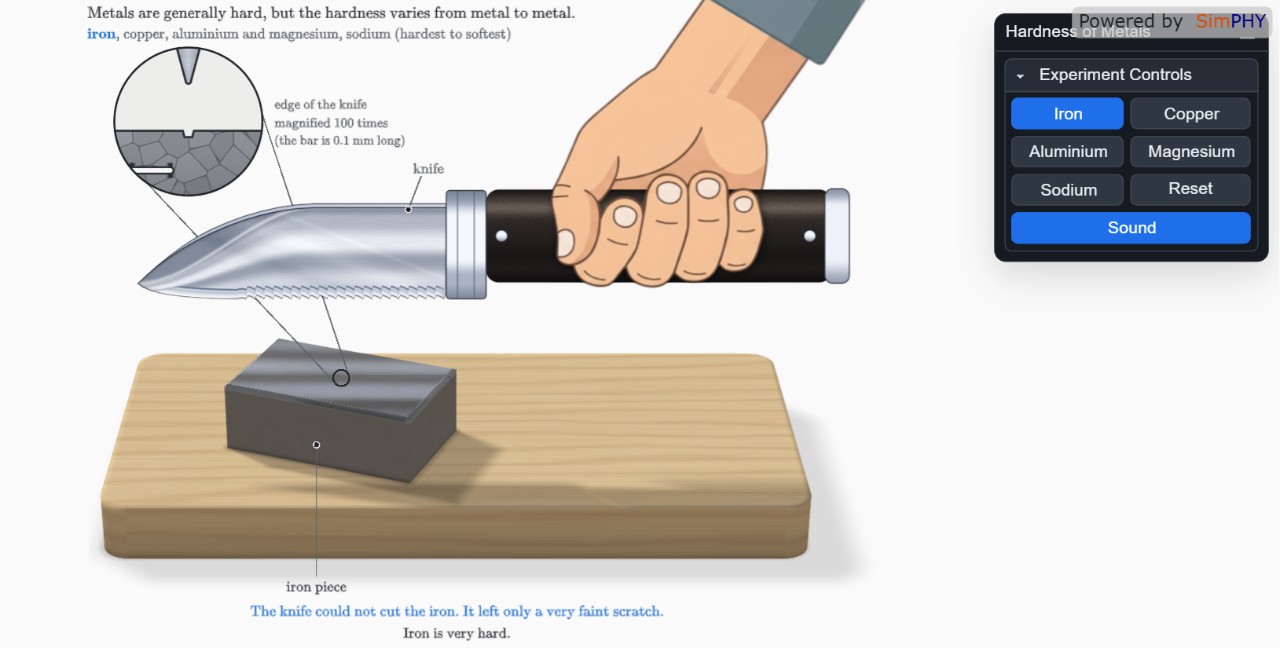
Hardness of Metals – Knife Cutting Simulation
Metal and Non MetalExplore how metals resist a knife’s edge, observing indentation depth...
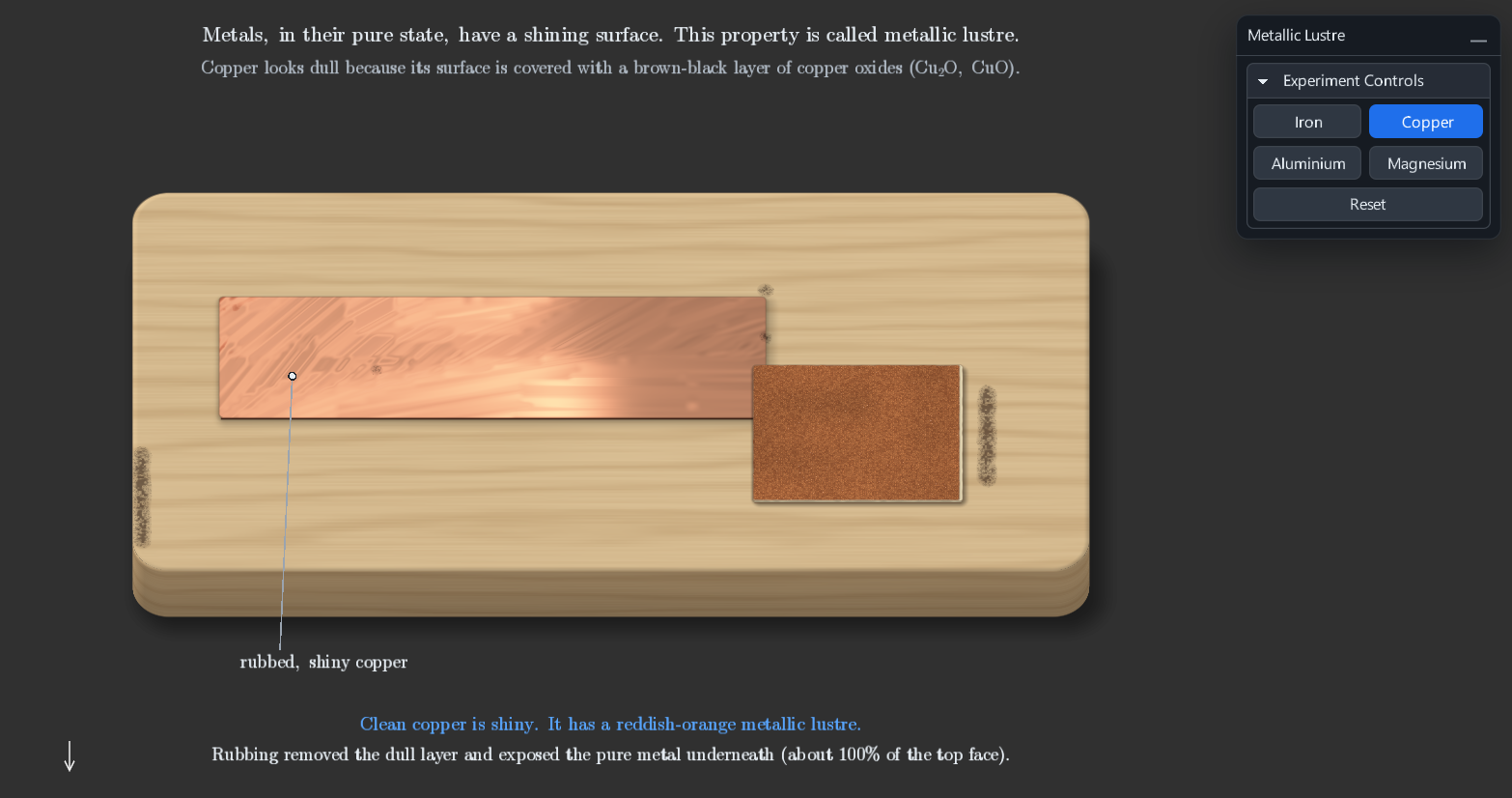
Rub sandpaper over metal strips to strip away oxide layers, revealing lustre, and watch cell‑by‑cell wear.
Metals appear shiny because their pure surfaces reflect light. In air, a thin oxide or contaminant layer forms—rust on iron, copper oxides on copper, aluminium oxide on aluminium, and magnesium oxide on magnesium—making the surface look dull. Rubbing the metal with sandpaper removes this layer, exposing the underlying metallic lustre only where it is scratched.
The simulation models a metal strip divided into a grid of cells, each tracking how much of the dull layer remains. As the sandpaper moves across the strip, the script applies Archard's law, removing material proportionally to the pressure and sliding distance for each cell. Students can watch the progressive removal of the oxide layer and see how the bright regions develop in real time.
By interacting with the model, learners explore concepts of surface chemistry, oxidation, and abrasive wear. They observe how material removal depends on contact pressure and motion, reinforcing the link between microscopic surface processes and the macroscopic property of metallic lustre.
Free
Explore how metals resist a knife’s edge, observing indentation depth...
 Free
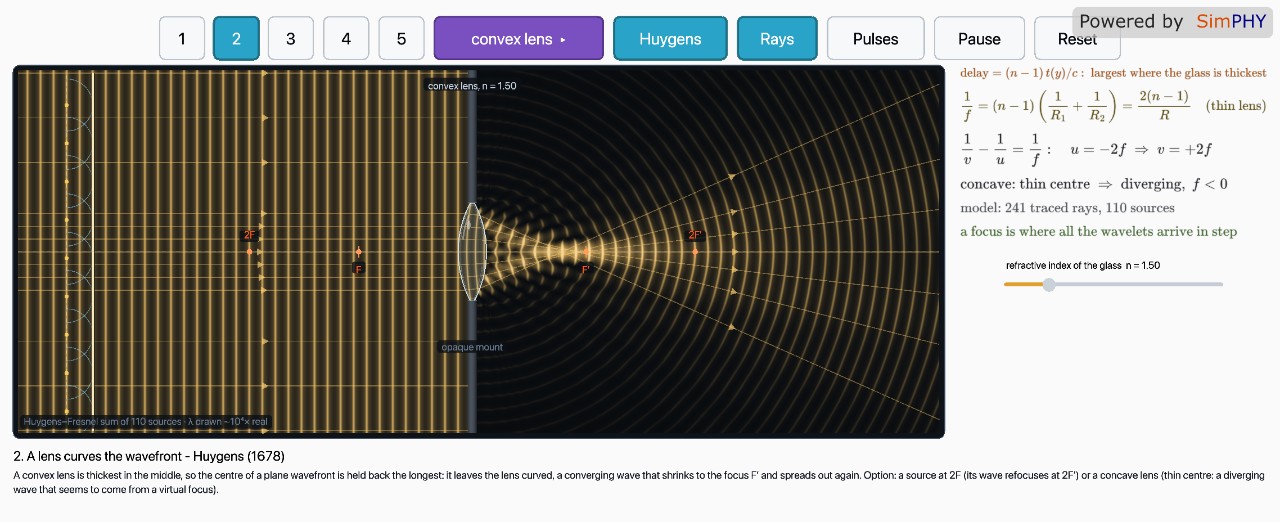
Explore Huygens’ construction and ray behavior as wavefronts pass thro...
 Free
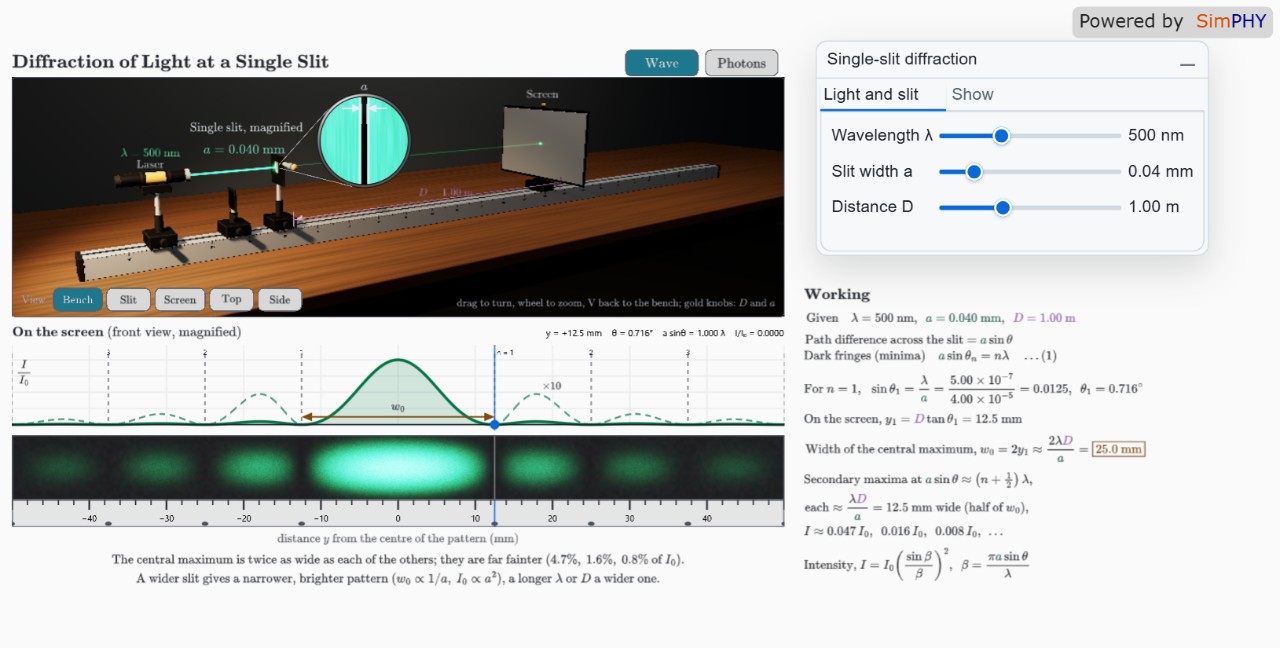
Explore how slit width, wavelength, and distance affect the Fraunhofer...
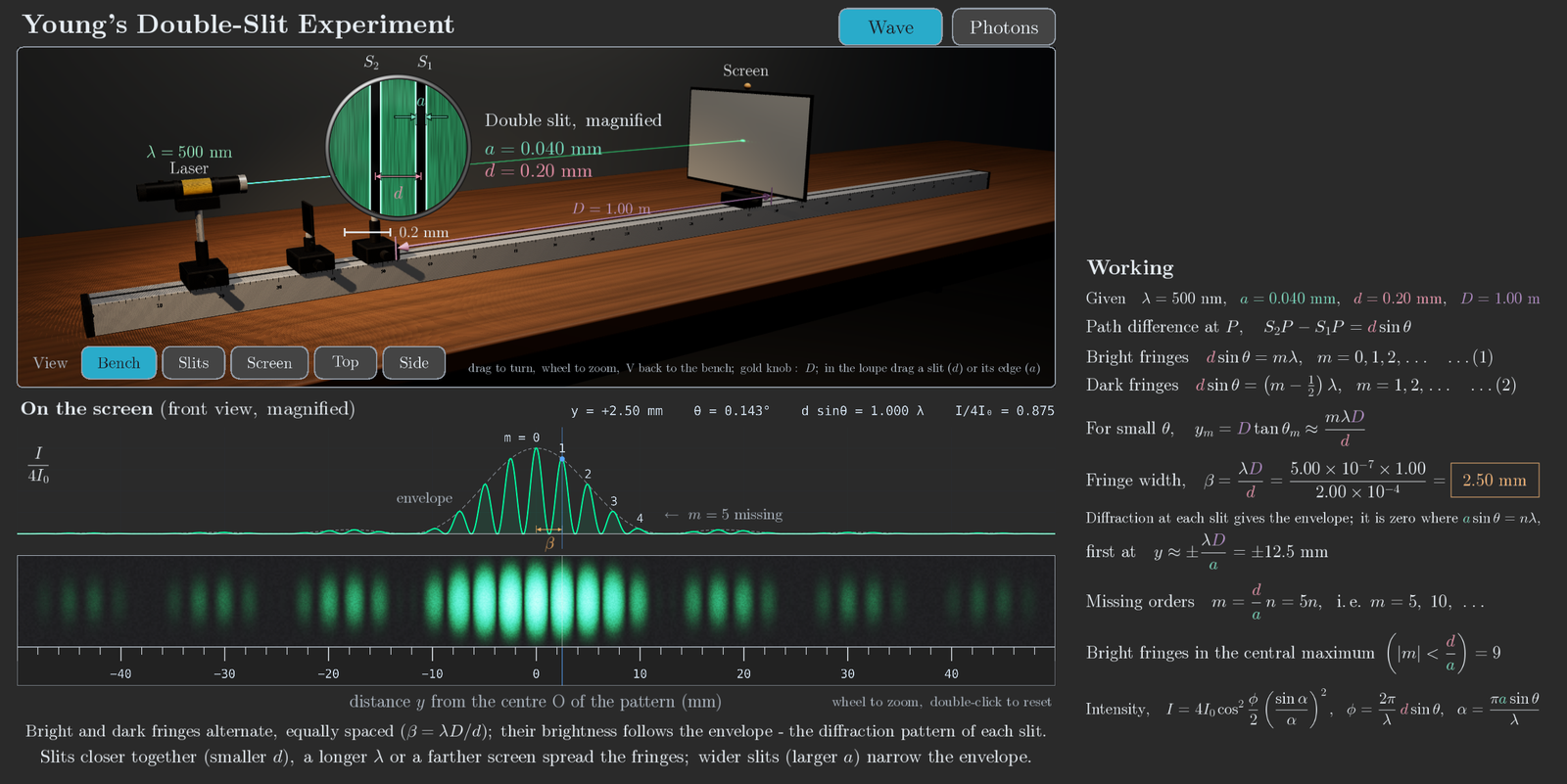 Free
Observe interference and diffraction from a laser through adjustable s...
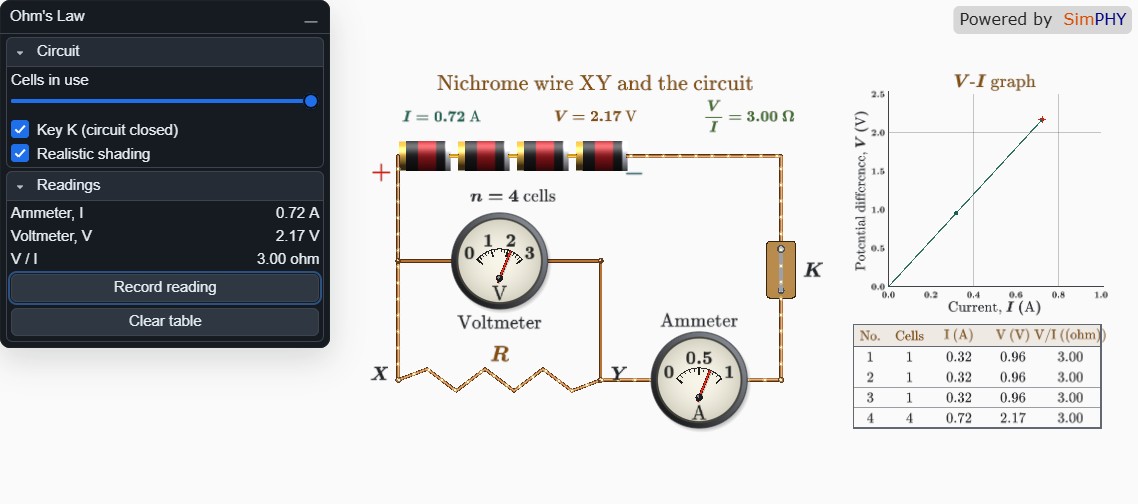 Free
Add 1‑4 cells with a nichrome wire, close the key and read the ammeter...
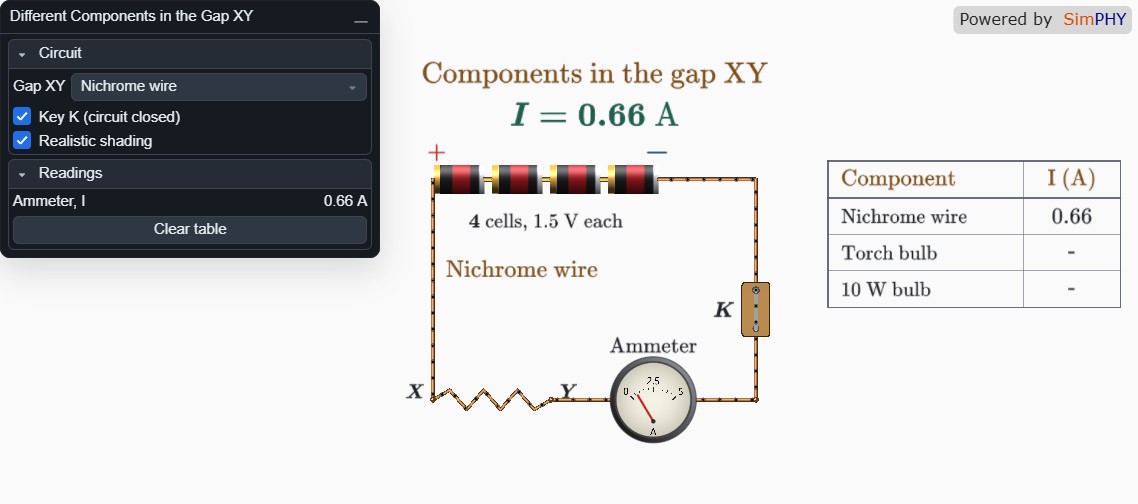 Free
Watch how a nichrome wire, a torch bulb, and a 10 W bulb change the am...