 Free
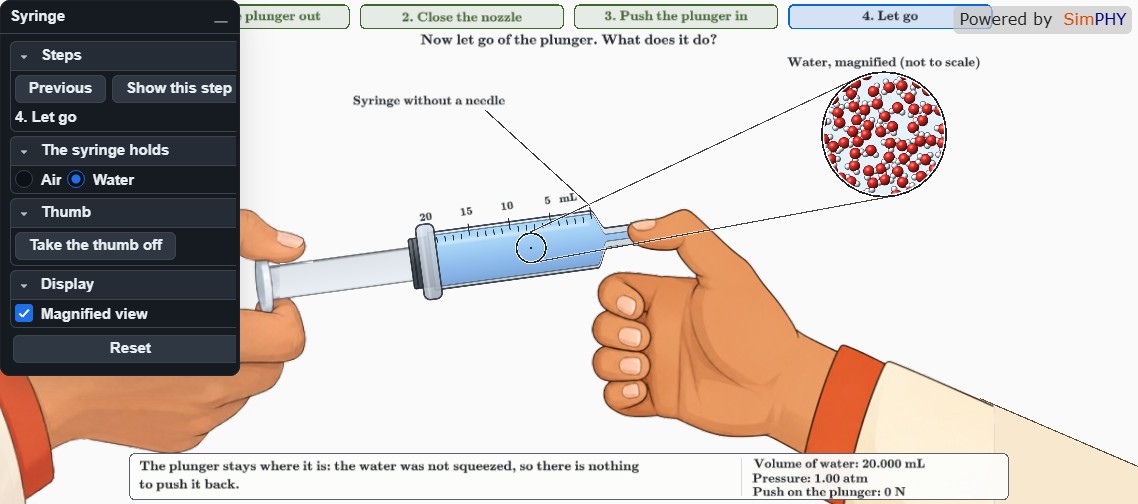
Compressing Air and Water in a Syringe
Fluid MechanicsPull the plunger, seal the tip, and see air compress while water remai...
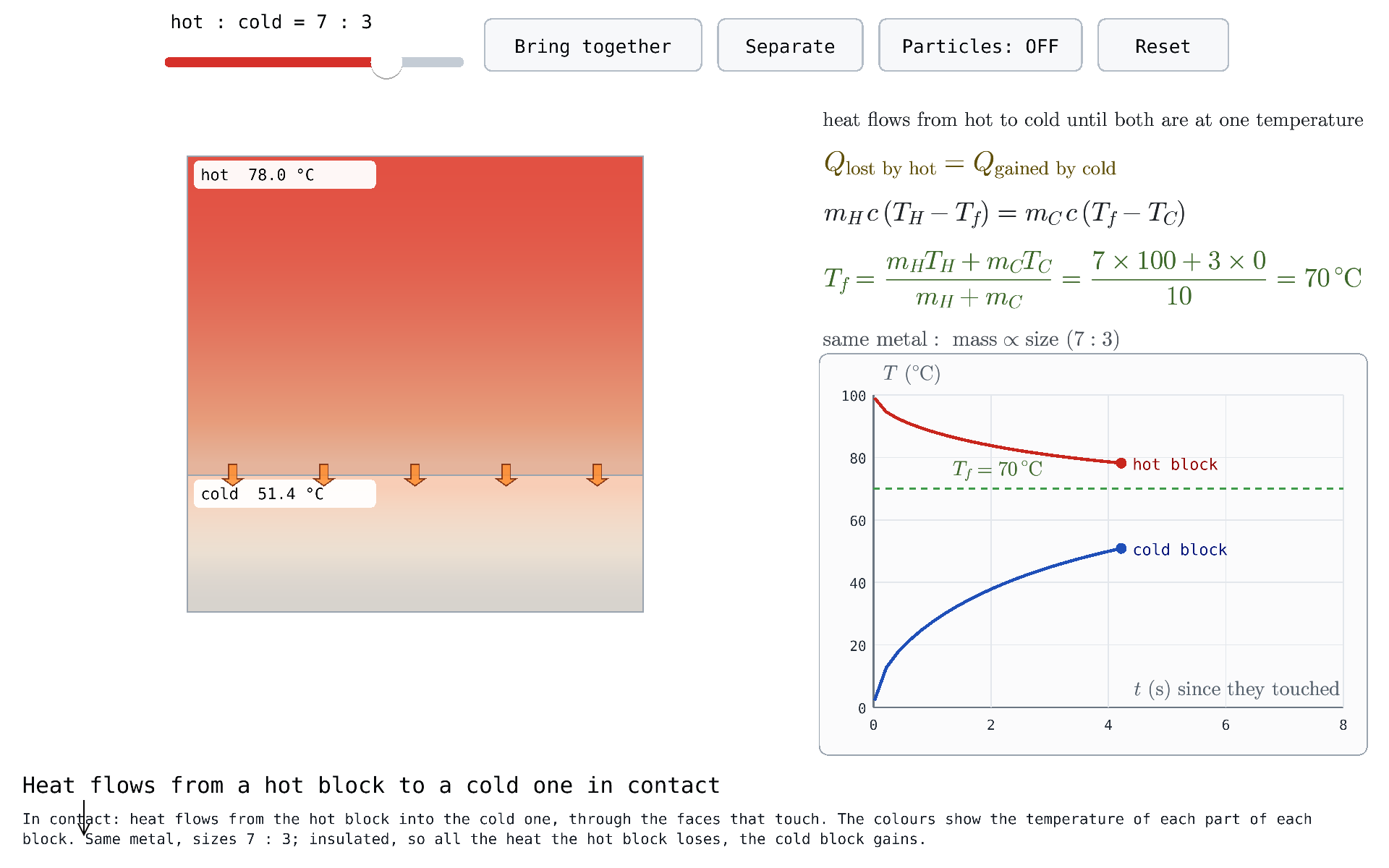
Two metal blocks at different temperatures exchange heat on contact, showing gradients and equilibrium.
This simulation visualises heat conduction when two identical metal blocks, one hot and one cold, are placed in contact. Each block is represented by a grid of cells that solve the 2‑D heat equation, so the colour gradient reveals how heat spreads from the hot face to the cold face cell by cell. Because the system is insulated, no heat is lost and both blocks eventually settle at the mass‑weighted average temperature.
Students can drag the blocks together or use the Bring Together and Separate buttons. A slider adjusts the size ratio of the hot and cold blocks, letting learners see how mass influences the final equilibrium temperature. Turning on Particles displays vibrating atoms that move faster in hotter regions, and a graph tracks the average temperature of each block over time.
Through this interactive model, students explore the principles of thermal conduction, the role of material size in heat transfer, and the concept of thermal equilibrium. They gain intuition about the heat equation, temperature gradients, and energy conservation in insulated systems.
Free
Pull the plunger, seal the tip, and see air compress while water remai...
 Free
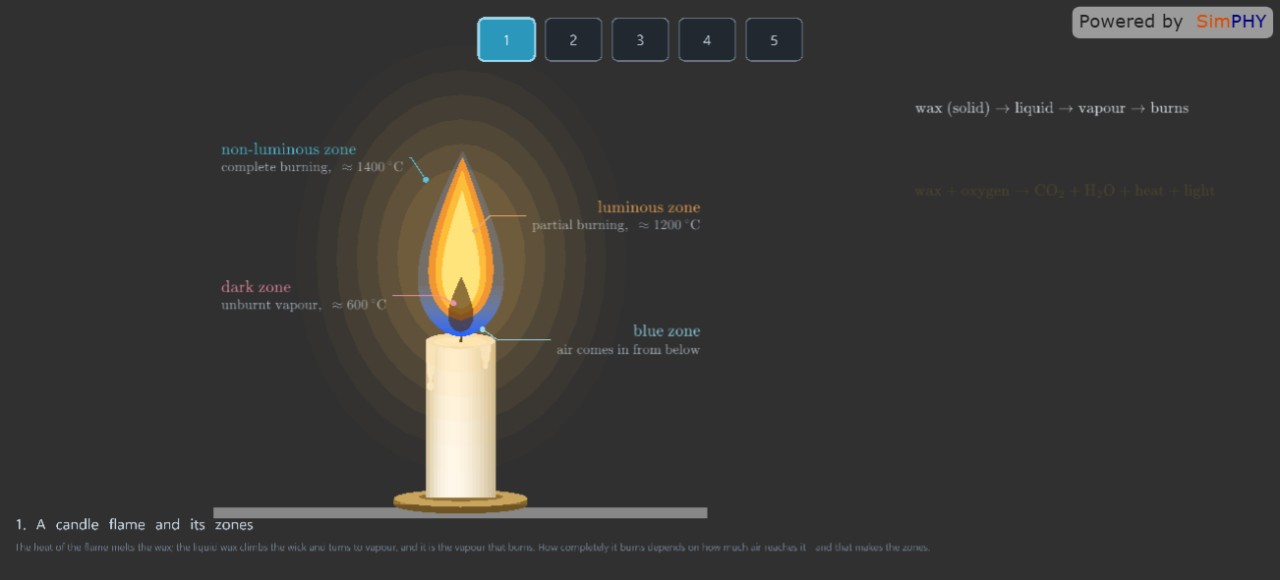
Explore the distinct zones of a candle flame—dark, luminous, outer, an...
 Free
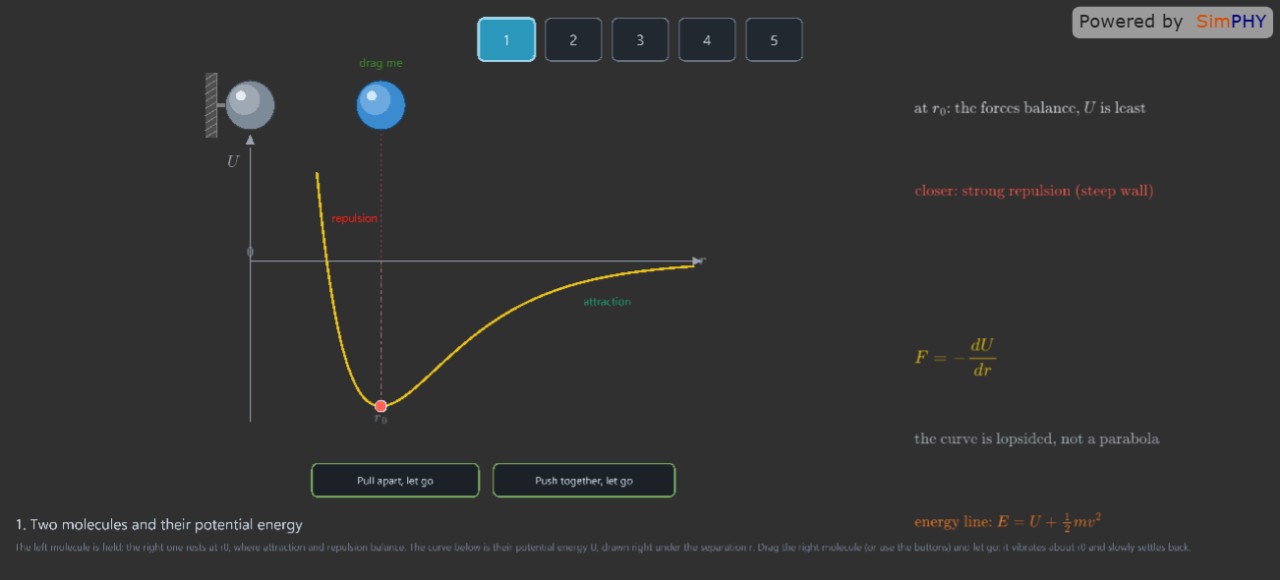
Watch how anharmonic molecular forces cause solids to expand with temp...
 Free
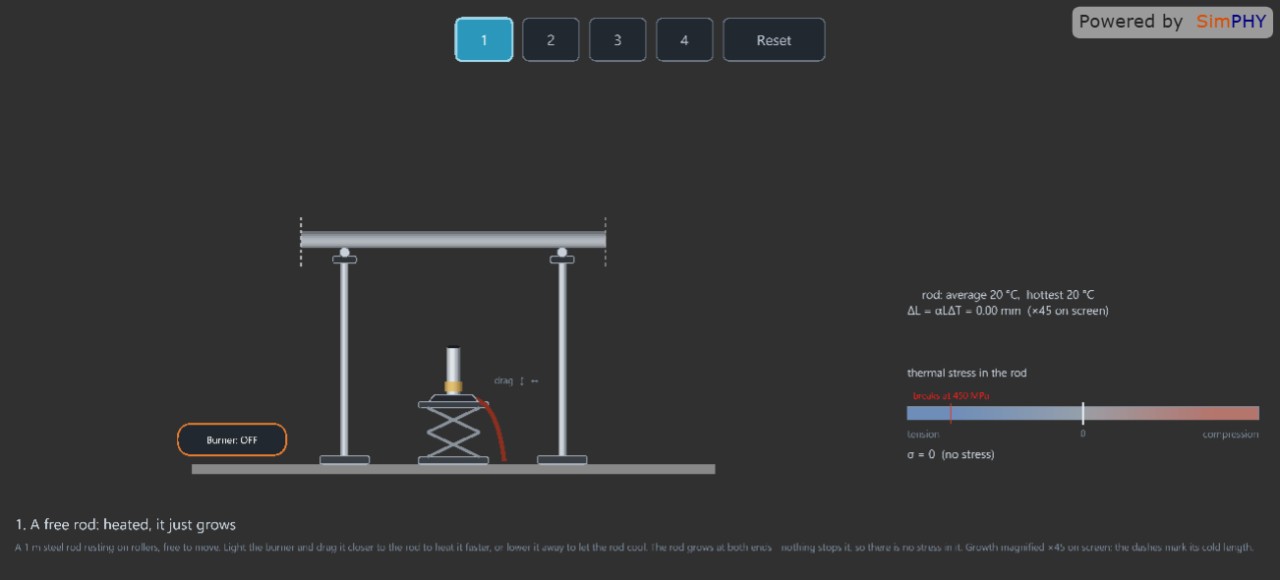
Explore how heating, constraints, and rapid cooling create thermal str...
 Free
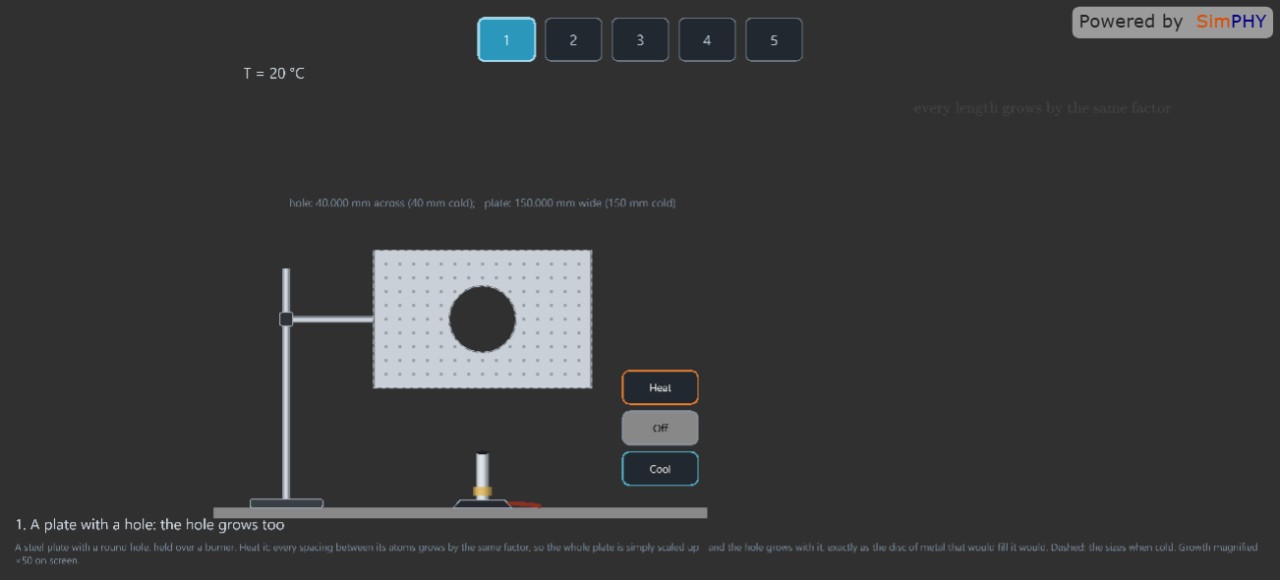
Explore five thermal‑expansion demos: metal plate, glass tube, ball‑ri...
 Free
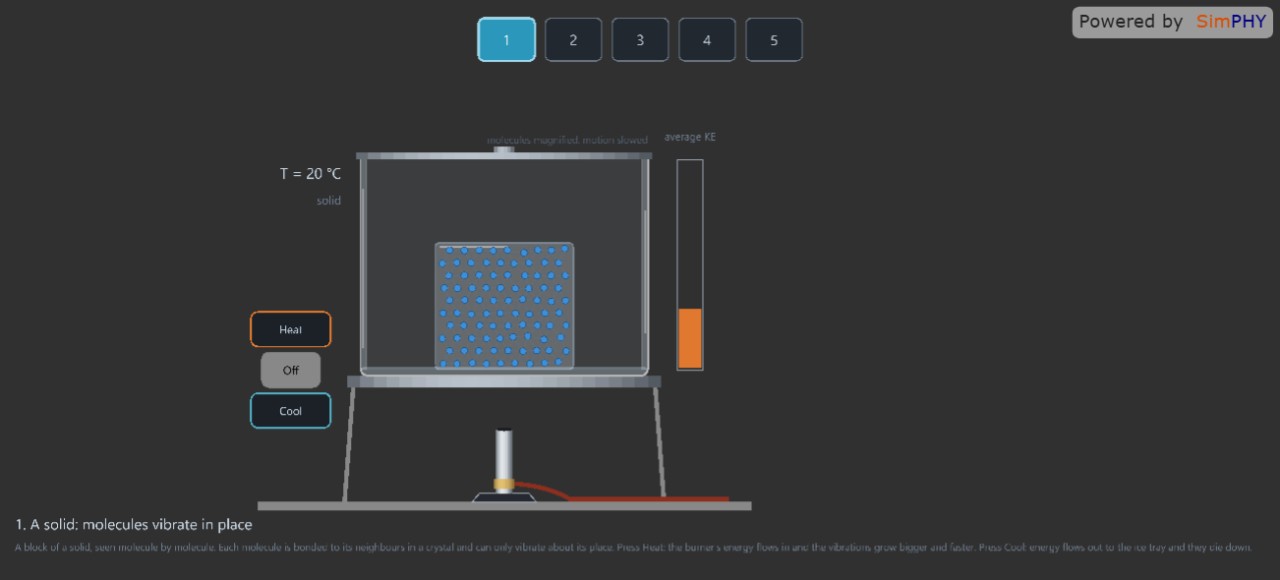
See how heating and cooling change molecular motion in solids, liquids...