
 Free
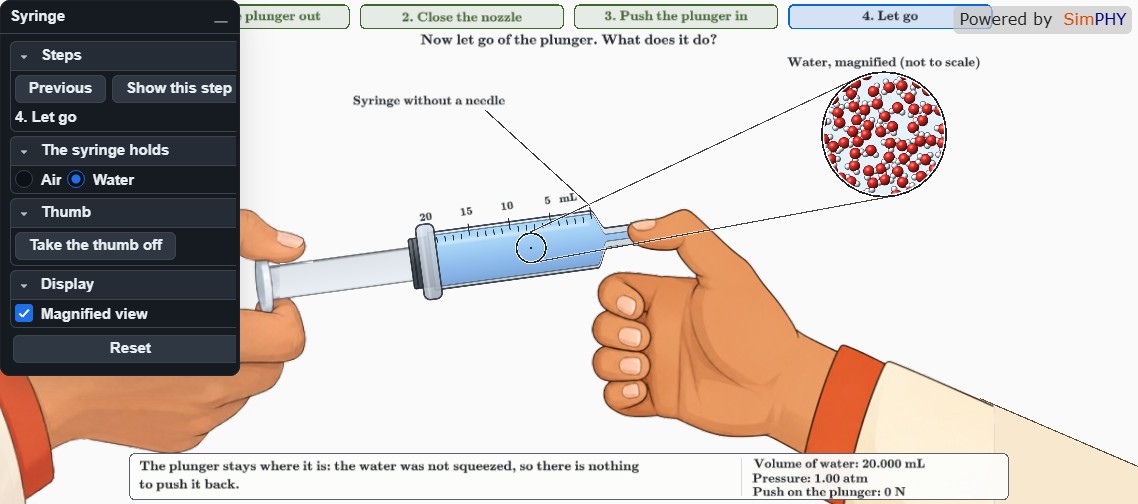
Compressing Air and Water in a Syringe
Fluid MechanicsPull the plunger, seal the tip, and see air compress while water remai...
Switch between series and parallel rods, change their material, and watch gradients and heat currents.
The simulation models steady‑state heat conduction through two rods using the thermal‑resistance formula R = L/(kA). In a series arrangement the same heat current passes through both rods, so the rod with lower conductivity shows a steeper temperature drop, producing a kink at the junction. In a parallel arrangement each rod experiences the full temperature difference, and the better conductor carries more heat, analogous to electrical resistors.
Students can select Series or Parallel at the top, then tap each rod to cycle its material among copper, aluminium, brass and steel. The rods start cold and colour‑change to show temperature as they warm. Arrows indicate the magnitude and direction of heat current, and a graph plots temperature along the length, revealing the kink in series or the straight lines in parallel.
By observing how the temperature profile and heat‑current arrows change with material and configuration, learners see how thermal resistance adds in series (R = R1+R2) and in parallel (1/R = 1/R1+1/R2), reinforcing concepts of conductivity, heat flow, and the analogy to electrical circuits.
Free
Pull the plunger, seal the tip, and see air compress while water remai...
 Free
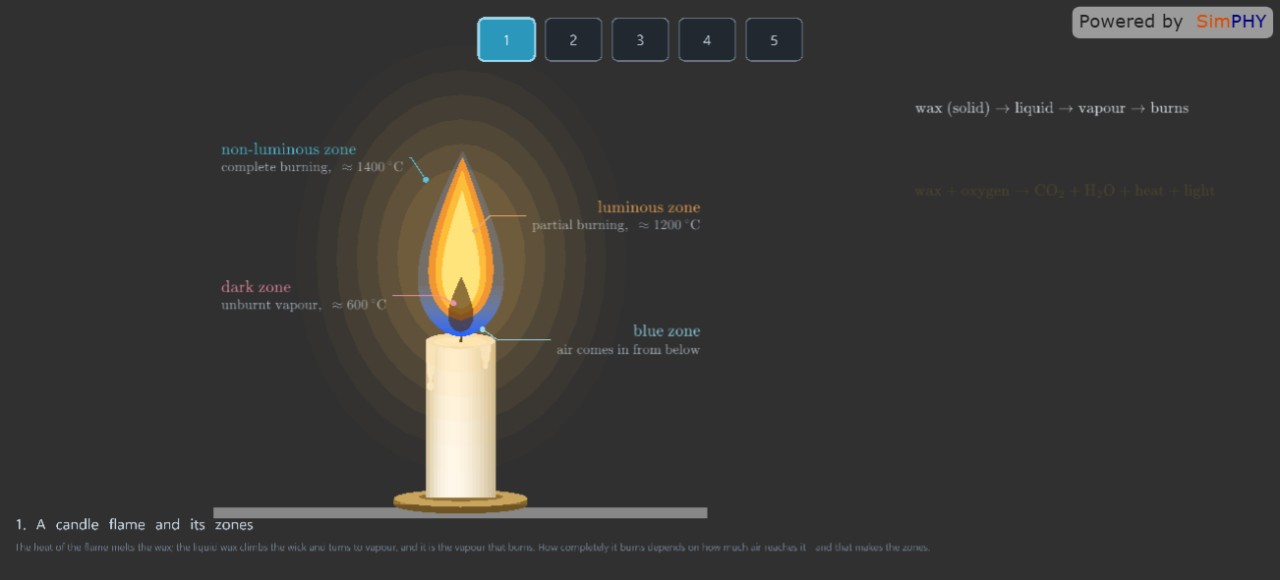
Explore the distinct zones of a candle flame—dark, luminous, outer, an...
 Free
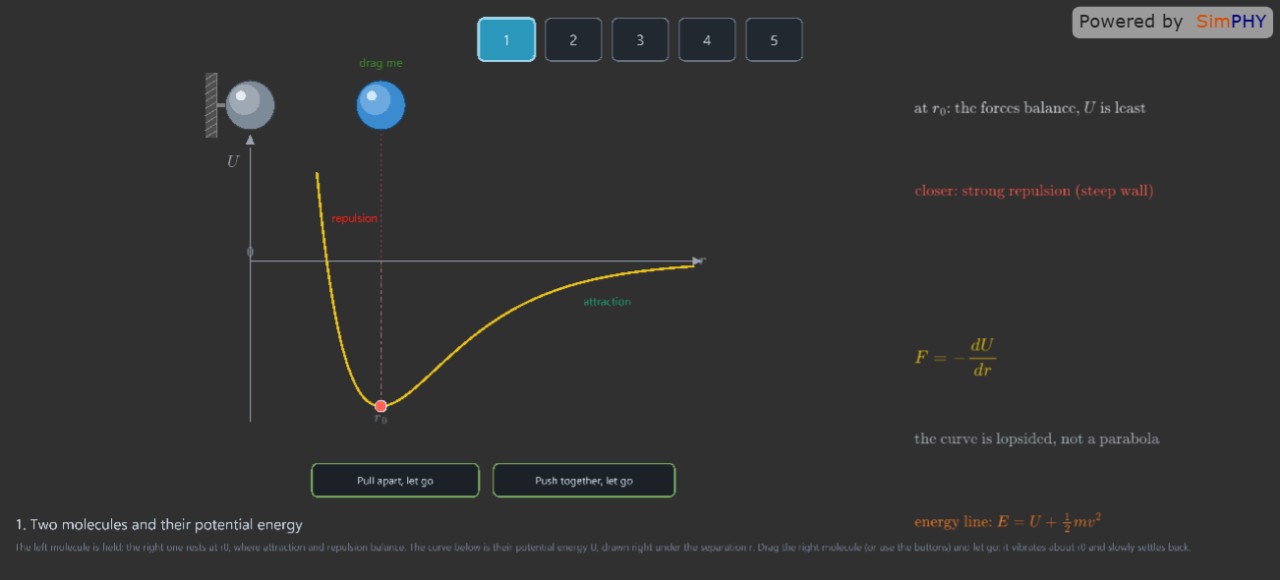
Watch how anharmonic molecular forces cause solids to expand with temp...
 Free
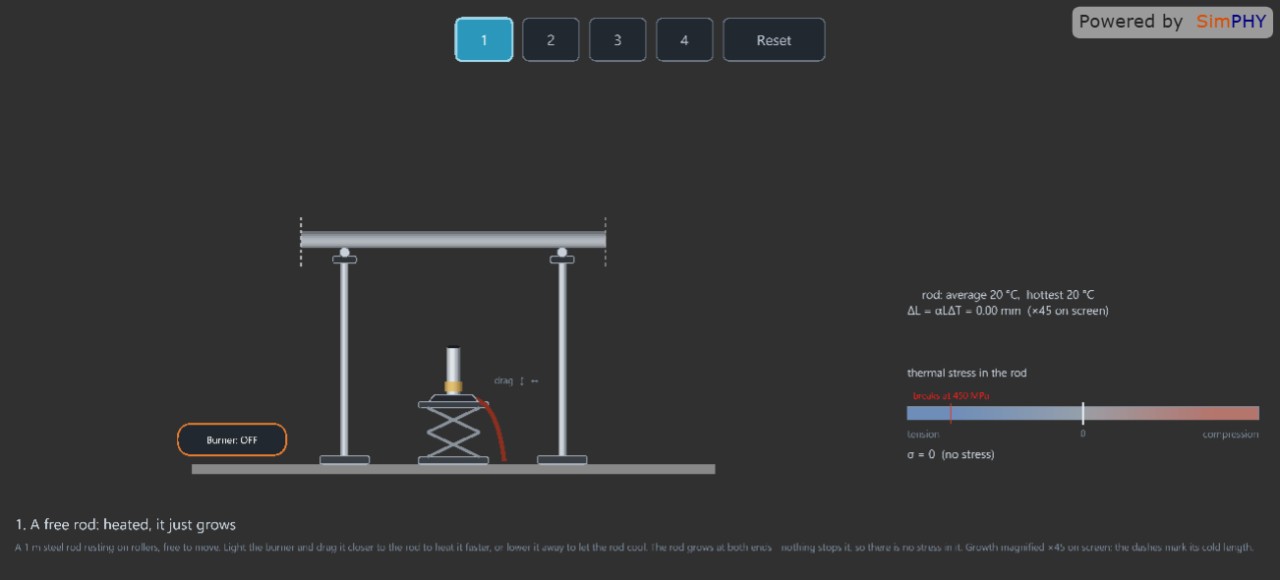
Explore how heating, constraints, and rapid cooling create thermal str...
 Free
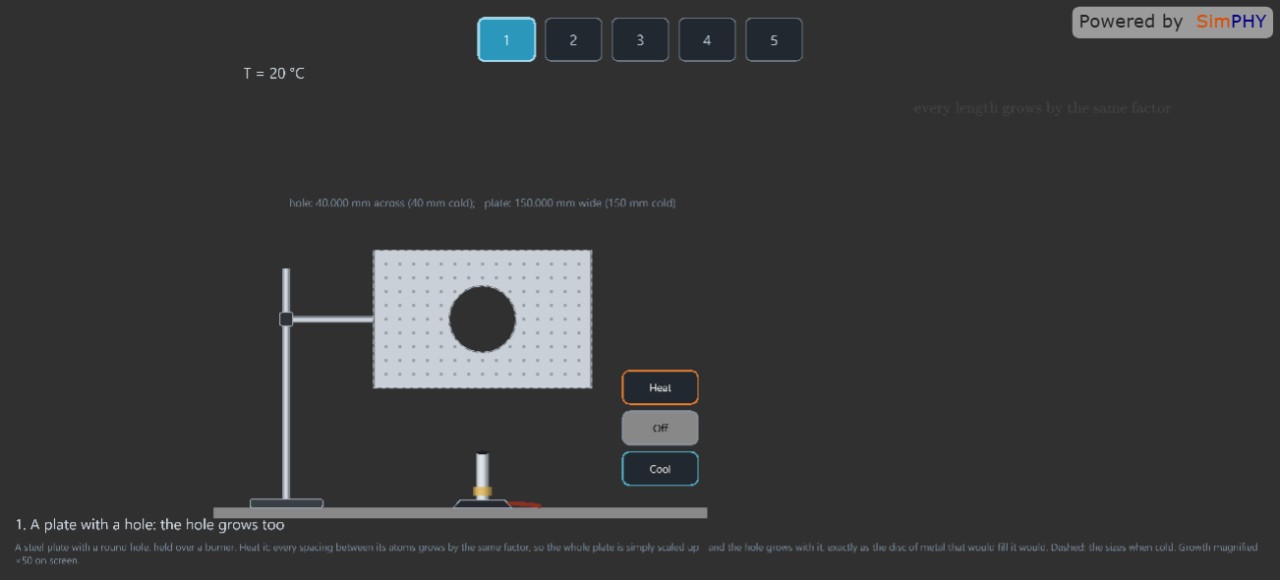
Explore five thermal‑expansion demos: metal plate, glass tube, ball‑ri...
 Free
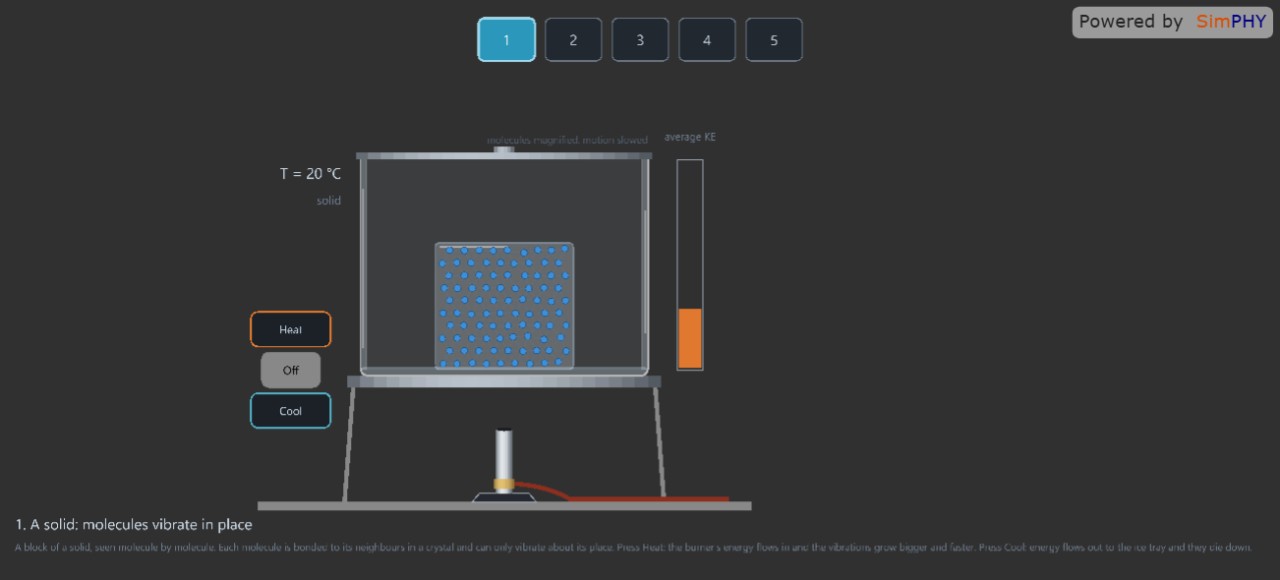
See how heating and cooling change molecular motion in solids, liquids...