 Free
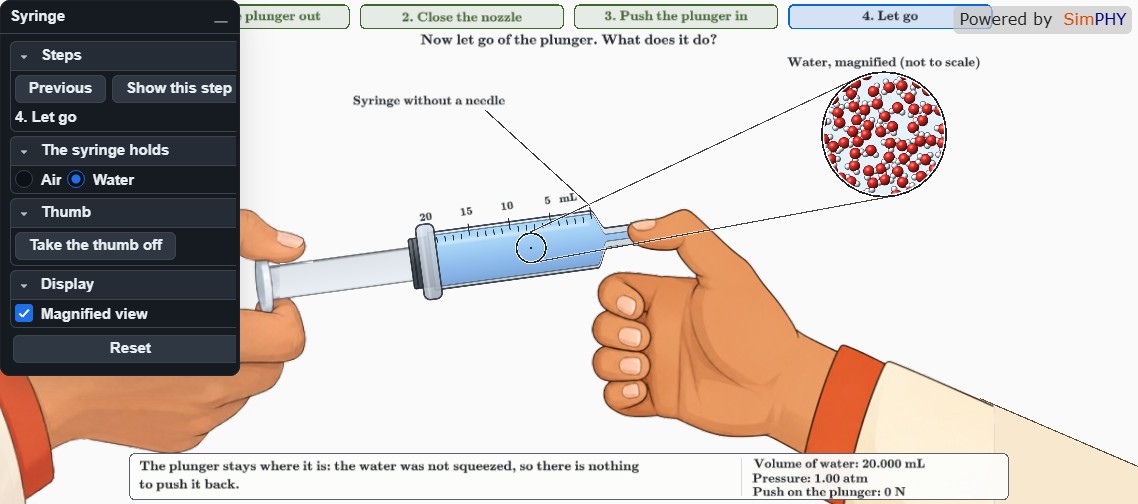
Compressing Air and Water in a Syringe
Fluid MechanicsPull the plunger, seal the tip, and see air compress while water remai...
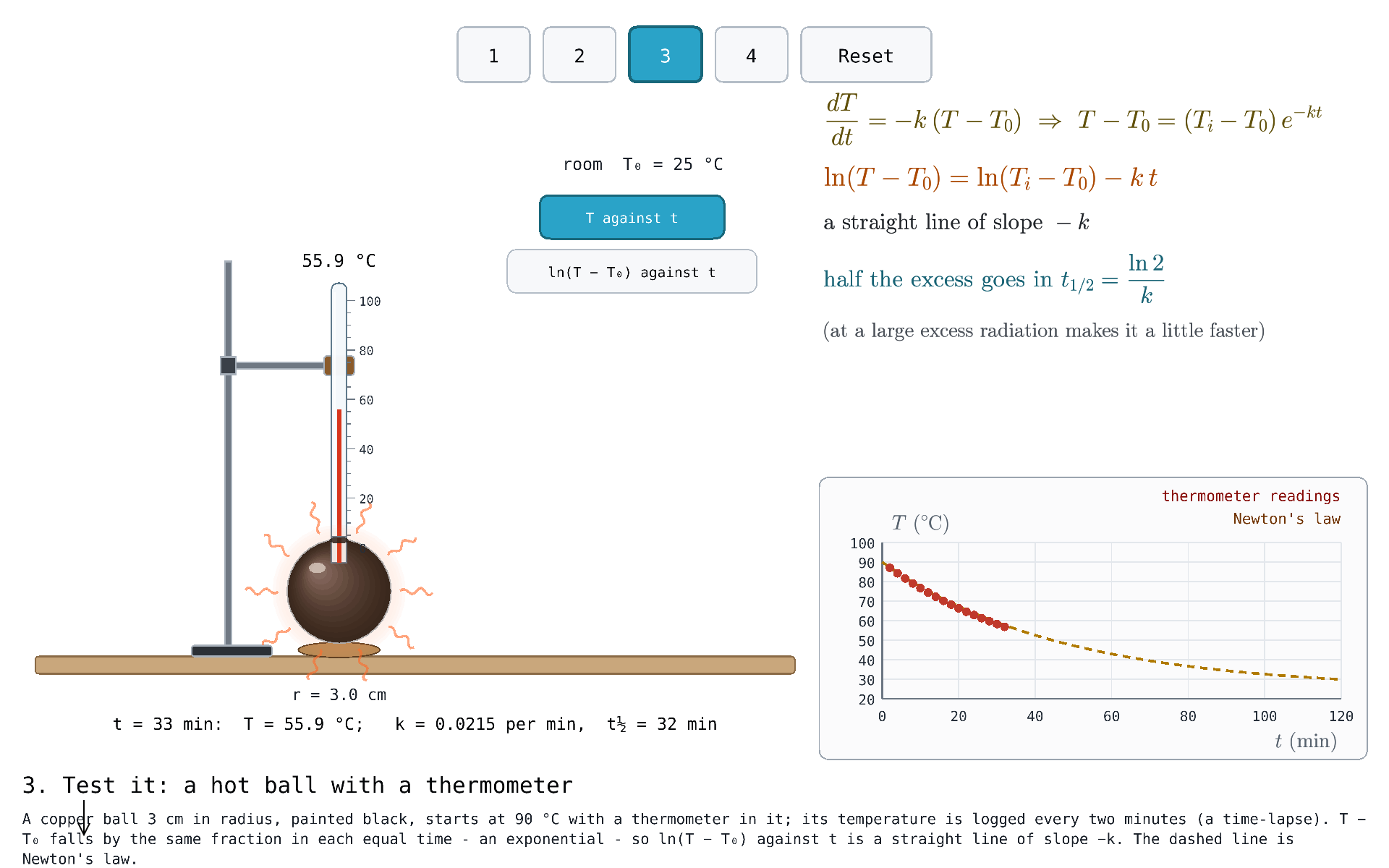
Explore cooling of a copper ball, adjust its temperature and radius, and view linear vs logarithmic graphs.
The simulation demonstrates Newton's law of cooling, where the rate of temperature loss of a hot body is proportional to its excess temperature over the surroundings. It derives the law from radiation principles and shows how the cooling constant k depends on the ball’s surface area and mass.
Students step through four stages using numbered buttons. In step 2 a slider changes the ball’s initial temperature; step 3 lets them switch the graph between temperature versus time and the natural‑log of the excess temperature versus time; step 4 adjusts the ball’s radius to see how a larger sphere cools more slowly. The Reset button restarts the experiment.
By observing the exponential decay of temperature and the straight‑line behavior of the logarithmic plot, learners connect the mathematical form to physical reality. Changing the radius reveals the inverse relationship between k and radius, reinforcing concepts of heat transfer, radiation, and thermodynamic scaling.
Free
Pull the plunger, seal the tip, and see air compress while water remai...
 Free
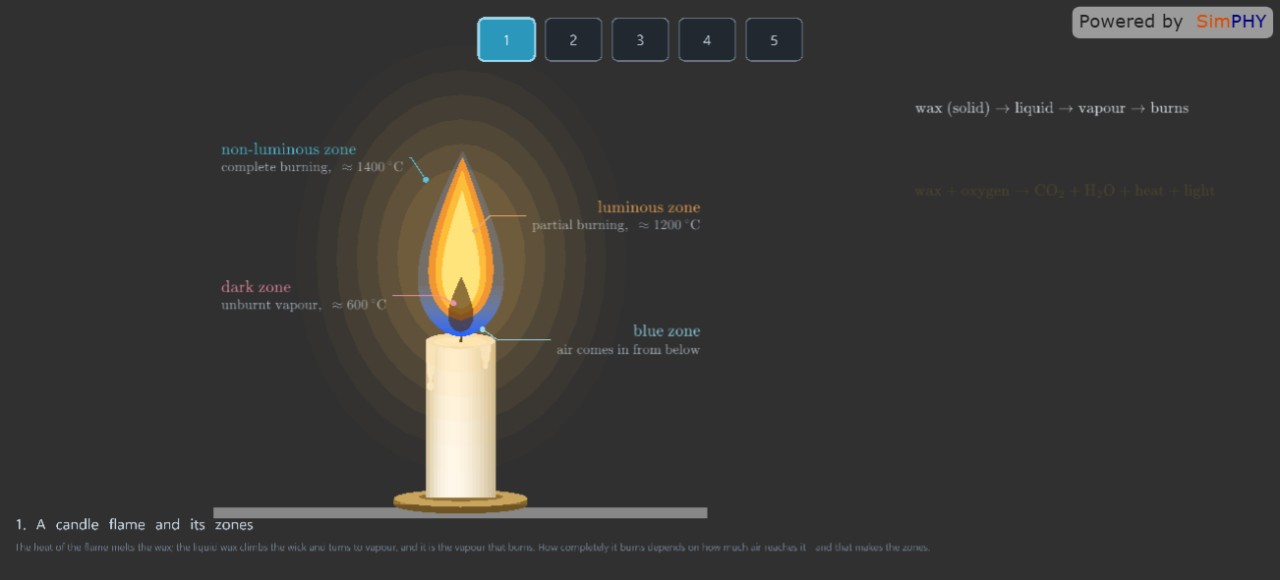
Explore the distinct zones of a candle flame—dark, luminous, outer, an...
 Free
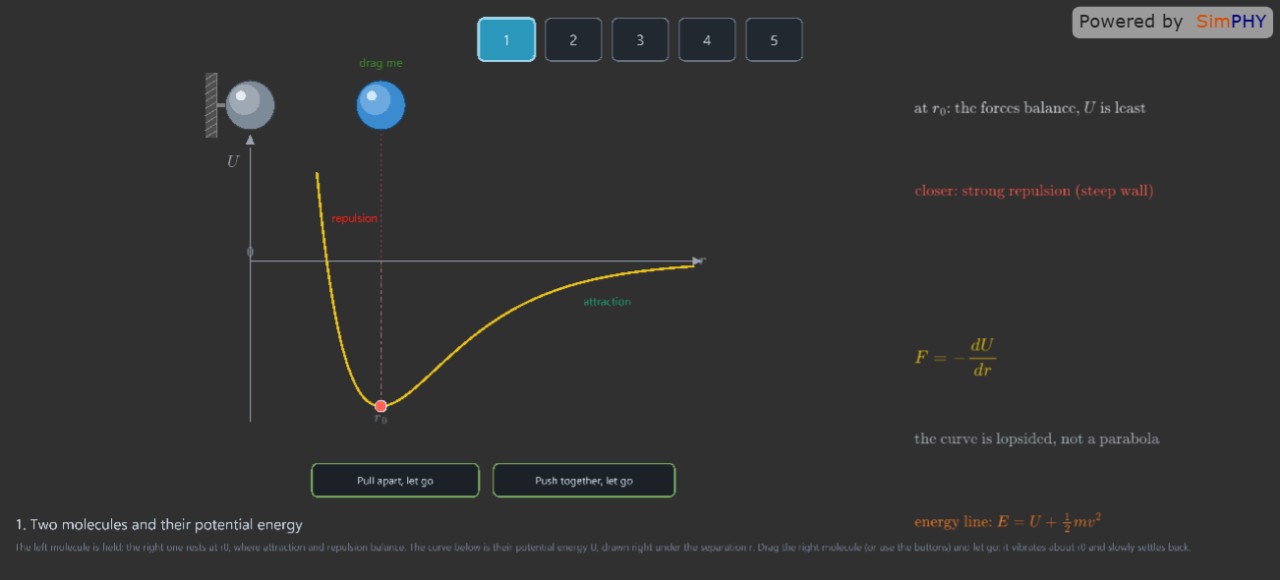
Watch how anharmonic molecular forces cause solids to expand with temp...
 Free
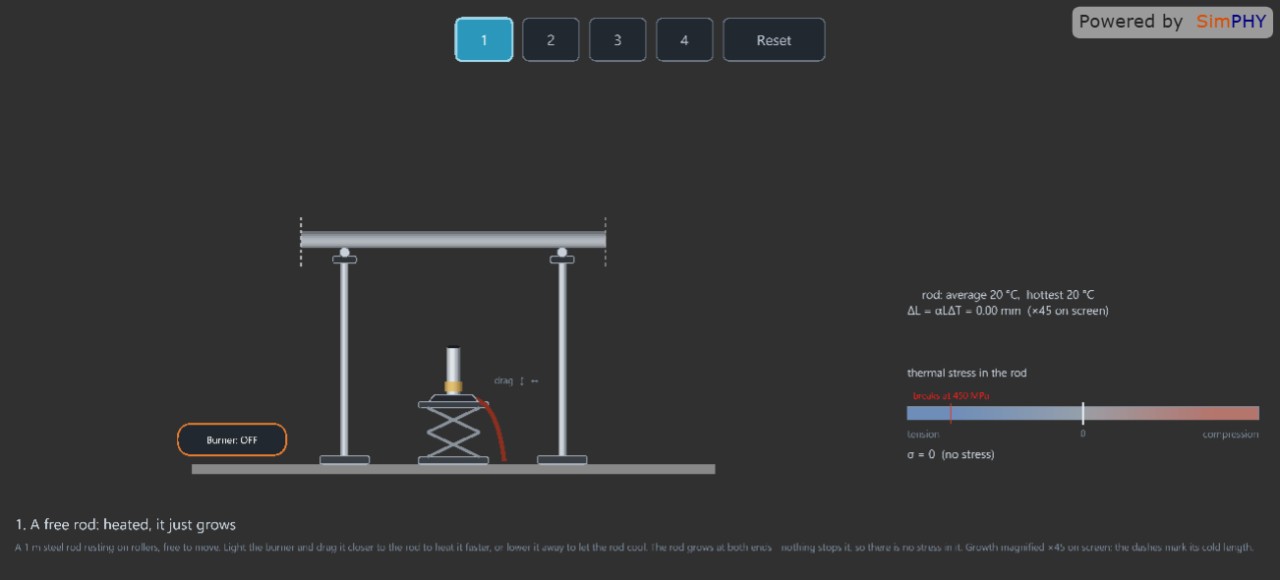
Explore how heating, constraints, and rapid cooling create thermal str...
 Free
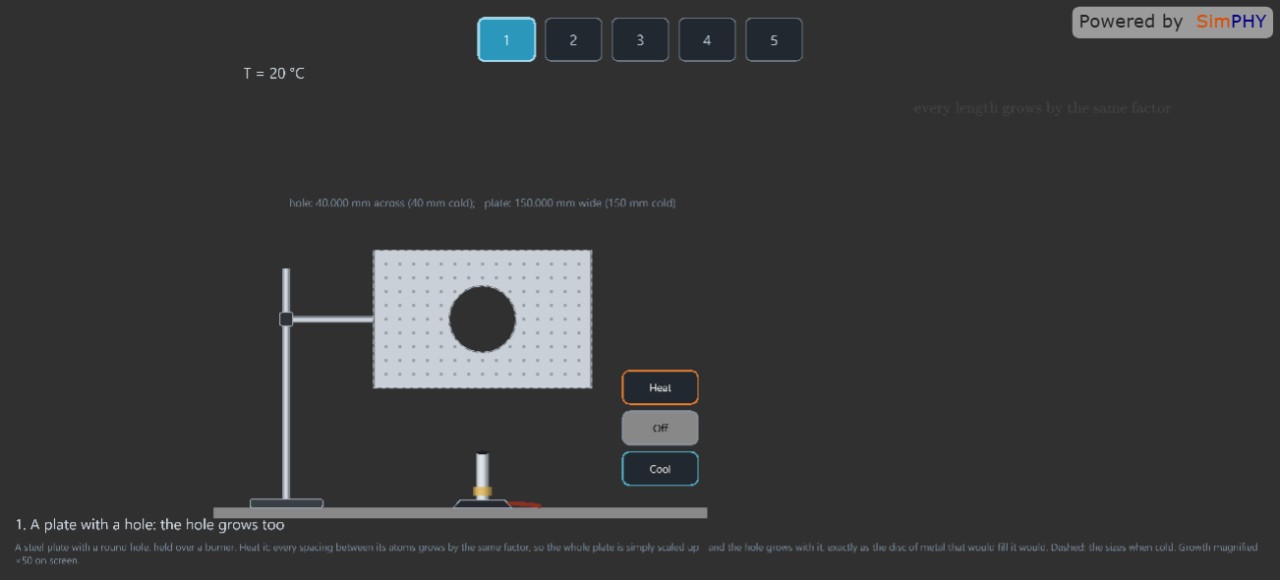
Explore five thermal‑expansion demos: metal plate, glass tube, ball‑ri...
 Free
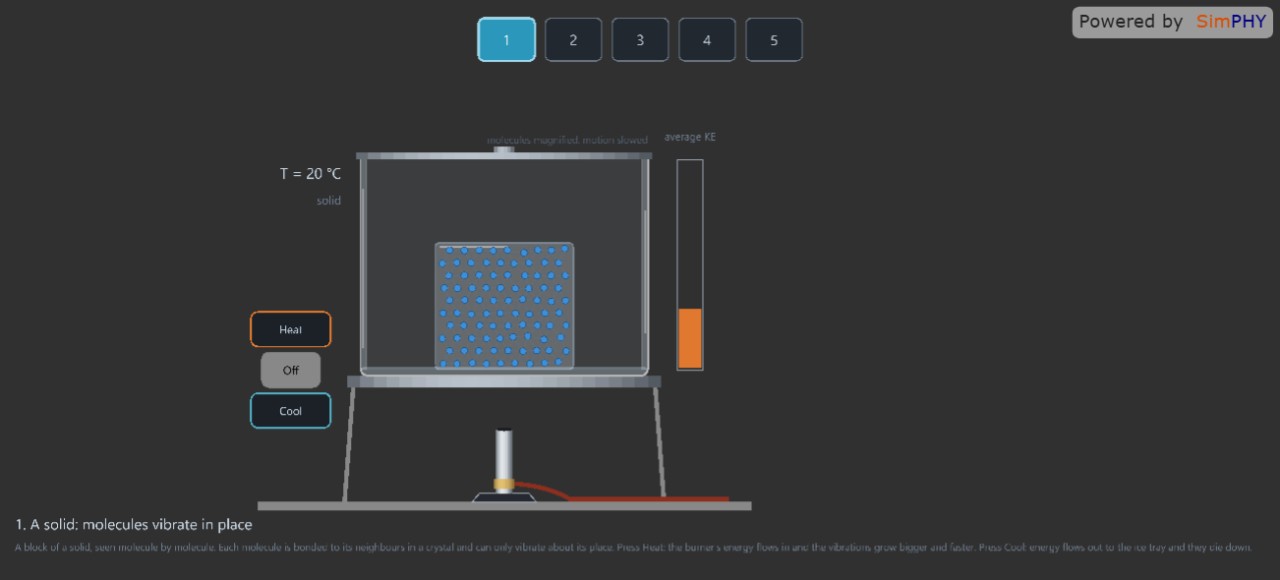
See how heating and cooling change molecular motion in solids, liquids...