 Free
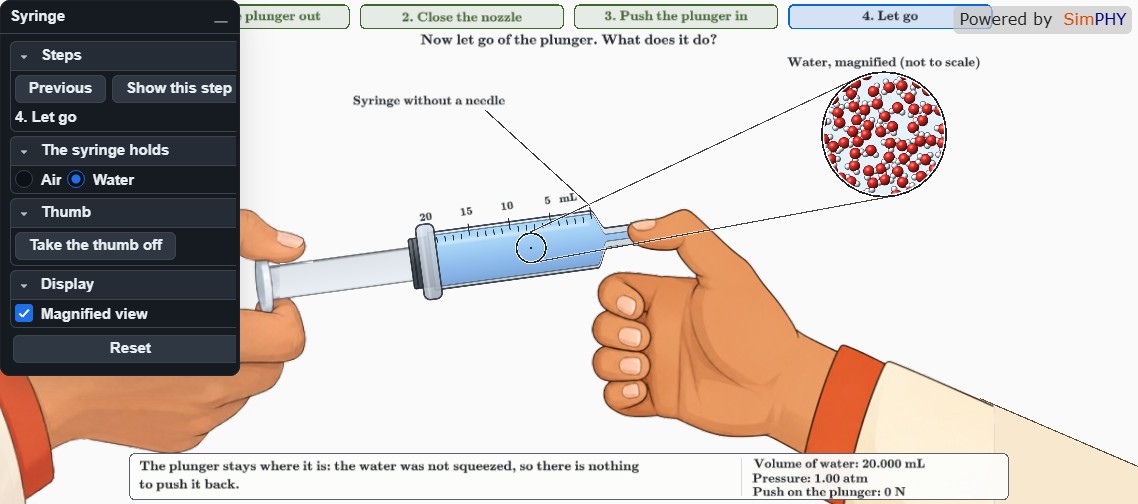
Compressing Air and Water in a Syringe
Fluid MechanicsPull the plunger, seal the tip, and see air compress while water remai...
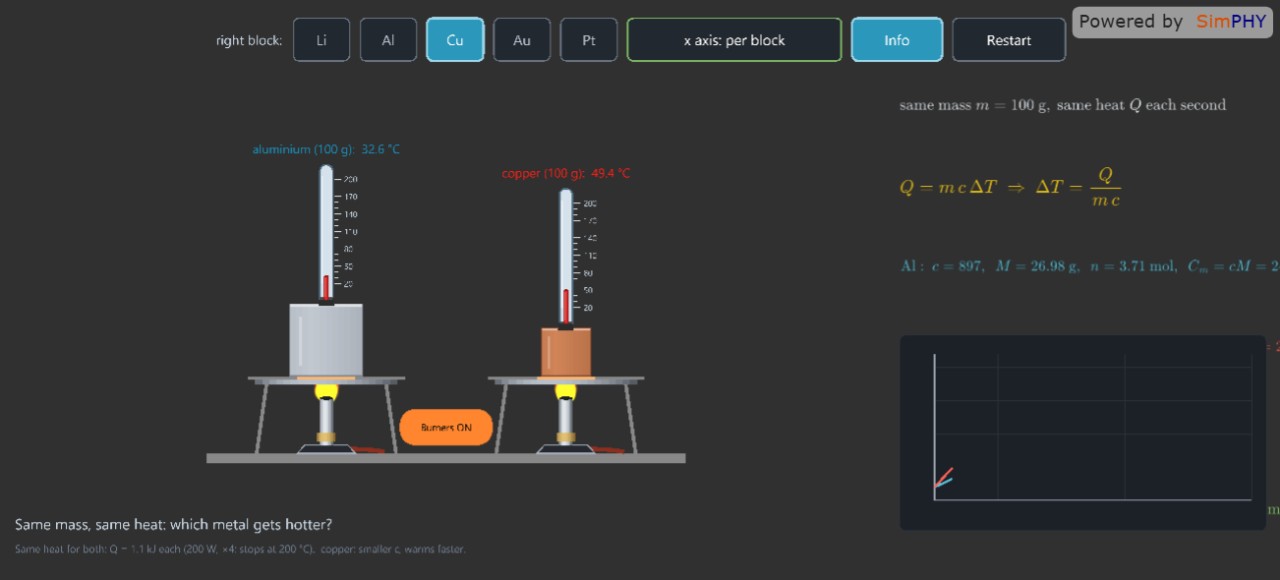
Heat 100 g aluminium and a selected metal on identical burners to compare specific and molar heat capacities.
The simulation shows two 100 g metal blocks – aluminium on the left and a user‑chosen metal on the right – receiving the same heat power from identical burners. By plotting temperature against supplied heat, students see how a low specific‑heat metal (e.g., gold) warms faster than a high specific‑heat metal (e.g., lithium). When the heat is expressed per mole, the curves nearly overlap, illustrating Dulong‑Petit's law that molar heat capacity is roughly constant for many solids.
Students can select the right‑hand metal from a list (Li, Al, Cu, Au, Pt), start or stop the burners, and switch the graph’s x‑axis between heat per block and heat per mole. The blocks are drawn to scale for density, so the visual size reflects the metal’s mass density. Observing the temperature rise and the graph helps students connect specific heat, molar heat, and atomic mass.
Through this interactive model, learners discover why specific heat varies with material while molar heat capacity remains similar, reinforcing concepts of heat capacity, the role of atomic mass, and the empirical Dulong‑Petit relationship in thermodynamics.
Free
Pull the plunger, seal the tip, and see air compress while water remai...
 Free
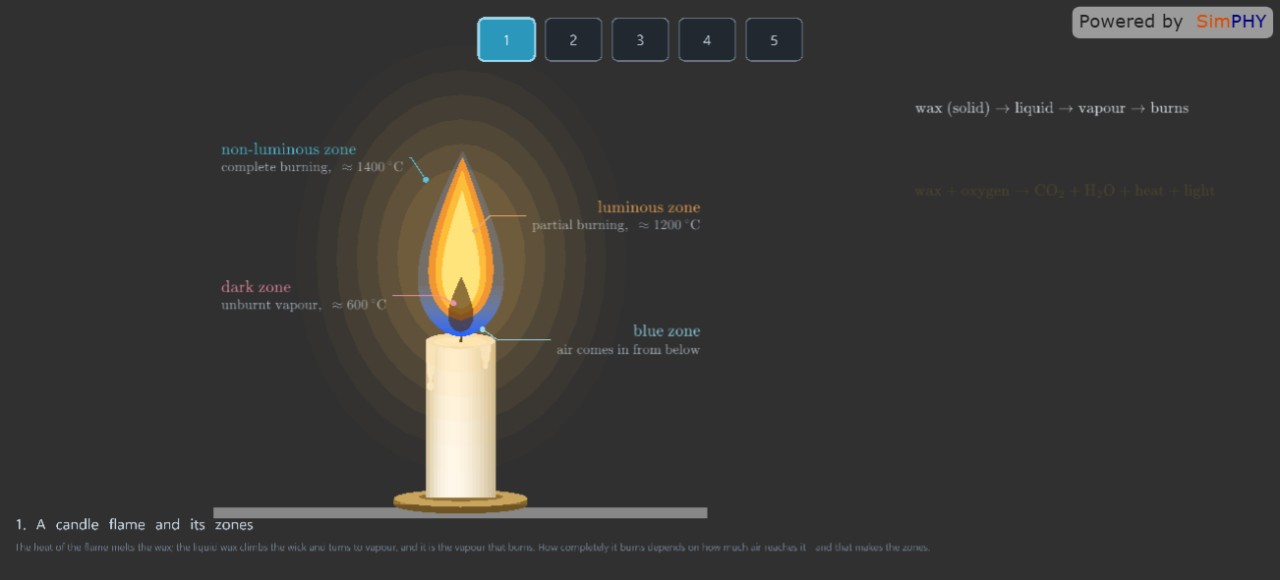
Explore the distinct zones of a candle flame—dark, luminous, outer, an...
 Free
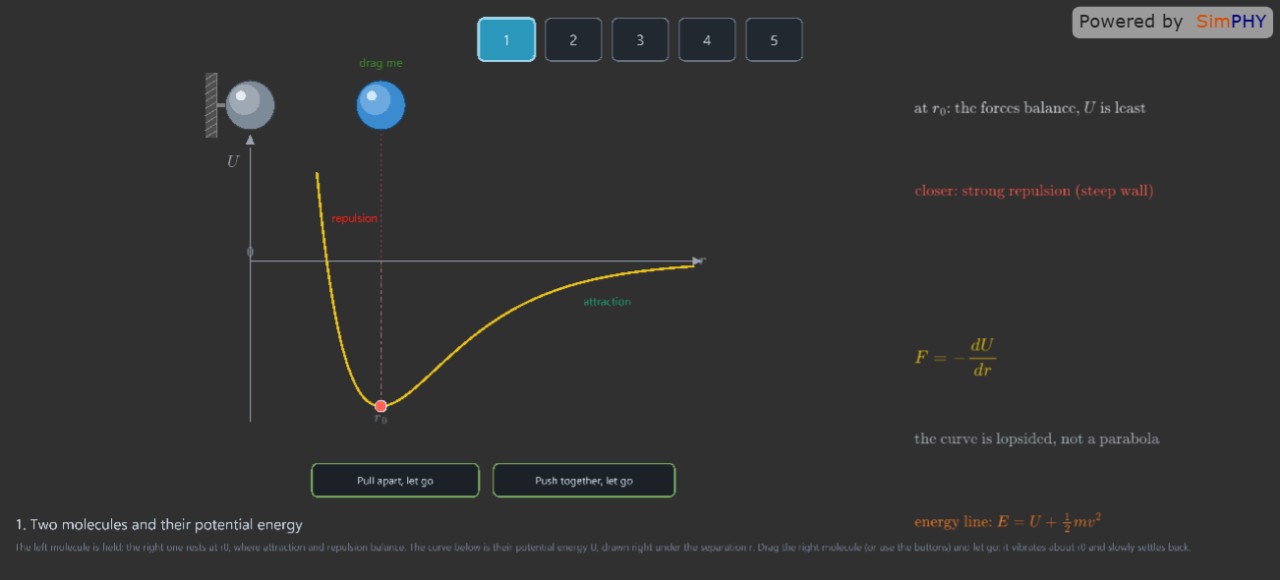
Watch how anharmonic molecular forces cause solids to expand with temp...
 Free
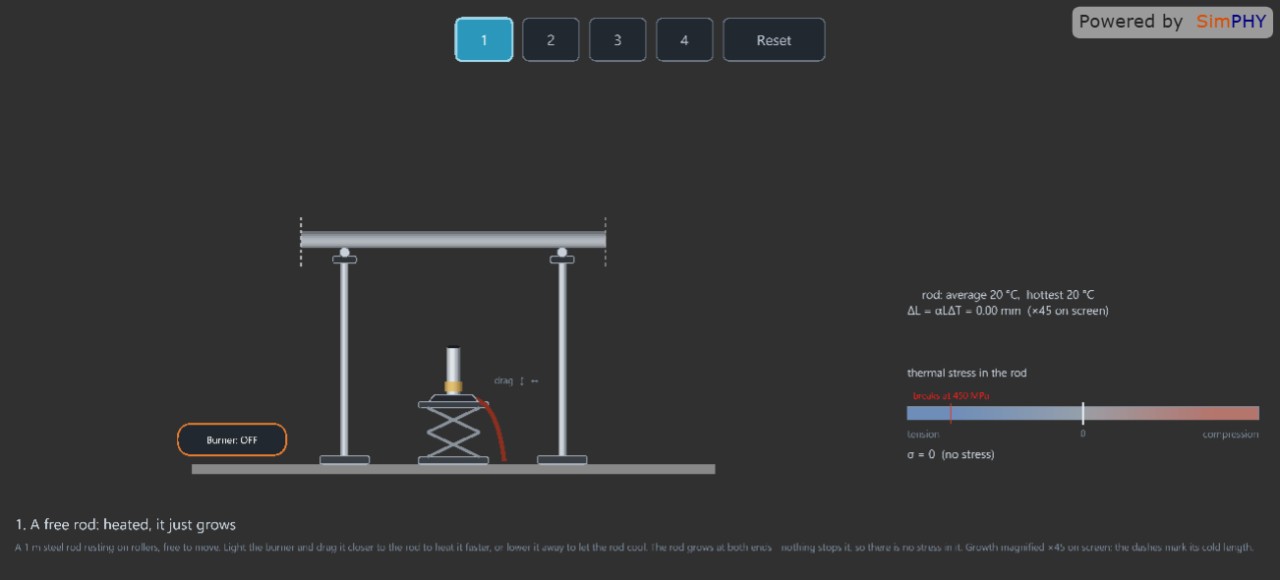
Explore how heating, constraints, and rapid cooling create thermal str...
 Free
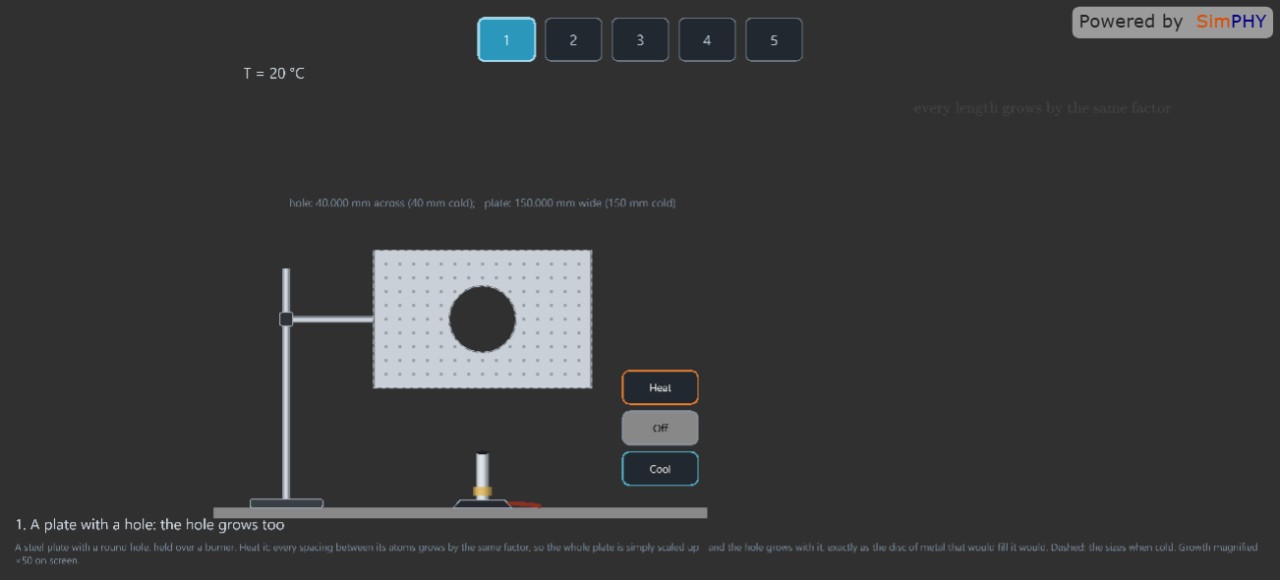
Explore five thermal‑expansion demos: metal plate, glass tube, ball‑ri...
 Free
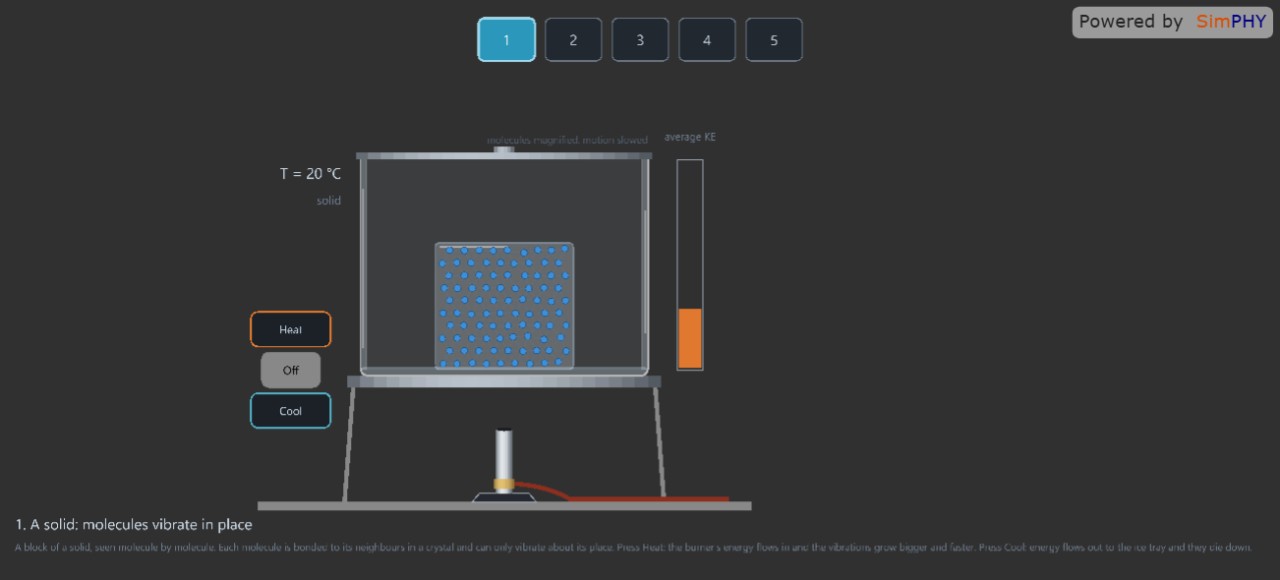
See how heating and cooling change molecular motion in solids, liquids...